
Why Some Flowers Bloom Only At Night

While most flowers open their petals in daylight, some plants wait until the sun goes down to reveal their blooms. Night-blooming flowers are found across many parts of the world and have evolved fascinating strategies to survive and reproduce. Their unusual blooming schedules are not accidental, they are closely connected to pollination, temperature, moisture and the behaviour of nighttime animals.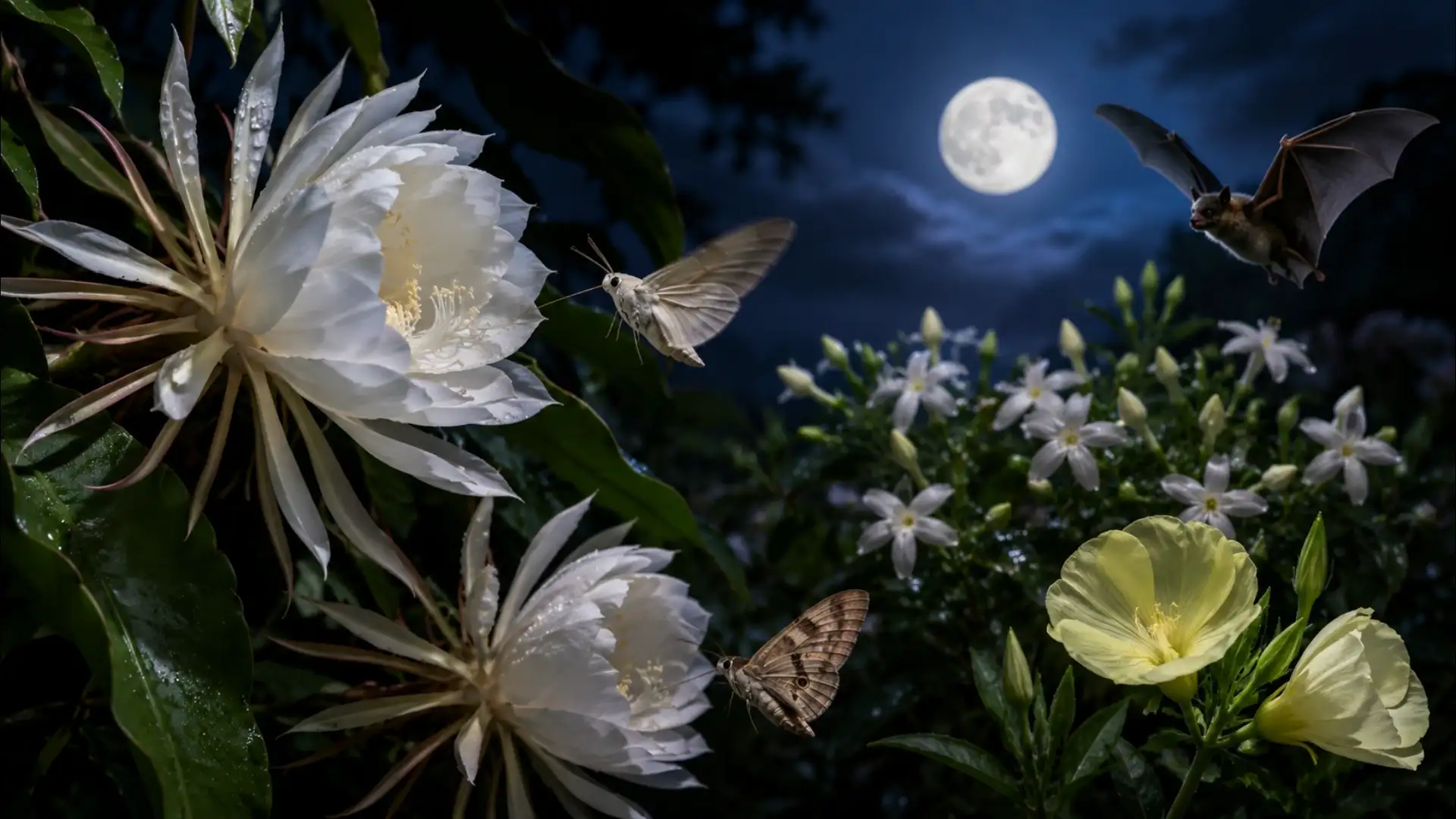
Many night-blooming flowers produce strong fragrances that become more noticeable in darkness. Since visual signals are less useful at night, scent becomes an important way for flowers to attract pollinators from a distance. Plants such as night-blooming jasmine and evening primrose are well known for their powerful nighttime fragrances.
Some flowers also produce large, pale or white petals. These colours can stand out under moonlight, making the flowers easier for nighttime pollinators to locate.
The cooler, more humid conditions of night can also help preserve nectar. This can make the flowers more attractive to pollinators that visit during the evening or early morning.
This separation can increase the chances that pollen reaches another flower of the same species. In ecological terms, it is an efficient reproductive strategy because the plant is adapting its schedule to the animals most likely to pollinate it.
This behaviour is often controlled by the plant's internal biological clock, known as a circadian rhythm. Light and temperature act as environmental signals that help regulate when the flower opens and closes.
What may look like a mysterious botanical habit is actually the result of evolution. By blooming when the world becomes dark, these plants have developed a specialised relationship with nocturnal pollinators and created some of the most intriguing displays in the natural world.
The Role Of Nighttime Pollinators
One of the biggest reasons flowers bloom at night is to attract nocturnal pollinators . Animals such as moths, bats and certain beetles are active after sunset and help transfer pollen between flowers.Many night-blooming flowers produce strong fragrances that become more noticeable in darkness. Since visual signals are less useful at night, scent becomes an important way for flowers to attract pollinators from a distance. Plants such as night-blooming jasmine and evening primrose are well known for their powerful nighttime fragrances.
Some flowers also produce large, pale or white petals. These colours can stand out under moonlight, making the flowers easier for nighttime pollinators to locate.
Cooler Temperatures Can Help
Nighttime conditions can also benefit certain plants. During the day, high temperatures and intense sunlight can cause flowers to lose moisture quickly. Opening after sunset reduces exposure to heat and allows delicate petals to remain fresh for longer.The cooler, more humid conditions of night can also help preserve nectar. This can make the flowers more attractive to pollinators that visit during the evening or early morning.
A Different Strategy For Reproduction
Blooming at night can reduce competition with plants that rely on daytime pollinators. During the day, bees, butterflies and other insects visit thousands of brightly coloured flowers. A plant that opens after sunset can target a completely different group of pollinators.This separation can increase the chances that pollen reaches another flower of the same species. In ecological terms, it is an efficient reproductive strategy because the plant is adapting its schedule to the animals most likely to pollinate it.
Why Some Flowers Close In The Morning
Many night-blooming flowers have a relatively short window for displaying their blooms. As sunlight returns, their petals may close or begin to wilt.This behaviour is often controlled by the plant's internal biological clock, known as a circadian rhythm. Light and temperature act as environmental signals that help regulate when the flower opens and closes.
Nature's Night Shift
Night-blooming flowers demonstrate how plants can adapt their behaviour to their surroundings. Their fragrances, pale petals, nectar production and opening schedules are all connected to the challenges of nighttime reproduction.What may look like a mysterious botanical habit is actually the result of evolution. By blooming when the world becomes dark, these plants have developed a specialised relationship with nocturnal pollinators and created some of the most intriguing displays in the natural world.
Next Story