
Why Do Stars Appear to Change Color? The Science Behind the Twinkling Sky

When we look at the night sky, stars may seem to twinkle in different shades of white, blue, red or even orange. Some stars appear to change color rapidly, particularly when they are close to the horizon. This fascinating effect is not always caused by the stars themselves. In many cases, Earth’s atmosphere is responsible for making their colors appear to shift.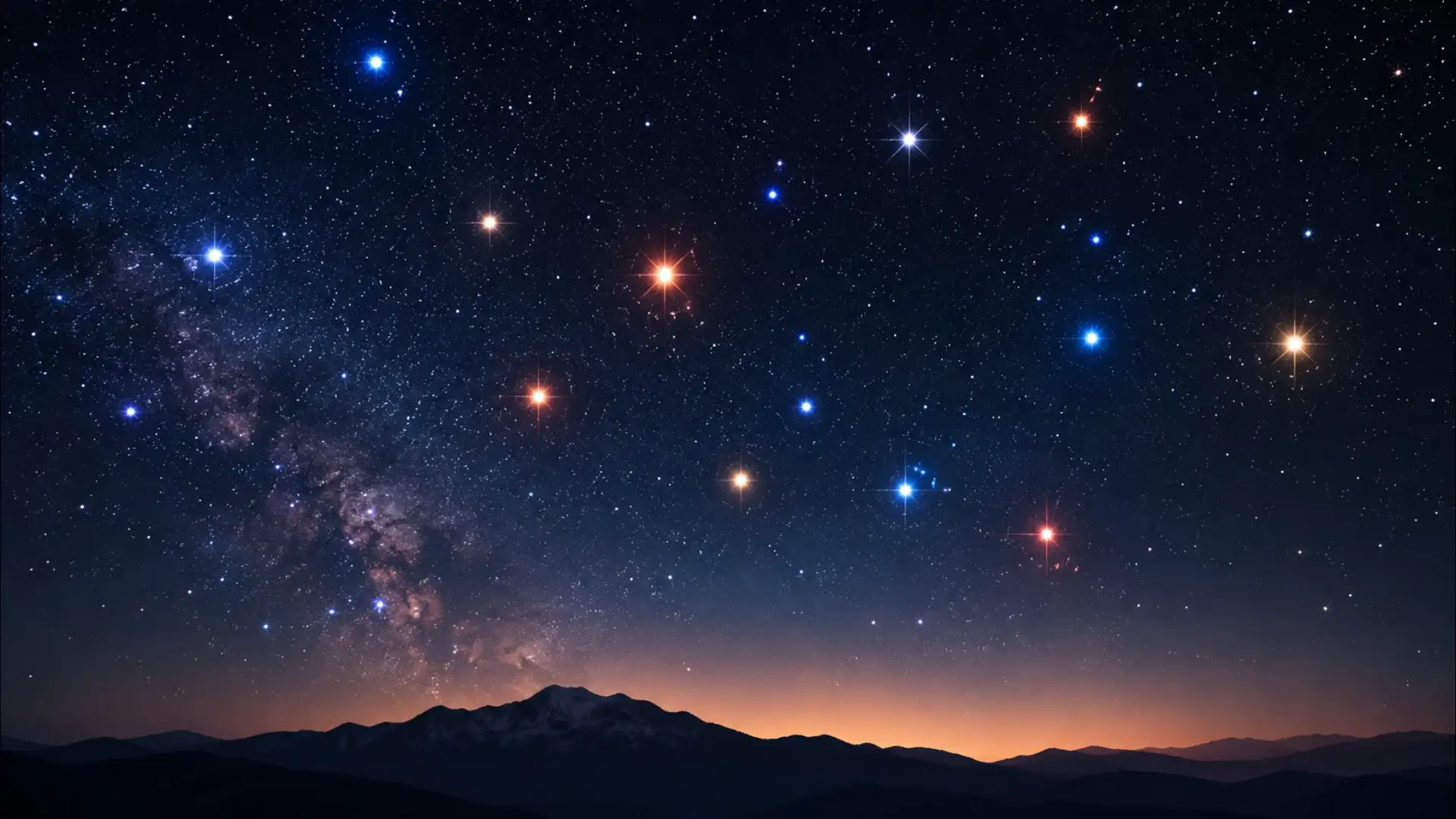
Because the atmosphere is constantly moving, the path of starlight changes slightly from moment to moment. This creates the familiar twinkling effect known as scintillation . Along with changes in brightness, atmospheric turbulence can make different colors appear stronger or weaker at different moments.
The effect becomes especially noticeable when a star is low in the sky. At that angle, its light travels through a greater amount of atmosphere before reaching our eyes.
For example, a bright star near the horizon may appear to flash red, blue, green or yellow in rapid succession. The star itself is generally not changing color that quickly. Instead, the atmosphere is temporarily altering how its light reaches us.
This is why the effect can look particularly dramatic with bright stars such as Sirius, which is one of the brightest stars visible from Earth.
Some stars also undergo physical changes as they evolve. Variable stars can change in brightness and, in certain cases, their temperatures can change as well. This may produce measurable variations in their color over days, months or even longer periods.
Space telescopes have an even greater advantage because they observe above Earth’s atmosphere. Without atmospheric distortion, astronomers can measure a star’s brightness and color much more accurately.
So, the next time a bright star seems to sparkle in several colors, you may be witnessing a remarkable interaction between distant starlight and Earth’s turbulent atmosphere, a reminder that even observing the night sky is shaped by the planet beneath our feet.
The Role of Earth’s Atmosphere
Starlight travels enormous distances through space before reaching Earth. Once it enters our atmosphere, however, it must pass through layers of moving air with different temperatures and densities. These layers bend and scatter the incoming light.Because the atmosphere is constantly moving, the path of starlight changes slightly from moment to moment. This creates the familiar twinkling effect known as scintillation . Along with changes in brightness, atmospheric turbulence can make different colors appear stronger or weaker at different moments.
The effect becomes especially noticeable when a star is low in the sky. At that angle, its light travels through a greater amount of atmosphere before reaching our eyes.
Why Colors Can Seem to Flash
White starlight is actually made up of many wavelengths of visible light. Atmospheric turbulence affects these wavelengths slightly differently. As the light passes through unstable pockets of air, some colors may be refracted more strongly than others.You may also like
- Against the current: Mother dog's desperate fight to save her puppy wins the internet's heart
- Understanding Menstrual Pain: Causes and Remedies
- How to Support Your Gut and Vaginal Microbiome Before Pregnancy
- Spilling water for luck! How India, Turkey and Iran share this ancient farewell ritual
- “It's OK mommy, it's OK”: 7-year-old American boy called 'hero' after calmly calling 911 when his mother suffered seizure; parenting lesson to take home
For example, a bright star near the horizon may appear to flash red, blue, green or yellow in rapid succession. The star itself is generally not changing color that quickly. Instead, the atmosphere is temporarily altering how its light reaches us.
This is why the effect can look particularly dramatic with bright stars such as Sirius, which is one of the brightest stars visible from Earth.
Real Changes in Stellar Color
Although atmospheric effects explain many apparent color changes, stars can genuinely change color over much longer periods. A star’s color is closely related to its surface temperature. Hotter stars tend to appear blue or blue-white, while cooler stars generally appear orange or red.Some stars also undergo physical changes as they evolve. Variable stars can change in brightness and, in certain cases, their temperatures can change as well. This may produce measurable variations in their color over days, months or even longer periods.
Why Telescopes See More Clearly
Astronomers use telescopes and specialized instruments to reduce the effects of atmospheric turbulence. Observatories are often placed at high elevations or in locations with stable atmospheric conditions.Space telescopes have an even greater advantage because they observe above Earth’s atmosphere. Without atmospheric distortion, astronomers can measure a star’s brightness and color much more accurately.
A Beautiful Atmospheric Illusion
The changing colors of stars demonstrate how much our atmosphere influences what we see in the universe. A star that appears to flicker between red, blue, and white may actually be shining steadily billions of kilometers away.So, the next time a bright star seems to sparkle in several colors, you may be witnessing a remarkable interaction between distant starlight and Earth’s turbulent atmosphere, a reminder that even observing the night sky is shaped by the planet beneath our feet.






Loving Newspoint? Download the app now
