
Why Is Spiti Valley a Cold Desert? The Science Behind Its Barren Landscape

High in the Himalayas, Spiti looks very different from the green image many people associate with mountain valleys. Instead of dense forests and thick vegetation, the landscape is dominated by bare mountains, rocky slopes, wide valleys and patches of dry grass. Villages appear as small green islands against an otherwise brown and grey landscape.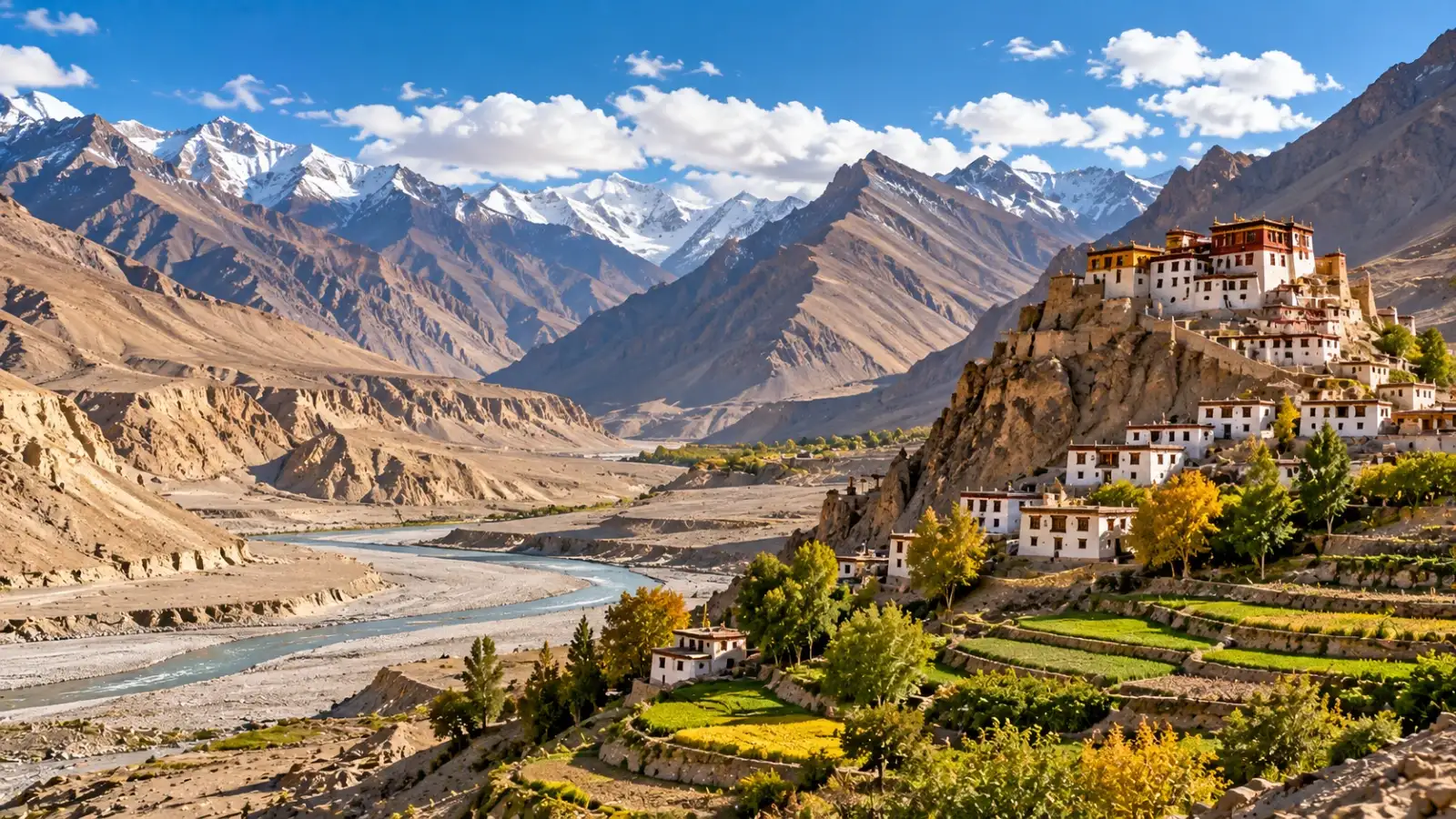
This is why Spiti is known as a cold desert.
The term may sound unusual because deserts are generally associated with intense heat. But a desert is defined primarily by its lack of precipitation, not by high temperatures. Spiti combines this dry environment with extreme Himalayan altitude and very low winter temperatures, creating the distinctive landscape for which the valley is known. Himachal Tourism officially describes Spiti as a mountainous cold desert with dry, weather-beaten landscapes and green patches scattered across the valley.
Spiti fits the first category. Much of the valley lies at elevations above 3,000 metres, creating a combination of thin air, harsh winters and limited precipitation. Himachal Tourism notes that Spiti is located at well over 3,000 metres and remains cold throughout the year.
The result is a landscape where there is enough moisture in some places to support agriculture and vegetation, but not enough widespread precipitation to create dense forests across the valley.
Moisture-bearing weather systems lose much of their moisture as they encounter the major Himalayan ranges. By the time air reaches the interior Trans-Himalayan valleys around Spiti, much less moisture is available.
This creates what is known as a rain-shadow effect. Spiti therefore receives considerably less precipitation than many of the greener valleys on the other side of the mountains.
Himachal Tourism describes Lahaul and Spiti as high-altitude Himalayan valleys with little monsoon influence, a characteristic that contributes to their dry landscapes.
Low precipitation limits the amount of moisture available for plant growth. The combination of altitude, cold temperatures and a short growing season makes it difficult for dense forests to develop across much of the valley.
However, Spiti is not completely barren. Small green patches appear around villages and areas where water is available. These pockets of vegetation are especially noticeable because they contrast so strongly with the surrounding rocky landscape.
Many villages are located close to streams or areas where irrigation is possible. Fields can therefore appear surprisingly green despite the barren mountains surrounding them.
Himachal Tourism notes that the Spiti River is a glacial stream and describes green agricultural patches around settlements within the otherwise dry landscape.
This creates one of Spiti's most recognisable visual contrasts. A cluster of green fields and whitewashed houses can sit directly beneath enormous brown mountains.
As elevation increases, temperatures generally decrease. Spiti's high elevation therefore keeps temperatures much lower than those found in India's plains, particularly during winter.
Himachal Tourism states that winter temperatures in Spiti can fall to around minus 20 degrees Celsius in some places. In the higher and more exposed parts of the wider Pin Valley region, winter conditions can become even more severe.
This combination of dryness and extreme cold is what separates Spiti from a conventional hot desert.
While monsoon clouds bring substantial rainfall to many parts of northern India, the geography of the Himalayas means that much less moisture reaches the interior Trans-Himalayan valleys.
This does not mean that Spiti never receives precipitation. Snowfall is important, particularly during winter, and local weather can vary considerably with altitude and location. But the overall climate remains much drier than the heavily forested Himalayan areas farther south.
The limited precipitation is one of the fundamental reasons the landscape resembles a desert despite being surrounded by some of the world's highest mountains.
The explanation is water management. Communities have historically developed agriculture around available streams and glacial meltwater, allowing crops to grow in areas where natural vegetation would otherwise be limited.
Himachal Tourism notes that barley is a major agricultural crop in Spiti and that green patches occur across the valley.
This means that agriculture is concentrated rather than widespread. Instead of seeing continuous farmland across the valley floor, travellers often encounter small cultivated areas surrounded by enormous expanses of dry terrain.
There are trees and shrubs in sheltered or better-watered areas, but they are much less abundant than in the wetter Himalayan valleys. The landscape instead supports dry alpine and scrub vegetation.
Pin Valley National Park provides a useful example. Himachal Tourism describes its vegetation as dry alpine and scrub, with juniper, birch and poplar growing in some more fertile patches.
This vegetation pattern is another reason the valley has such a stark appearance.
During the warmer months, agricultural fields become greener and some slopes develop more vegetation. Streams and rivers are fed by snow and glacial melt, while villages become more active.
Winter transforms the landscape. Snow and freezing temperatures become dominant, roads can become difficult to access and the valley becomes considerably harsher.
Himachal Tourism describes April to October as a suitable period for visiting Spiti, while noting that temperatures can fall sharply and that deep winter can bring temperatures around minus 20 degrees Celsius.
The seasonal contrast makes the valley particularly striking for travellers who want to see how communities live in a high-altitude environment.
The wider valley provides habitat for species such as Himalayan blue sheep, ibex and the snow leopard. Kibber and the surrounding high-altitude areas are particularly associated with snow leopard habitat.
Pin Valley National Park also supports species including snow leopard, ibex, blue sheep, Tibetan wolf, red fox and Himalayan marmot, along with several high-altitude bird species.
The presence of these animals demonstrates that a cold desert can support a specialised ecosystem even when the landscape appears almost barren.
Traditional homes, monasteries and settlements are generally concentrated in areas where water and cultivable land are available. Agriculture, animal husbandry, handicrafts and tourism contribute to local livelihoods.
Barley has traditionally been an important crop, while the region's Buddhist monasteries remain central to its cultural identity. Himachal Tourism highlights the long-standing role of monasteries, local villages and agriculture in Spiti's social landscape.
This relationship between people and environment is one of the most interesting aspects of travelling through the valley. The landscape may appear hostile, but generations of residents have adapted their lives around its limitations.
There are few large forests to interrupt the view, and the enormous scale of the surrounding mountains makes human settlements appear tiny. The dry climate also produces strong contrasts between the pale landscape and the green patches around villages.
Himachal Tourism itself describes Spiti's terrain in terms of rugged landscapes, windswept valleys, Himalayan lakes and highlands.
The famous landscapes around Kaza, Kibber, Langza, Hikkim, Komic and Pin Valley are all expressions of the same basic geographical conditions, although each area has its own character.
The valley is extremely high, receives limited precipitation because of its Himalayan location, has sparse vegetation and experiences severe winter temperatures. Water from rivers, snow and glaciers supports small areas of agriculture and settlements, creating green pockets within a predominantly dry landscape.
That combination is what makes Spiti so distinctive. It is not a desert because it is hot. It is a desert because it is exceptionally dry, and it is cold because it sits high in the Himalayas.
Together, these conditions create one of India's most unusual mountain environments, where barren slopes, green villages, Buddhist monasteries, glaciers and high-altitude wildlife exist within the same dramatic landscape.
This is why Spiti is known as a cold desert.
The term may sound unusual because deserts are generally associated with intense heat. But a desert is defined primarily by its lack of precipitation, not by high temperatures. Spiti combines this dry environment with extreme Himalayan altitude and very low winter temperatures, creating the distinctive landscape for which the valley is known. Himachal Tourism officially describes Spiti as a mountainous cold desert with dry, weather-beaten landscapes and green patches scattered across the valley.
What Makes a Place a Cold Desert?
A cold desert is a dry region where temperatures can remain very low, particularly during winter. Unlike hot deserts, where heat and evaporation dominate the landscape, cold deserts are generally found at high elevations or in polar environments.Spiti fits the first category. Much of the valley lies at elevations above 3,000 metres, creating a combination of thin air, harsh winters and limited precipitation. Himachal Tourism notes that Spiti is located at well over 3,000 metres and remains cold throughout the year.
The result is a landscape where there is enough moisture in some places to support agriculture and vegetation, but not enough widespread precipitation to create dense forests across the valley.
The Himalayas Create a Rain Shadow
One of the biggest reasons Spiti is so dry is its location within the Himalayas.Moisture-bearing weather systems lose much of their moisture as they encounter the major Himalayan ranges. By the time air reaches the interior Trans-Himalayan valleys around Spiti, much less moisture is available.
This creates what is known as a rain-shadow effect. Spiti therefore receives considerably less precipitation than many of the greener valleys on the other side of the mountains.
Himachal Tourism describes Lahaul and Spiti as high-altitude Himalayan valleys with little monsoon influence, a characteristic that contributes to their dry landscapes.
Why Are Spiti's Mountains So Bare?
The dry climate is immediately visible in the mountains. Instead of continuous tree cover, large slopes appear almost completely exposed, with rocks, gravel and thin vegetation dominating the terrain.Low precipitation limits the amount of moisture available for plant growth. The combination of altitude, cold temperatures and a short growing season makes it difficult for dense forests to develop across much of the valley.
However, Spiti is not completely barren. Small green patches appear around villages and areas where water is available. These pockets of vegetation are especially noticeable because they contrast so strongly with the surrounding rocky landscape.
Rivers Make Life Possible
The Spiti River is one of the most important geographical features of the valley. Its glacial waters pass through the dry landscape and provide the moisture required for settlements and agriculture.Many villages are located close to streams or areas where irrigation is possible. Fields can therefore appear surprisingly green despite the barren mountains surrounding them.
Himachal Tourism notes that the Spiti River is a glacial stream and describes green agricultural patches around settlements within the otherwise dry landscape.
This creates one of Spiti's most recognisable visual contrasts. A cluster of green fields and whitewashed houses can sit directly beneath enormous brown mountains.
Why Does Spiti Get So Cold?
Altitude is the key factor.As elevation increases, temperatures generally decrease. Spiti's high elevation therefore keeps temperatures much lower than those found in India's plains, particularly during winter.
Himachal Tourism states that winter temperatures in Spiti can fall to around minus 20 degrees Celsius in some places. In the higher and more exposed parts of the wider Pin Valley region, winter conditions can become even more severe.
This combination of dryness and extreme cold is what separates Spiti from a conventional hot desert.
Why Does Spiti Receive So Little Rain?
Spiti's position behind the high Himalayan ranges protects much of the valley from the strongest influence of the Indian monsoon.While monsoon clouds bring substantial rainfall to many parts of northern India, the geography of the Himalayas means that much less moisture reaches the interior Trans-Himalayan valleys.
This does not mean that Spiti never receives precipitation. Snowfall is important, particularly during winter, and local weather can vary considerably with altitude and location. But the overall climate remains much drier than the heavily forested Himalayan areas farther south.
The limited precipitation is one of the fundamental reasons the landscape resembles a desert despite being surrounded by some of the world's highest mountains.
Why Does Spiti Have Green Villages?
The green fields around villages can seem surprising when viewed against the surrounding desert-like landscape.The explanation is water management. Communities have historically developed agriculture around available streams and glacial meltwater, allowing crops to grow in areas where natural vegetation would otherwise be limited.
Himachal Tourism notes that barley is a major agricultural crop in Spiti and that green patches occur across the valley.
This means that agriculture is concentrated rather than widespread. Instead of seeing continuous farmland across the valley floor, travellers often encounter small cultivated areas surrounded by enormous expanses of dry terrain.
Why Are Trees So Limited?
Trees require suitable temperatures, moisture and a sufficiently long growing season. Spiti's combination of altitude, dryness and severe winters makes those conditions difficult to maintain.There are trees and shrubs in sheltered or better-watered areas, but they are much less abundant than in the wetter Himalayan valleys. The landscape instead supports dry alpine and scrub vegetation.
Pin Valley National Park provides a useful example. Himachal Tourism describes its vegetation as dry alpine and scrub, with juniper, birch and poplar growing in some more fertile patches.
This vegetation pattern is another reason the valley has such a stark appearance.
Spiti's Landscape Changes With the Seasons
The valley does not look exactly the same throughout the year.During the warmer months, agricultural fields become greener and some slopes develop more vegetation. Streams and rivers are fed by snow and glacial melt, while villages become more active.
Winter transforms the landscape. Snow and freezing temperatures become dominant, roads can become difficult to access and the valley becomes considerably harsher.
Himachal Tourism describes April to October as a suitable period for visiting Spiti, while noting that temperatures can fall sharply and that deep winter can bring temperatures around minus 20 degrees Celsius.
The seasonal contrast makes the valley particularly striking for travellers who want to see how communities live in a high-altitude environment.
The Cold Desert Is Not Lifeless
The dry landscape can give the impression that very little survives here, but Spiti supports wildlife adapted to its harsh environment.The wider valley provides habitat for species such as Himalayan blue sheep, ibex and the snow leopard. Kibber and the surrounding high-altitude areas are particularly associated with snow leopard habitat.
Pin Valley National Park also supports species including snow leopard, ibex, blue sheep, Tibetan wolf, red fox and Himalayan marmot, along with several high-altitude bird species.
The presence of these animals demonstrates that a cold desert can support a specialised ecosystem even when the landscape appears almost barren.
How Do People Live in Such a Harsh Landscape?
Spiti's villages have developed ways of life adapted to the short agricultural season and severe winters.Traditional homes, monasteries and settlements are generally concentrated in areas where water and cultivable land are available. Agriculture, animal husbandry, handicrafts and tourism contribute to local livelihoods.
You may also like
- Why Dietary Fiber Is the Ultimate Lifesaver for Your Heart and Microbiome
- Dietary Fiber: Gut Cleansing, How It Protects Heart Health & Fights Inflammation
- Looking 40 at 25, Stop These Everyday Habits Making You Age 15 Years Faster
- Eating Only Chicken for a Month, Here's What Really Happens to Your Body
- 'My mom dies alone': Belgian trekker recounts how a legal battle in India kept him away from his dying mother
Barley has traditionally been an important crop, while the region's Buddhist monasteries remain central to its cultural identity. Himachal Tourism highlights the long-standing role of monasteries, local villages and agriculture in Spiti's social landscape.
This relationship between people and environment is one of the most interesting aspects of travelling through the valley. The landscape may appear hostile, but generations of residents have adapted their lives around its limitations.
Why Does Spiti Look Like Another Planet?
The combination of bare mountains, unusual rock formations, high-altitude villages, deep valleys and intense light gives Spiti an almost otherworldly appearance.There are few large forests to interrupt the view, and the enormous scale of the surrounding mountains makes human settlements appear tiny. The dry climate also produces strong contrasts between the pale landscape and the green patches around villages.
Himachal Tourism itself describes Spiti's terrain in terms of rugged landscapes, windswept valleys, Himalayan lakes and highlands.
The famous landscapes around Kaza, Kibber, Langza, Hikkim, Komic and Pin Valley are all expressions of the same basic geographical conditions, although each area has its own character.
Spiti Is a Desert Without the Heat
Calling Spiti a cold desert may initially sound contradictory, but the term accurately describes its environment.The valley is extremely high, receives limited precipitation because of its Himalayan location, has sparse vegetation and experiences severe winter temperatures. Water from rivers, snow and glaciers supports small areas of agriculture and settlements, creating green pockets within a predominantly dry landscape.
That combination is what makes Spiti so distinctive. It is not a desert because it is hot. It is a desert because it is exceptionally dry, and it is cold because it sits high in the Himalayas.
Together, these conditions create one of India's most unusual mountain environments, where barren slopes, green villages, Buddhist monasteries, glaciers and high-altitude wildlife exist within the same dramatic landscape.






Loving Newspoint? Download the app now
