
How Subscription Services Get Us to Spend More than We Realise

There was a time when spending money usually involved making an actual decision. You went to a shop, picked something up , paid for it and physically watched your money leave your wallet. Today, a lot of our spending happens in the background. A subscription renews while we are sleeping, a payment gets deducted automatically , and, unless we check our bank statement , we may not even notice it happened. One subscription may cost just ₹99 or ₹199, which hardly feels like a big deal. But when several such payments continue every month, they can quietly become one of the reasons we are left wondering where all our money went.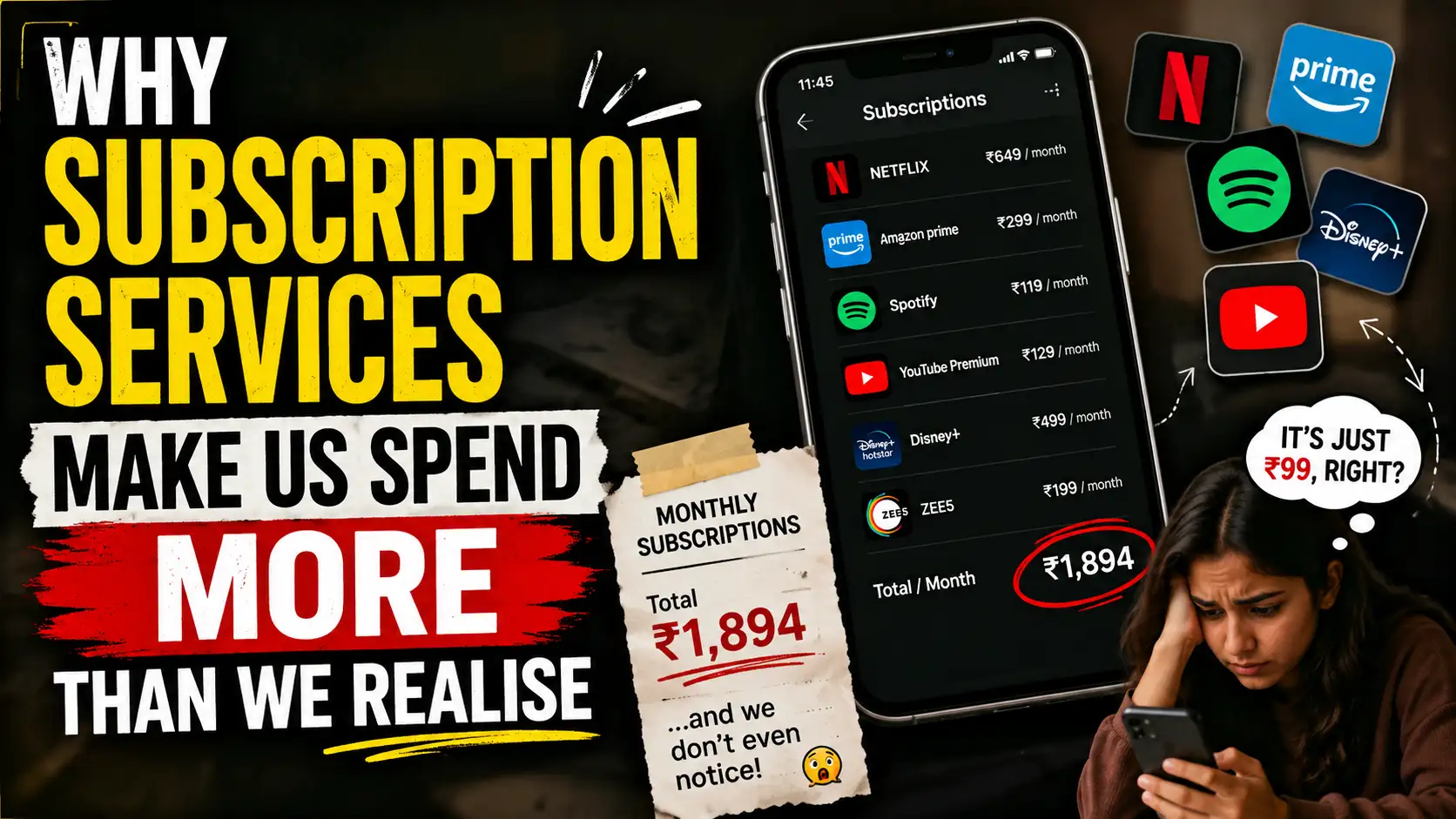
Most subscriptions do not feel expensive when we sign up for them. ₹99 does not sound like a serious financial decision. Neither does ₹149 or ₹199. We are more likely to think carefully before spending ₹2,000 on one purchase, but we rarely give the same attention to multiple smaller payments.
That is where the problem begins. A ₹199 subscription costs ₹2,388 over a year. Add another one for ₹149, another for ₹299 and perhaps a few more services that you subscribed to during a free trial. Suddenly, the amount is much bigger than it felt when you were clicking “Subscribe”. The small amount makes the spending easy to ignore.
One of the biggest reasons subscriptions are so easy to continue is automatic renewal. When you have to manually pay every month, you get a chance to ask yourself whether you actually want the service. With subscriptions, that moment often disappears. The payment happens automatically, usually through a card, UPI or another saved payment method.
You do not have to make a fresh decision. And when there is no fresh decision, there is often no fresh evaluation either. You might not have opened a streaming app in weeks, but the subscription remains active. You may have stopped using a productivity app months ago, but the payment continues because cancelling it feels like a task you can do later.
The phrase “I might need it later” is responsible for a lot of unnecessary spending. Maybe you are not watching anything on a particular streaming platform right now, but you are waiting for a new series. Maybe you are not using your gym app, but you plan to start exercising again. Maybe you do not need extra storage today, but cancelling it feels inconvenient.
So, you keep the subscription. The funny part is that “later” can continue for months.We end up paying for the possibility of using a service instead of actually using it.
Free trials feel harmless because they do not require an immediate payment. You sign up thinking you will explore the service and cancel before the trial ends. Then you forget. A busy week turns into a busy month, and suddenly the free trial has become a paid subscription. Since the payment is automatically deducted, you may not notice it immediately.
Sometimes, the amount is so small that even when you see the transaction, you do not consider it important enough to investigate.
Subscriptions are built around convenience, and that is why they work so well. You do not have to think about ordering, downloading , storing or paying for something every time. Everything is already available. But convenience can also make us less aware of how much we are spending.
A food delivery membership, a music app , multiple streaming platforms , cloud storage and premium features can all seem reasonable individually. The problem appears when they are added together. The issue is not always that subscriptions are bad. The issue is that we often keep paying for them long after they have stopped being useful.
The easiest way to understand the problem is to check your bank account and list every recurring payment. Do not look at them individually. Look at the total. Then ask yourself: If I had to subscribe to this service again today, would I?
If the answer is no, that subscription may not deserve another automatic renewal. Subscriptions can absolutely be worth the money when we use them regularly. But when payments become invisible, spending becomes easier too. And sometimes , it is not one large purchase that damages our budget. It is the collection of small payments we stopped noticing.
The Problem With “It’s Just ₹99”
Most subscriptions do not feel expensive when we sign up for them. ₹99 does not sound like a serious financial decision. Neither does ₹149 or ₹199. We are more likely to think carefully before spending ₹2,000 on one purchase, but we rarely give the same attention to multiple smaller payments.
That is where the problem begins. A ₹199 subscription costs ₹2,388 over a year. Add another one for ₹149, another for ₹299 and perhaps a few more services that you subscribed to during a free trial. Suddenly, the amount is much bigger than it felt when you were clicking “Subscribe”. The small amount makes the spending easy to ignore.
Automatic Payments Remove the Moment of Doubt
One of the biggest reasons subscriptions are so easy to continue is automatic renewal. When you have to manually pay every month, you get a chance to ask yourself whether you actually want the service. With subscriptions, that moment often disappears. The payment happens automatically, usually through a card, UPI or another saved payment method.
You do not have to make a fresh decision. And when there is no fresh decision, there is often no fresh evaluation either. You might not have opened a streaming app in weeks, but the subscription remains active. You may have stopped using a productivity app months ago, but the payment continues because cancelling it feels like a task you can do later.
You may also like
- Amitabh Bachchan Returns for KBC Season 18 with a New Thought-Provoking Theme
- Frequent Swelling in Your Feet? Experts Say It Could Signal an Underlying Health Condition
- Busy schedule? These 7 everyday conversations can keep couples emotionally close
- The hidden airplane space most passengers never see: Why flight attendants rely on the 'sin bin' during long journeys
- She retired at 53, and a week in Bali taught her she'd been doing slow travel wrong all along
We Keep Paying for things we might use
The phrase “I might need it later” is responsible for a lot of unnecessary spending. Maybe you are not watching anything on a particular streaming platform right now, but you are waiting for a new series. Maybe you are not using your gym app, but you plan to start exercising again. Maybe you do not need extra storage today, but cancelling it feels inconvenient.
So, you keep the subscription. The funny part is that “later” can continue for months.We end up paying for the possibility of using a service instead of actually using it.
Free Trials Are Easy to Forget
Free trials feel harmless because they do not require an immediate payment. You sign up thinking you will explore the service and cancel before the trial ends. Then you forget. A busy week turns into a busy month, and suddenly the free trial has become a paid subscription. Since the payment is automatically deducted, you may not notice it immediately.
Sometimes, the amount is so small that even when you see the transaction, you do not consider it important enough to investigate.
Convenience Can Become an Expensive Habit
Subscriptions are built around convenience, and that is why they work so well. You do not have to think about ordering, downloading , storing or paying for something every time. Everything is already available. But convenience can also make us less aware of how much we are spending.
A food delivery membership, a music app , multiple streaming platforms , cloud storage and premium features can all seem reasonable individually. The problem appears when they are added together. The issue is not always that subscriptions are bad. The issue is that we often keep paying for them long after they have stopped being useful.
The Best Way to Know What You Are Actually Spending
The easiest way to understand the problem is to check your bank account and list every recurring payment. Do not look at them individually. Look at the total. Then ask yourself: If I had to subscribe to this service again today, would I?
If the answer is no, that subscription may not deserve another automatic renewal. Subscriptions can absolutely be worth the money when we use them regularly. But when payments become invisible, spending becomes easier too. And sometimes , it is not one large purchase that damages our budget. It is the collection of small payments we stopped noticing.






Loving Newspoint? Download the app now
