
Is the Earth Really Round? Here's Why It Is Not a Perfect Sphere

Most of us grow up learning that the Earth is a sphere, and while that description is close enough for everyday life, it is not entirely accurate. In reality, our planet has a slightly squashed shape that differs from a perfect ball. This subtle difference is the result of billions of years of rotation, gravity and geological activity working together. Although the flattening is small enough to go unnoticed in daily life, it has a significant impact on everything from satellite navigation to climate studies and space exploration. Understanding the Earth's true shape offers a fascinating glimpse into the dynamic forces that continue to shape our world.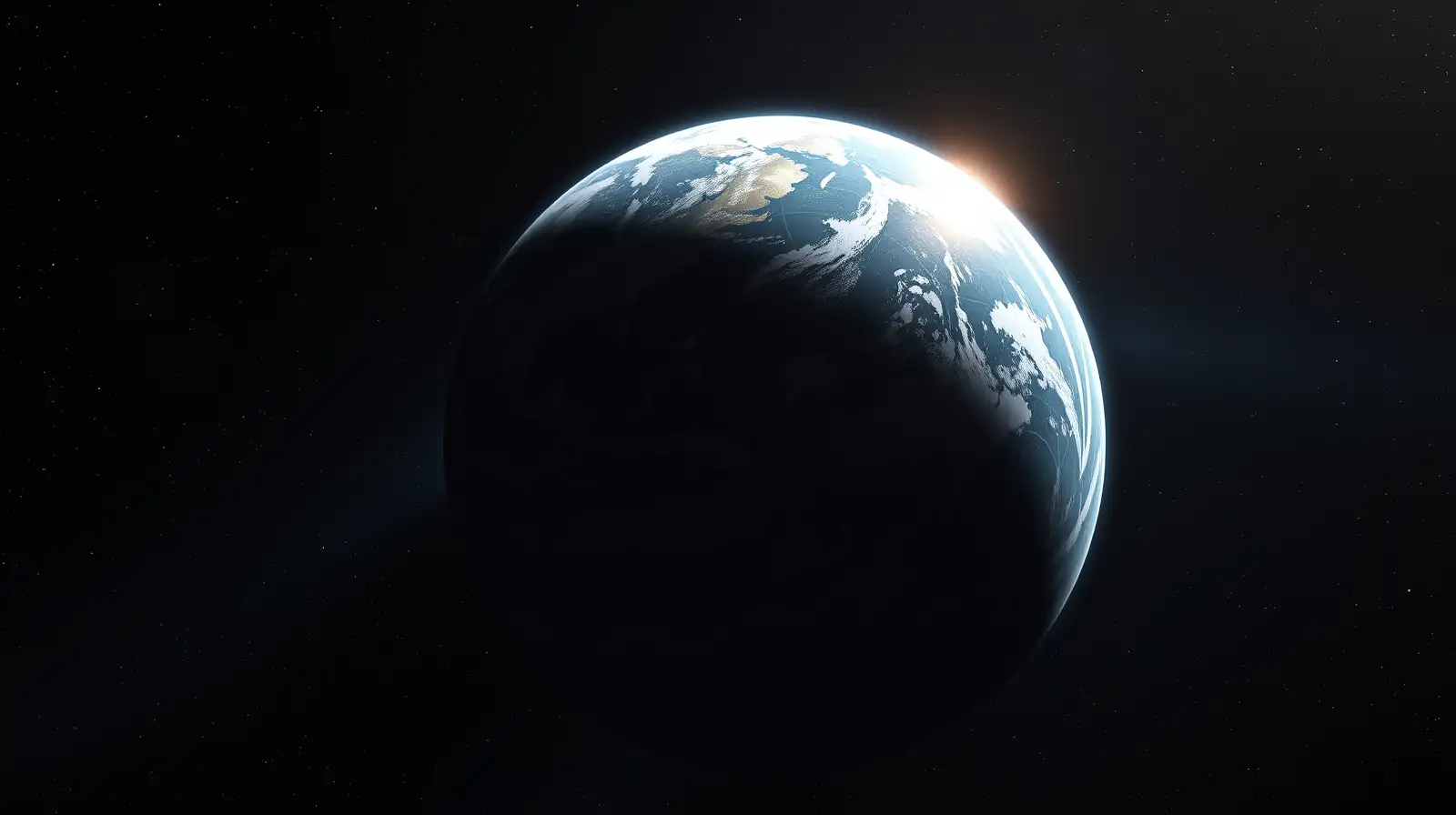
The planet's equatorial diameter is about 43 kilometres greater than its polar diameter. This means the Earth bulges slightly around the middle while appearing gently flattened at both poles.
If the Earth were reduced to the size of a standard classroom globe, this difference would barely be noticeable. However, on a planetary scale, it is an important characteristic that scientists must account for.
While gravity constantly pulls everything towards the Earth's centre, the outward force caused by rotation slightly counteracts gravity at the Equator. Over millions of years, this has caused the planet to bulge around its middle while remaining flatter near the poles.
The Earth is also not perfectly smooth. Mountains, ocean trenches and variations in the distribution of rock beneath the surface make its shape even more irregular.
Scientists often refer to the planet's actual form as the "geoid", an imaginary surface representing Earth's average sea level influenced by subtle variations in gravity.
Another interesting detail is that Earth's shape is constantly changing. Large earthquakes, melting glaciers and shifting tectonic plates can slightly alter the planet's mass distribution, producing tiny changes in its shape and gravitational field.
Modern satellites continuously monitor these variations to improve mapping, navigation and climate research.
It also plays a vital role in understanding rising sea levels, ocean circulation and climate change. Scientists rely on precise measurements of the Earth's shape to monitor environmental changes and predict future trends.
The fact that our planet is not a perfect sphere serves as a reminder that nature rarely conforms to simple textbook descriptions. Beneath its familiar appearance lies a world shaped by powerful forces that have been at work for billions of years, quietly influencing the way we live, travel and understand our place in the universe.
The Earth Is Slightly Squashed
The Earth is best described as an " oblate spheroid ", meaning it is slightly wider around the Equator than it is from the North Pole to the South Pole. The difference is modest, but measurable.The planet's equatorial diameter is about 43 kilometres greater than its polar diameter. This means the Earth bulges slightly around the middle while appearing gently flattened at both poles.
If the Earth were reduced to the size of a standard classroom globe, this difference would barely be noticeable. However, on a planetary scale, it is an important characteristic that scientists must account for.
Why the Earth Is Not a Perfect Sphere
The main reason the Earth is not perfectly spherical is its rotation. As the planet spins on its axis once every 24 hours, centrifugal force pushes material outward around the Equator.You may also like
- Expensive birthday party or a holiday with kids? This family chose the latter and explains why it became the best parenting formula
- Kids can 'drown' in sleep hours after their swimming lesson: Australian mom shares warning every parent should know
- Haaland Lookalike Julia Grop Goes Viral During FIFA World Cup
- Psychology says people who take spiritual journeys instead of only beach holidays often experience deeper and longer-lasting stress relief
- Shopping for engagement rings? Taylor Swift's one-of its-kind rare diamond should be on your wishlist
While gravity constantly pulls everything towards the Earth's centre, the outward force caused by rotation slightly counteracts gravity at the Equator. Over millions of years, this has caused the planet to bulge around its middle while remaining flatter near the poles.
The Earth is also not perfectly smooth. Mountains, ocean trenches and variations in the distribution of rock beneath the surface make its shape even more irregular.
Scientists often refer to the planet's actual form as the "geoid", an imaginary surface representing Earth's average sea level influenced by subtle variations in gravity.
Lesser-Known Facts About Earth's Shape
One surprising fact is that the highest point on Earth is not necessarily the one farthest from the planet's centre. Because of the equatorial bulge , Ecuador's Mount Chimborazo is actually farther from the Earth's centre than Mount Everest, even though Everest stands higher above sea level.Another interesting detail is that Earth's shape is constantly changing. Large earthquakes, melting glaciers and shifting tectonic plates can slightly alter the planet's mass distribution, producing tiny changes in its shape and gravitational field.
Modern satellites continuously monitor these variations to improve mapping, navigation and climate research.
Why Earth's Shape Matters Today
Knowing that the Earth is not a perfect sphere is far more than a scientific curiosity. Accurate knowledge of the planet's shape is essential for GPS systems, aircraft navigation, telecommunications and satellite operations. Even small errors could lead to inaccurate positioning and mapping.It also plays a vital role in understanding rising sea levels, ocean circulation and climate change. Scientists rely on precise measurements of the Earth's shape to monitor environmental changes and predict future trends.
The fact that our planet is not a perfect sphere serves as a reminder that nature rarely conforms to simple textbook descriptions. Beneath its familiar appearance lies a world shaped by powerful forces that have been at work for billions of years, quietly influencing the way we live, travel and understand our place in the universe.






Loving Newspoint? Download the app now
