
Is the Earth Really Round? Here's Why It Is Not a Perfect Sphere

Most of us grow up learning that the Earth is a sphere, and while that description is close enough for everyday life, it is not entirely accurate. In reality, our planet has a slightly squashed shape that differs from a perfect ball. This subtle difference is the result of billions of years of rotation, gravity and geological activity working together. Although the flattening is small enough to go unnoticed in daily life, it has a significant impact on everything from satellite navigation to climate studies and space exploration. Understanding the Earth's true shape offers a fascinating glimpse into the dynamic forces that continue to shape our world.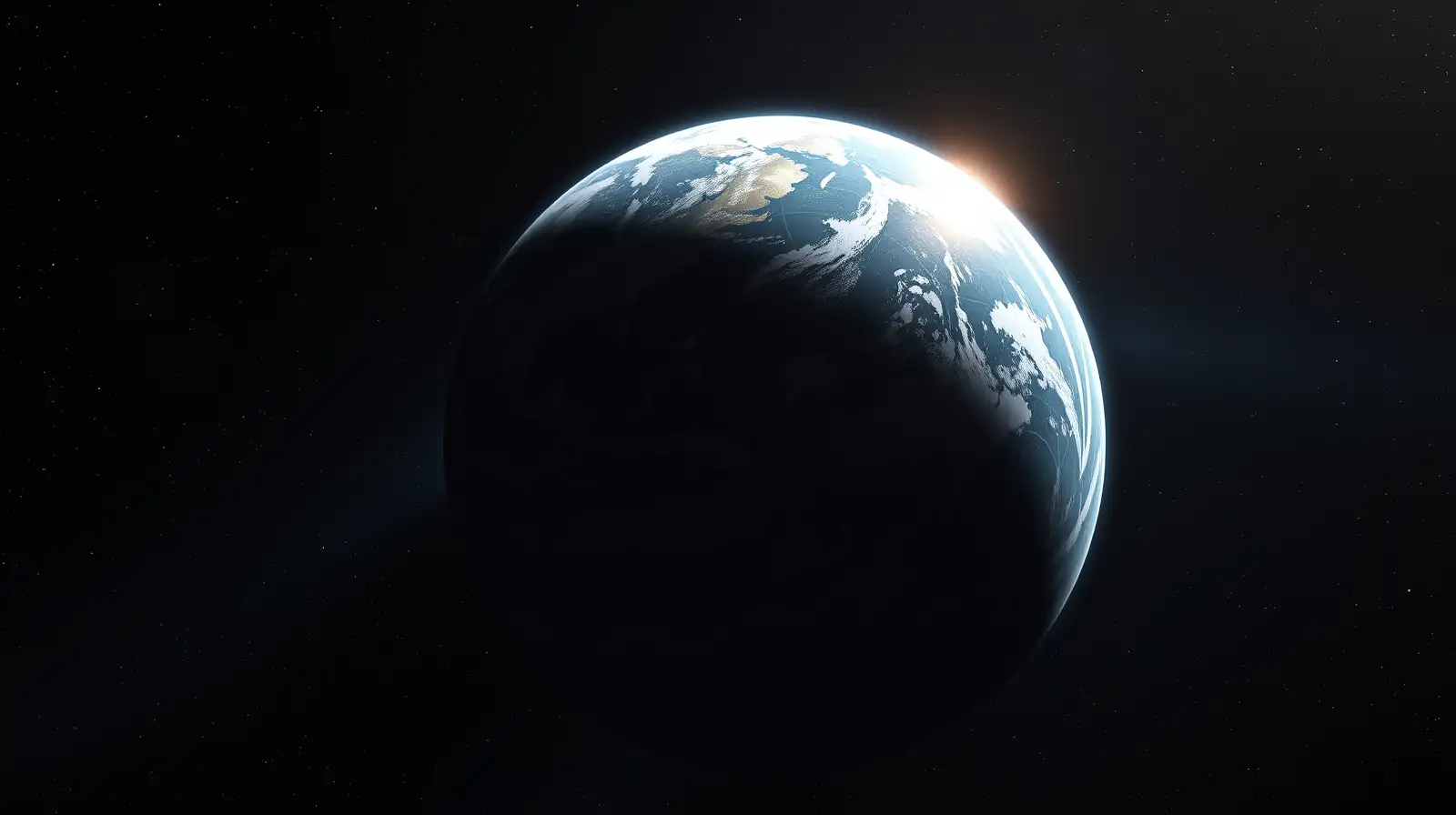
The planet's equatorial diameter is about 43 kilometres greater than its polar diameter. This means the Earth bulges slightly around the middle while appearing gently flattened at both poles.
If the Earth were reduced to the size of a standard classroom globe, this difference would barely be noticeable. However, on a planetary scale, it is an important characteristic that scientists must account for.
The Earth Is Slightly Squashed
The Earth is best described as an " oblate spheroid ", meaning it is slightly wider around the Equator than it is from the North Pole to the South Pole. The difference is modest, but measurable.The planet's equatorial diameter is about 43 kilometres greater than its polar diameter. This means the Earth bulges slightly around the middle while appearing gently flattened at both poles.
If the Earth were reduced to the size of a standard classroom globe, this difference would barely be noticeable. However, on a planetary scale, it is an important characteristic that scientists must account for.
Why the Earth Is Not a Perfect Sphere
The main reason the Earth is not perfectly spherical is its rotation. As the planet spins on its axis once every 24 hours, centrifugal force pushes material outward around the Equator.Next Story