
Stress Eating Explained: Why We Crave Crunchy Foods During Anxiety

When a difficult deadline looms or a frustrating day leaves us feeling overwhelmed, many of us reach straight for a bag of crisps, salted nuts, or crunchy carrots. Soft foods like ice cream or warm soup might feel soothing, but during periods of high tension, it is often the loudest and hardest snacks that draw us in. Opening a fresh packet of crackers and munching away provides an odd sense of satisfaction that soft snacks simply cannot match. This sudden urge is far from random. There are genuine biological and psychological reasons why we crave crunchy foods when we are stressed out.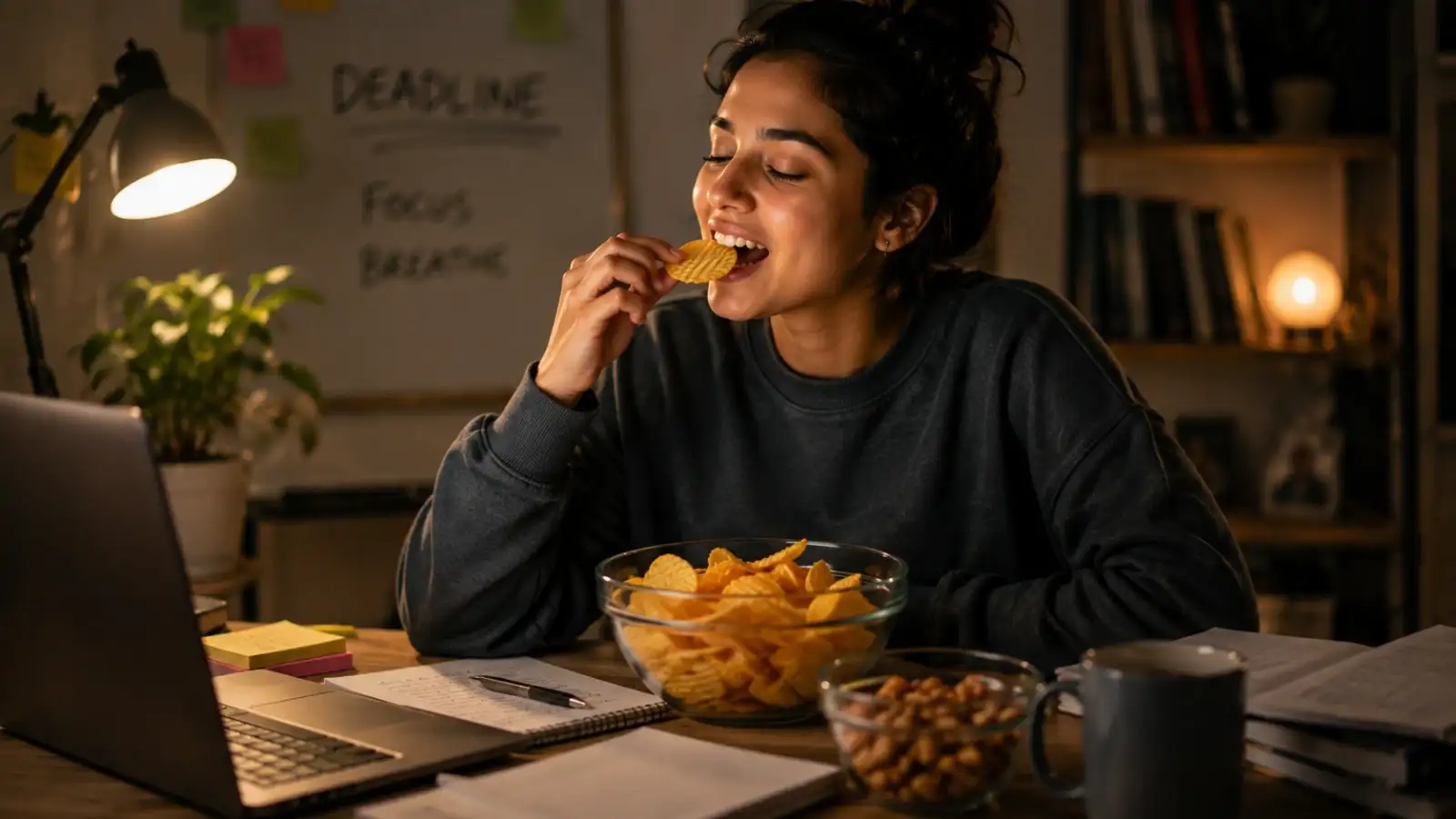
When you grind your teeth or clench your jaw during a demanding day, that built up physical strain needs an outlet. Chewing on firm, resistant heavy items forces those tight jaw muscles to work through their tension. The sharp act of biting down provides a physical release, similar to squeezing a stress ball or punching a pillow. The vigorous movement helps break down the physical stiffness in your face and head, offering immediate bodily relief.
Human focus is naturally limited. When your ears process the loud crunching noise of your snack, your brain temporarily redirects its attention away from internal worries and racing thoughts. The rhythmic sound creates a grounding effect that pulls you back into the present moment. That audible feedback gives your mind a short pause from overthinking, acting as a noisy shield against external pressure and chaotic thoughts.
When you engage in the energetic action of eating crisp snacks, your brain releases small doses of dopamine. This chemical boosts your mood and creates a brief feeling of comfort. Unlike soft porridge or smooth yoghurt, which can be swallowed quickly without much effort, hard foods require complete physical engagement. This active texture keeps your mouth busy and satisfied, helping you regain a sense of control when everything around you feels chaotic.
Muscle Tension and Jaw Movement as Stress Relief
When stress hits, the human body naturally triggers a fight or flight response. This ancient survival mechanism releases hormones like cortisol and adrenaline, causing our muscles to contract and tighten. One of the main places where we store this physical tension is in the jaw muscle, known as the masseter.When you grind your teeth or clench your jaw during a demanding day, that built up physical strain needs an outlet. Chewing on firm, resistant heavy items forces those tight jaw muscles to work through their tension. The sharp act of biting down provides a physical release, similar to squeezing a stress ball or punching a pillow. The vigorous movement helps break down the physical stiffness in your face and head, offering immediate bodily relief.
Auditory Feedback and Sensory Distraction
The loud sound that echoes inside your head when you bite into a crisp or pretzel plays a massive role in changing your emotional state. This acoustic feedback acts as a powerful sensory distraction from whatever is causing you anxiety.Human focus is naturally limited. When your ears process the loud crunching noise of your snack, your brain temporarily redirects its attention away from internal worries and racing thoughts. The rhythmic sound creates a grounding effect that pulls you back into the present moment. That audible feedback gives your mind a short pause from overthinking, acting as a noisy shield against external pressure and chaotic thoughts.
Brain Stimulation and the Power of Texture
Texture significantly impacts how our brain processes reward and pleasure. Hard, crispy textures demand active chewing, which stimulates blood flow to the brain and triggers the release of feel good chemicals.When you engage in the energetic action of eating crisp snacks, your brain releases small doses of dopamine. This chemical boosts your mood and creates a brief feeling of comfort. Unlike soft porridge or smooth yoghurt, which can be swallowed quickly without much effort, hard foods require complete physical engagement. This active texture keeps your mouth busy and satisfied, helping you regain a sense of control when everything around you feels chaotic.
Next Story