
Why We Feel Guilty When We’re Not Productive

There is a very specific kind of guilt that appears on a free afternoon. You wake up with no deadlines, no classes, and no meetings, and for a few hours, it feels wonderful. Then slowly, the thoughts begin. "I should probably do something productive." "I wasted the entire day." "Everyone else is doing something with their lives." Suddenly, a day that was supposed to help you recharge turns into another reason to feel bad about yourself. For many people, being unproductive isn't relaxing anymore; it's uncomfortable. And that feeling didn't come from nowhere.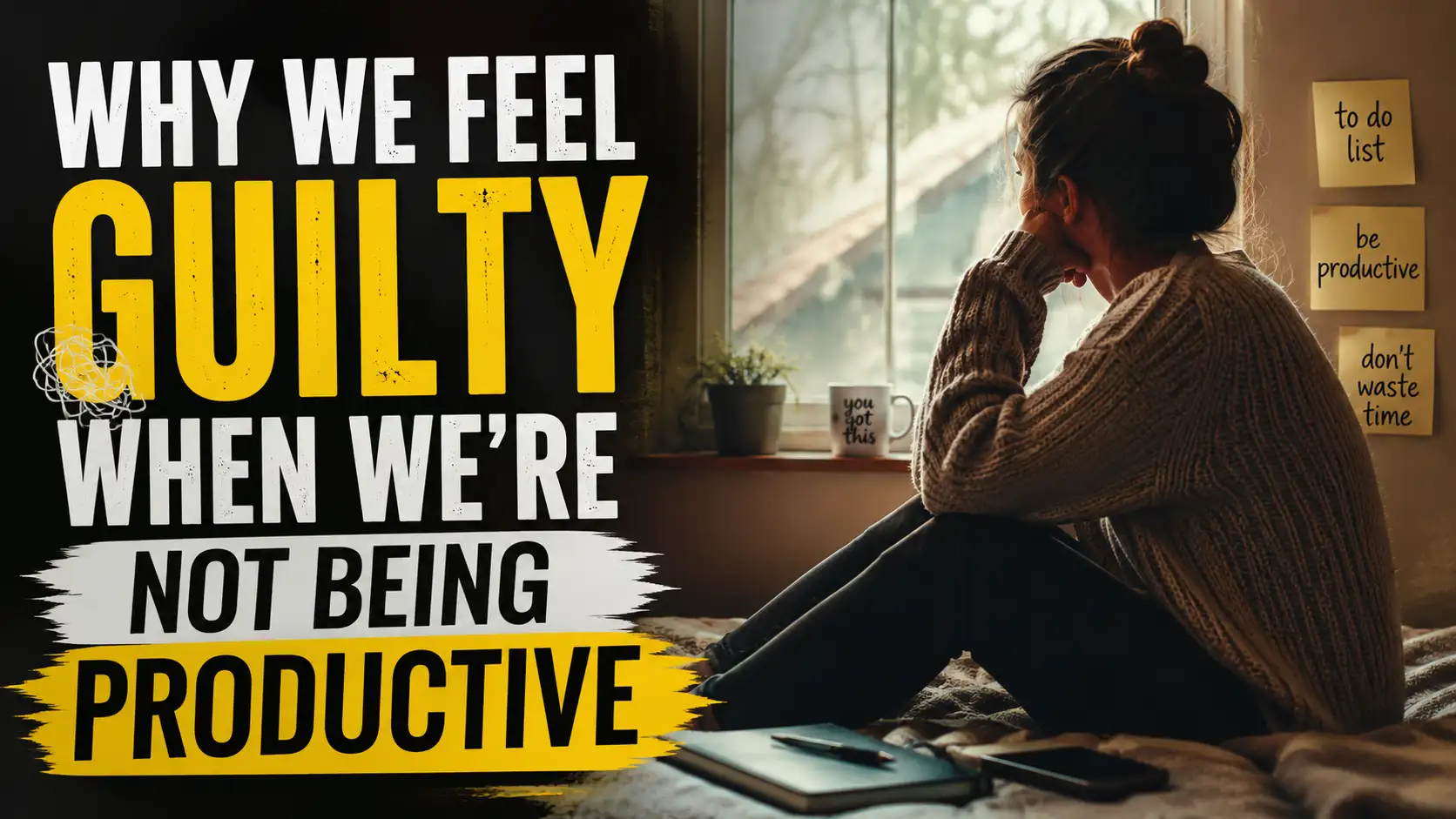
Somewhere along the way, productivity stopped being just something we do. It became proof that we're responsible, ambitious, and successful. That's why a day spent doing nothing can feel strangely uncomfortable. It isn't because rest is wrong. It's because many of us have been taught to associate rest with falling behind.
Even when we know social media only shows selected moments, it still affects us. The result is that rest no longer feels like rest. It feels like a comparison exercise. Instead of enjoying our free time, we spend it wondering whether we're using it correctly.
The Problem With "Productive Rest"
Many people don't even allow themselves to rest normally nowadays. If they're watching a movie, they feel they should be learning something. If they're taking a walk, they should listen to a podcast. If they're pursuing a hobby, perhaps they should monetize it. Everything needs to have a purpose, an outcome, or a measurable benefit.
But not every moment of our lives has to be optimized. Sometimes a walk can simply be a walk. A hobby can remain a hobby. An afternoon nap doesn't need to improve your performance or increase your productivity. It can simply make you feel better.
We treat ourselves like machines.
One of the strangest things about modern life is that we expect ourselves to function continuously. We understand that phones need charging. We understand that athletes need recovery days. We understand that machines break down when they're overused.
Yet when it comes to ourselves, we often believe we should be able to keep going indefinitely. When we become tired, we don't think, "I need rest." We think, "I need to work harder." With time this creates a cycle where exhaustion becomes normal and rest begins to feel undeserved.
Maybe Rest Doesn't Need to Be Earned
The reason we feel guilty when we're not productive is because we've convinced ourselves that our value depends on what we deliver. But our lives are made up of more than deadlines, achievements, and completed tasks. We are allowed to spend an afternoon doing absolutely nothing. We are allowed to have hobbies that don't make money. We are allowed to rest before we reach our breaking point.
The truth is, most of us wouldn't judge a friend for taking a day off. We would tell them to relax and take care of themselves. Maybe the difficult part isn't learning how to be productive. Maybe it's learning that we deserve to rest, even when we haven't earned it.
We Grew Up Believing That Being Busy Is a Good Thing
Most of us didn't intentionally decide that our worth depends on how much we achieve. We learned it gradually. As children, we were praised for good grades, extracurricular activities, achievements, and staying busy. As adults, the expectations simply changed shape. Now it's internships, promotions, certifications, side hustles, networking, fitness goals, and self-improvement routines.Somewhere along the way, productivity stopped being just something we do. It became proof that we're responsible, ambitious, and successful. That's why a day spent doing nothing can feel strangely uncomfortable. It isn't because rest is wrong. It's because many of us have been taught to associate rest with falling behind.
Social Media Made Rest Feel Like Laziness
There was a time when people rested without worrying about what others must be doing. Now, while lying in bed on a Sunday afternoon, you can open your phone and see someone launching a business, someone else traveling abroad, another person waking up at 5 a.m. to work out, and someone posting about their latest achievement.Even when we know social media only shows selected moments, it still affects us. The result is that rest no longer feels like rest. It feels like a comparison exercise. Instead of enjoying our free time, we spend it wondering whether we're using it correctly.
You may also like
- “My father saved a year's salary to send me to America”: Sundar Pichai on the cost of success and a what it takes for parents who send their child abroad
- Essential Brain Foods for Children's Growth and Development
- Essential Dietary Tips for Children During Monsoon Season
- 20 Essential Parenting Insights for Modern Parents
- Essential Tips for Storing Lentils During the Rainy Season
The Problem With "Productive Rest"
Many people don't even allow themselves to rest normally nowadays. If they're watching a movie, they feel they should be learning something. If they're taking a walk, they should listen to a podcast. If they're pursuing a hobby, perhaps they should monetize it. Everything needs to have a purpose, an outcome, or a measurable benefit. But not every moment of our lives has to be optimized. Sometimes a walk can simply be a walk. A hobby can remain a hobby. An afternoon nap doesn't need to improve your performance or increase your productivity. It can simply make you feel better.
We treat ourselves like machines.
One of the strangest things about modern life is that we expect ourselves to function continuously. We understand that phones need charging. We understand that athletes need recovery days. We understand that machines break down when they're overused. Yet when it comes to ourselves, we often believe we should be able to keep going indefinitely. When we become tired, we don't think, "I need rest." We think, "I need to work harder." With time this creates a cycle where exhaustion becomes normal and rest begins to feel undeserved.
Maybe Rest Doesn't Need to Be Earned
The reason we feel guilty when we're not productive is because we've convinced ourselves that our value depends on what we deliver. But our lives are made up of more than deadlines, achievements, and completed tasks. We are allowed to spend an afternoon doing absolutely nothing. We are allowed to have hobbies that don't make money. We are allowed to rest before we reach our breaking point. The truth is, most of us wouldn't judge a friend for taking a day off. We would tell them to relax and take care of themselves. Maybe the difficult part isn't learning how to be productive. Maybe it's learning that we deserve to rest, even when we haven't earned it.






Loving Newspoint? Download the app now
