
Why Do We Feel Sleepier While Travelling in a Moving Train?

You settle into your train seat, watch the scenery pass outside and promise yourself you will stay awake for the journey. A little later, your eyes begin to close. The steady sound of the wheels, the gentle movement of the carriage and the passing landscape somehow make sleep feel irresistible.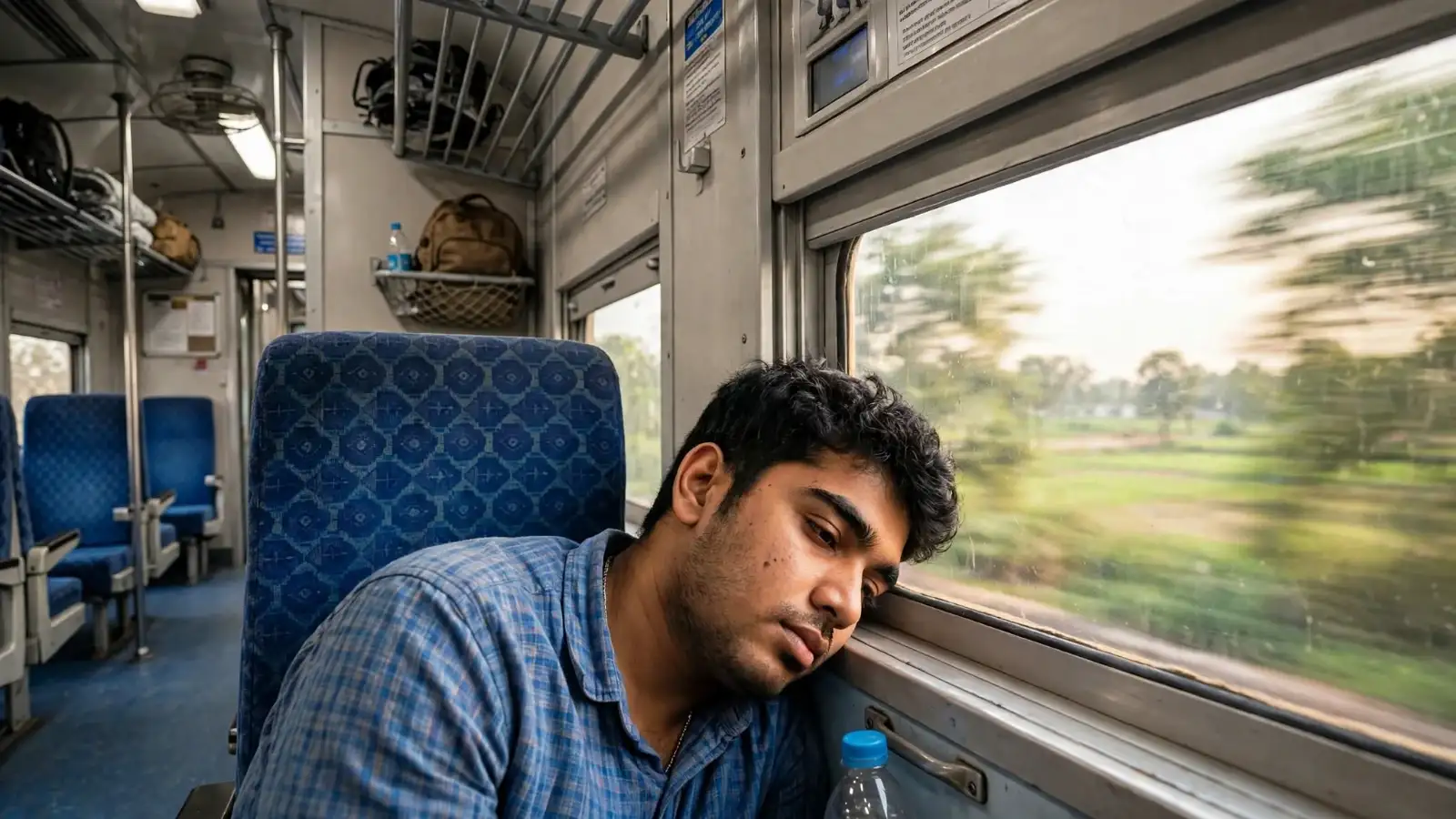
This experience is common enough to seem almost automatic, but there is no single reason everyone feels sleepy on a moving train. A combination of rhythmic motion, repetitive sound, reduced activity and ordinary tiredness can make it easier to drift off.
The train itself may not be putting you to sleep directly. Instead, the environment can make it easier for sleepiness that is already present to take over.
Research into rhythmic rocking suggests that gentle, repeated movement can influence sleep in some settings. However, this does not mean every train's motion has the same effect or that a specific vibration automatically causes sleep.
For a passenger sitting comfortably, the movement may simply be soothing. There is little need to balance, walk or make constant decisions, so the body can remain relatively inactive for long stretches.
That combination of repetitive sensation and physical stillness may help some travellers relax enough to fall asleep.
For some people, predictable background noise makes it easier to ignore sudden distractions. The sound of a train may also become familiar through repeated journeys, making it less noticeable over time.
However, noise does not always promote sleep. Loud announcements, screeching brakes, crowded compartments and conversations can interrupt rest. Whether train sounds feel soothing depends on the individual, the carriage and the journey.
Sleepiness is also affected by your body's internal clock. If you board a train early in the morning, late at night or during a period when you normally feel sleepy, you may find it harder to stay awake.
There is another factor: train travel often removes the pressure to remain actively engaged. Unlike driving, you do not need to control the vehicle or constantly monitor the road. Once you have checked your stop and settled in, your attention can wander.
If you want to rest, keep valuables secure and set an alarm before your stop. If you are driving after the journey, remember that a short nap may not fully overcome sleep deprivation.
Ultimately, feeling sleepy on a moving train is not mysterious. The journey offers a repetitive sensory environment with relatively little physical activity, while ordinary travel fatigue can do the rest. Sometimes, the most relaxing part of travelling is the moment you stop trying to stay entertained and simply let the journey pass.
This experience is common enough to seem almost automatic, but there is no single reason everyone feels sleepy on a moving train. A combination of rhythmic motion, repetitive sound, reduced activity and ordinary tiredness can make it easier to drift off.
The train itself may not be putting you to sleep directly. Instead, the environment can make it easier for sleepiness that is already present to take over.
Can Rhythmic Movement Make You Drowsy?
A moving train creates repeated sensations as it travels along the tracks. Depending on the carriage and the condition of the railway, passengers may notice gentle swaying, vibrations and regular changes in movement.Research into rhythmic rocking suggests that gentle, repeated movement can influence sleep in some settings. However, this does not mean every train's motion has the same effect or that a specific vibration automatically causes sleep.
For a passenger sitting comfortably, the movement may simply be soothing. There is little need to balance, walk or make constant decisions, so the body can remain relatively inactive for long stretches.
That combination of repetitive sensation and physical stillness may help some travellers relax enough to fall asleep.
The Sound of the Tracks Creates a Familiar Background
Train journeys often involve a continuous mixture of wheel noise, ventilation, distant conversations and announcements. Although the sounds vary, they can become a fairly steady background once you have settled into your seat.For some people, predictable background noise makes it easier to ignore sudden distractions. The sound of a train may also become familiar through repeated journeys, making it less noticeable over time.
However, noise does not always promote sleep. Loud announcements, screeching brakes, crowded compartments and conversations can interrupt rest. Whether train sounds feel soothing depends on the individual, the carriage and the journey.
Travel Fatigue Can Play a Bigger Role Than You Think
A long journey often begins with an early alarm, hurried packing, a trip to the station and the effort of navigating crowds. Even if you have spent most of the day sitting, the overall experience can leave you tired.Sleepiness is also affected by your body's internal clock. If you board a train early in the morning, late at night or during a period when you normally feel sleepy, you may find it harder to stay awake.
There is another factor: train travel often removes the pressure to remain actively engaged. Unlike driving, you do not need to control the vehicle or constantly monitor the road. Once you have checked your stop and settled in, your attention can wander.
Why the Train Nap Feels So Natural
A combination of movement, background noise, physical stillness and existing tiredness can make a train journey feel like an ideal opportunity for a nap. The effect differs from person to person, and some passengers find travelling uncomfortable rather than relaxing.If you want to rest, keep valuables secure and set an alarm before your stop. If you are driving after the journey, remember that a short nap may not fully overcome sleep deprivation.
Ultimately, feeling sleepy on a moving train is not mysterious. The journey offers a repetitive sensory environment with relatively little physical activity, while ordinary travel fatigue can do the rest. Sometimes, the most relaxing part of travelling is the moment you stop trying to stay entertained and simply let the journey pass.
Next Story