
<b>Why You Sometimes Wake Up Seconds Before Your Alarm</b>

You open your eyes, glance at the clock and discover that your alarm is due to ring in just 30 seconds. It can feel almost supernatural, as though your body has an internal alarm clock. In reality, human sleep is influenced by powerful timing systems that help regulate when we feel sleepy and when we become alert. Some people can also develop a capacity for what researchers call self-awakening , in which they wake at a planned time without an external alarm. The science is intriguing, although it does not mean everyone can consciously predict the exact second an alarm will sound.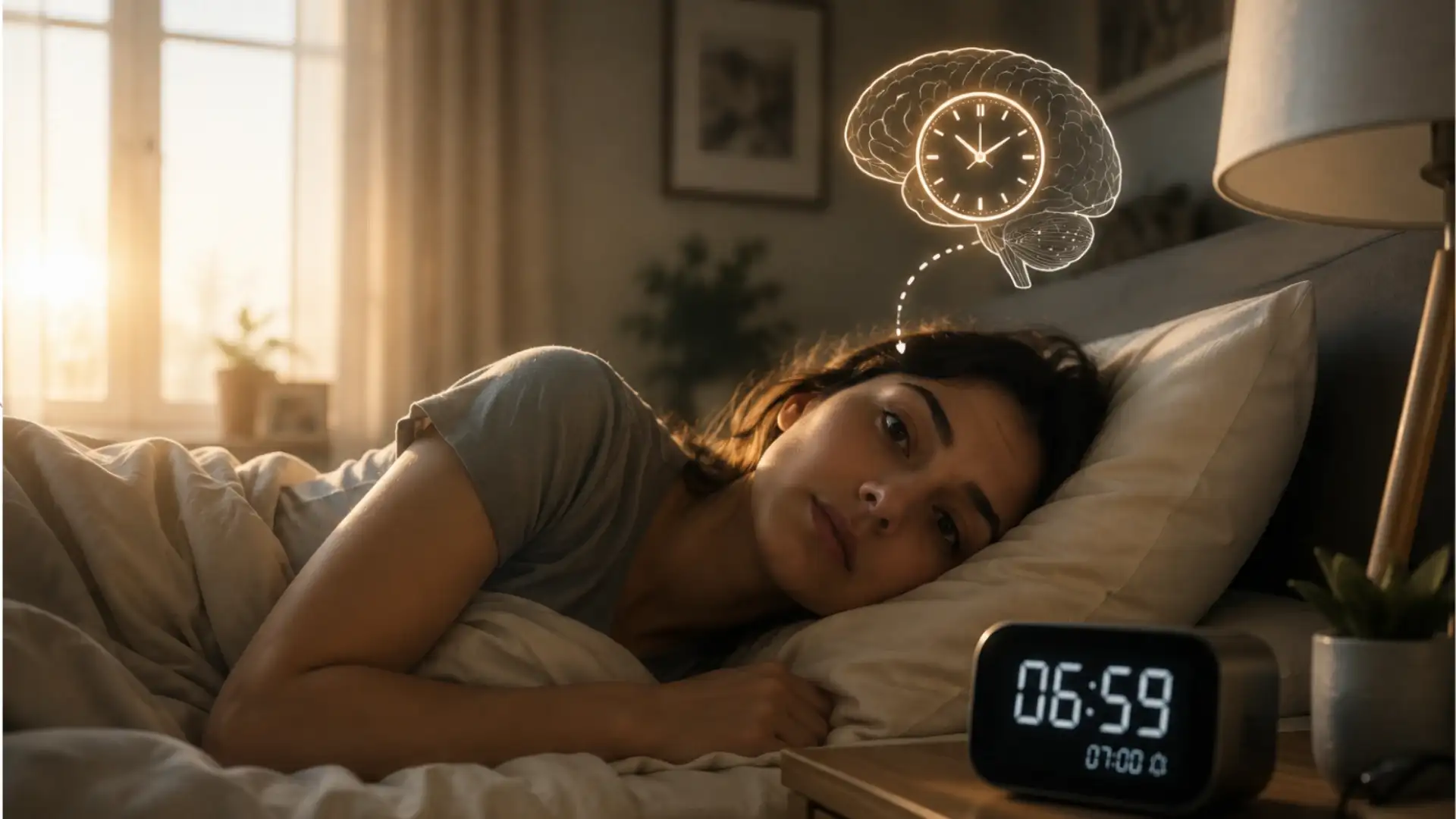
When you follow a regular routine, your brain receives repeated timing cues. Going to bed and waking at roughly the same time gives the body an increasingly predictable schedule.
That predictability may help explain why some people naturally wake shortly before their alarm.
Other research found differences in sleep inertia between self-awakening and forced awakening, suggesting that the way we wake can influence how we feel immediately afterwards.
Hormonal rhythms also change around awakening, although research continues to examine exactly how these processes interact with self-awakening.
So if you wake at 6:59 and your alarm is set for 7:00, there is no need to assume your body has developed a supernatural ability.
It may simply be showing you how powerful a well-established biological rhythm can be.
Your Body Has an Internal Clock
The circadian system coordinates daily rhythms in sleep, alertness, hormones and body temperature.When you follow a regular routine, your brain receives repeated timing cues. Going to bed and waking at roughly the same time gives the body an increasingly predictable schedule.
That predictability may help explain why some people naturally wake shortly before their alarm.
Self-Awakening Has Been Studied
Research has specifically examined self-awakening. In one study, participants were instructed to wake themselves at their usual time without an alarm. By the end of the experiment, the participants had an 82 per cent success rate on the seventh day.Other research found differences in sleep inertia between self-awakening and forced awakening, suggesting that the way we wake can influence how we feel immediately afterwards.
Stress and Routine Matter
Waking naturally before an alarm is more likely to be noticed when your sleep schedule is consistent. If you regularly wake at 7am, the brain and body receive repeated cues around that time.Hormonal rhythms also change around awakening, although research continues to examine exactly how these processes interact with self-awakening.
Why It Feels So Impressive
The remarkable part is not that the brain can keep time perfectly. It is that a biological system evolved without clocks can develop such reliable timing from repeated daily routines.So if you wake at 6:59 and your alarm is set for 7:00, there is no need to assume your body has developed a supernatural ability.
It may simply be showing you how powerful a well-established biological rhythm can be.
Next Story