
Why Your Attention Span Feels Worse Than Ever and What You Can Do About It

Ever found yourself picking up your phone to check one message, only to realise you've spent 20 minutes scrolling through videos you never intended to watch? You're not alone. Many people today feel like they can't concentrate on a book, finish a film without checking their phone, or stay focused on a single task for more than a few minutes. While it may seem like our attention spans are disappearing, experts say the issue is far more complex than simply blaming smartphones. Our daily habits, digital environment and even modern work culture are quietly reshaping the way our brains process information.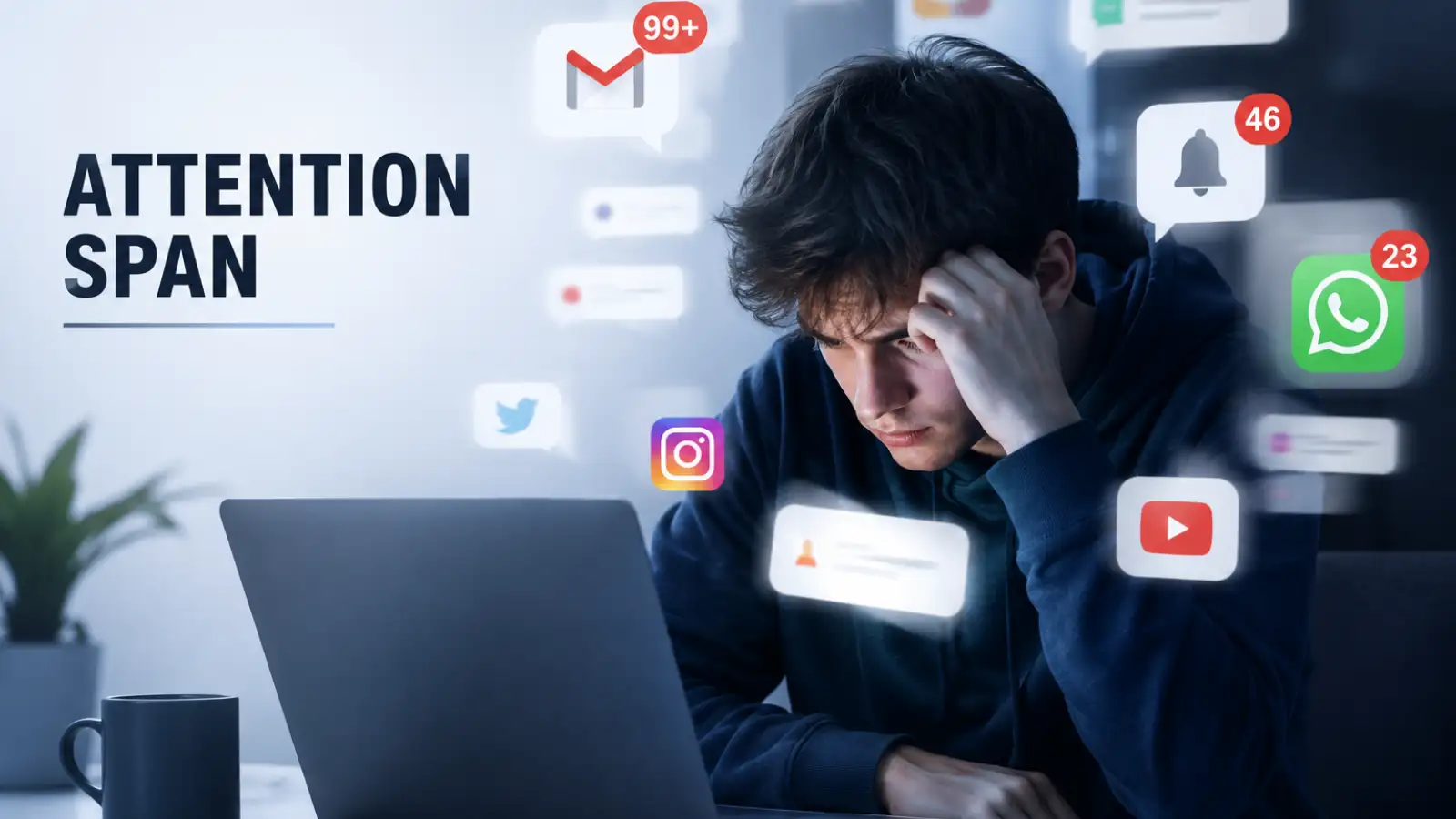
Researchers have found that every interruption forces the brain to switch tasks, making it harder to return to the original activity. This constant "task switching" doesn't just waste time but also increases mental fatigue.
Short-form content has amplified this effect. Platforms built around quick, engaging videos encourage rapid consumption, training the brain to expect new stimulation every few seconds rather than sustained focus.
If something feels rewarding, emotionally engaging or personally relevant, people can still remain focused for hours. Think about binge-watching an entire TV series or spending an evening immersed in a favourite hobby.
The challenge isn't an inability to concentrate. It's an environment filled with constant distractions.
At the same time, poor sleep, chronic stress and information overload reduce the brain's ability to maintain deep concentration.
Psychologists describe this as "attention residue", where part of your mind remains stuck on the previous task even after you've moved on to the next one.
Simple habits such as silencing non-essential notifications, scheduling dedicated focus sessions, keeping the phone out of reach while working and taking regular screen breaks can significantly improve concentration.
Many productivity experts also recommend reading physical books, spending time outdoors and practising mindfulness to rebuild sustained attention.
The feeling that your attention span is getting worse isn't just in your head. Modern technology and fast-paced lifestyles are constantly competing for one of your most valuable resources: your attention. The good news is that focus is a skill, not a fixed trait. By making small, intentional changes to how you interact with technology, you can gradually retrain your brain to concentrate for longer. In an age where distractions are everywhere, the ability to focus may become one of the most valuable skills you can develop.
Why Your Brain Feels Constantly Distracted
Our brains were never designed to process the endless stream of information available today. Emails, instant messages, breaking news alerts, social media notifications and short-form videos all compete for our attention every minute of the day.Researchers have found that every interruption forces the brain to switch tasks, making it harder to return to the original activity. This constant "task switching" doesn't just waste time but also increases mental fatigue.
Short-form content has amplified this effect. Platforms built around quick, engaging videos encourage rapid consumption, training the brain to expect new stimulation every few seconds rather than sustained focus.
The Myth That Attention Spans Are Simply Shrinking
Contrary to popular belief, scientists argue that humans haven't necessarily developed shorter attention spans. Instead, we've become more selective about what deserves our attention.You may also like
- Train News: Several trains are affected from today until August 7; check which routes have changed and view the full list.
- Ex-Agniveer Reservation: 50% quota in new recruitments; know the eligibility, age limit, salary, and job opportunities.
- Boss Warning Signs: If your boss shows these signs, your job could be at risk. Here's what you should never say to your senior.
- What happens when you eat garlic and honey on an empty stomach? An Ayurvedic doctor explains the benefits..
- This Karnataka boy grew up in a village without the internet; today, his space-tech startup works with NASA: What Pixxel CEO Awais Ahmed's parents invested in
If something feels rewarding, emotionally engaging or personally relevant, people can still remain focused for hours. Think about binge-watching an entire TV series or spending an evening immersed in a favourite hobby.
The challenge isn't an inability to concentrate. It's an environment filled with constant distractions.
Modern Life Is Making Focus Harder
Remote work, hybrid offices and digital communication have blurred the boundaries between work and personal life. Many professionals switch between emails, meetings, messaging apps and multiple browser tabs throughout the day.At the same time, poor sleep, chronic stress and information overload reduce the brain's ability to maintain deep concentration.
Psychologists describe this as "attention residue", where part of your mind remains stuck on the previous task even after you've moved on to the next one.
Small Changes Can Make a Big Difference
Improving focus doesn't require giving up technology altogether.Simple habits such as silencing non-essential notifications, scheduling dedicated focus sessions, keeping the phone out of reach while working and taking regular screen breaks can significantly improve concentration.
Many productivity experts also recommend reading physical books, spending time outdoors and practising mindfulness to rebuild sustained attention.
The feeling that your attention span is getting worse isn't just in your head. Modern technology and fast-paced lifestyles are constantly competing for one of your most valuable resources: your attention. The good news is that focus is a skill, not a fixed trait. By making small, intentional changes to how you interact with technology, you can gradually retrain your brain to concentrate for longer. In an age where distractions are everywhere, the ability to focus may become one of the most valuable skills you can develop.






Loving Newspoint? Download the app now
