
<b>Why Your Brain Makes You Feel Like You've Fallen While Sleeping</b>

You are comfortably lying in bed when, just as sleep begins to take over, you suddenly feel as if you are falling. Your body may jerk, your heart may race and you can wake up in an instant. It can feel as though you have dropped from a great height, even though you have not moved at all. This odd experience is often connected with a hypnic jerk , also known as a sleep start . These brief involuntary movements are common during the transition from wakefulness to sleep. Researchers believe several systems are changing state at the same time, and the brain can sometimes interpret the resulting sensations as a fall.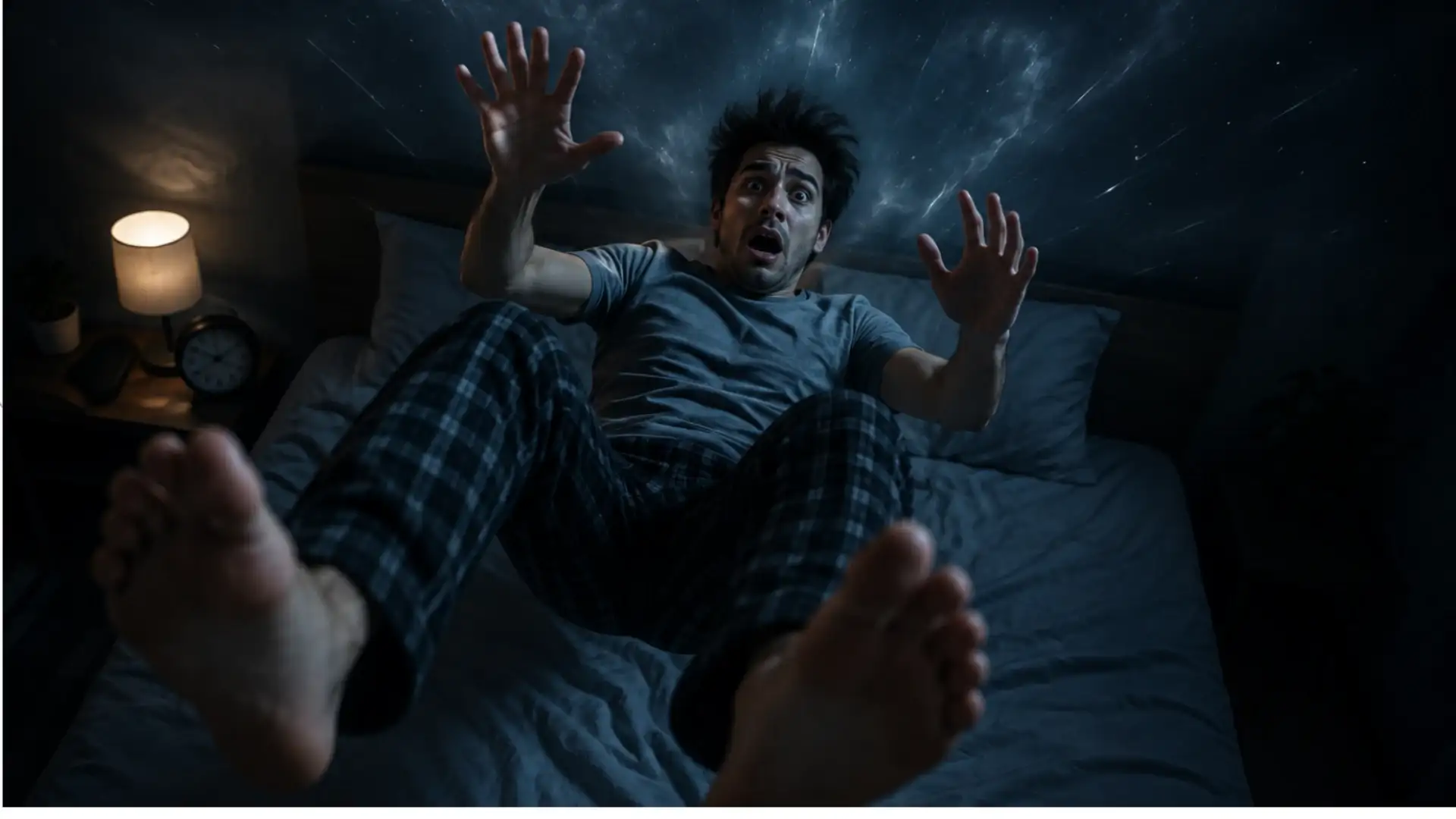
During this transition, brief involuntary muscle contractions can occur. Hypnic jerks are recognised as physiological events associated with the sleep-wake transition and can occur in otherwise healthy people.
The exact mechanism behind the falling sensation is not completely settled, which is important because popular explanations sometimes present theories as established facts.
What researchers do know is that hypnic jerks can be accompanied by a sudden feeling of falling, alarm or an internal shock-like sensation.
That may explain why the sensation sometimes appears repeatedly during particularly stressful periods.
The fascinating part is that the experience demonstrates how quickly the brain can transform a tiny physical event into a complete sensation of movement.
You may be lying perfectly still, but for a fraction of a second, your brain can make you feel as though you have fallen through space.
The Strange Transition Into Sleep
Falling asleep is not an instant switch. The brain and body gradually move from wakefulness towards sleep, with changes in muscle activity, sensory processing and brain activity.During this transition, brief involuntary muscle contractions can occur. Hypnic jerks are recognised as physiological events associated with the sleep-wake transition and can occur in otherwise healthy people.
Why It Can Feel Like Falling
One theory is that the sudden muscle contraction and changing body sensations are interpreted by the brain as movement. The feeling can then become incorporated into a brief dream-like or hypnagogic experience.The exact mechanism behind the falling sensation is not completely settled, which is important because popular explanations sometimes present theories as established facts.
You may also like
- Do not be bored with a black and white kitchen; here are 5 elements that can add more life and color to your favourite place
- She lived with her father in jail, until an IAS officer asked her one question that changed her life: What Khushi's story teaches us about giving children opportunities
- ICTS professor Deepak Dhar awarded prestigious 2026 Dirac Medal
- Celebrate Independence Day with Delicious Tiranga Pulao
- Healthy Eating Tips for Hariyali Teej Celebrations
What researchers do know is that hypnic jerks can be accompanied by a sudden feeling of falling, alarm or an internal shock-like sensation.
Stress Can Make It More Noticeable
Fatigue, stress, sleep deprivation and stimulants such as caffeine have been associated with more frequent or intense hypnic jerks.That may explain why the sensation sometimes appears repeatedly during particularly stressful periods.
Should You Be Worried?
For most people, occasional sleep starts are harmless. They become more important when they are unusually frequent, severely disrupt sleep or occur alongside other concerning symptoms.The fascinating part is that the experience demonstrates how quickly the brain can transform a tiny physical event into a complete sensation of movement.
You may be lying perfectly still, but for a fraction of a second, your brain can make you feel as though you have fallen through space.






Loving Newspoint? Download the app now
