
How Do Dogs Know Their Owners Are About to Come Home?

Have you ever arrived home to find your dog already waiting near the door, tail wagging as though they knew you were on your way? For many dog owners, this can feel almost mysterious. Your dog may appear to know that you are coming home several minutes before you actually arrive.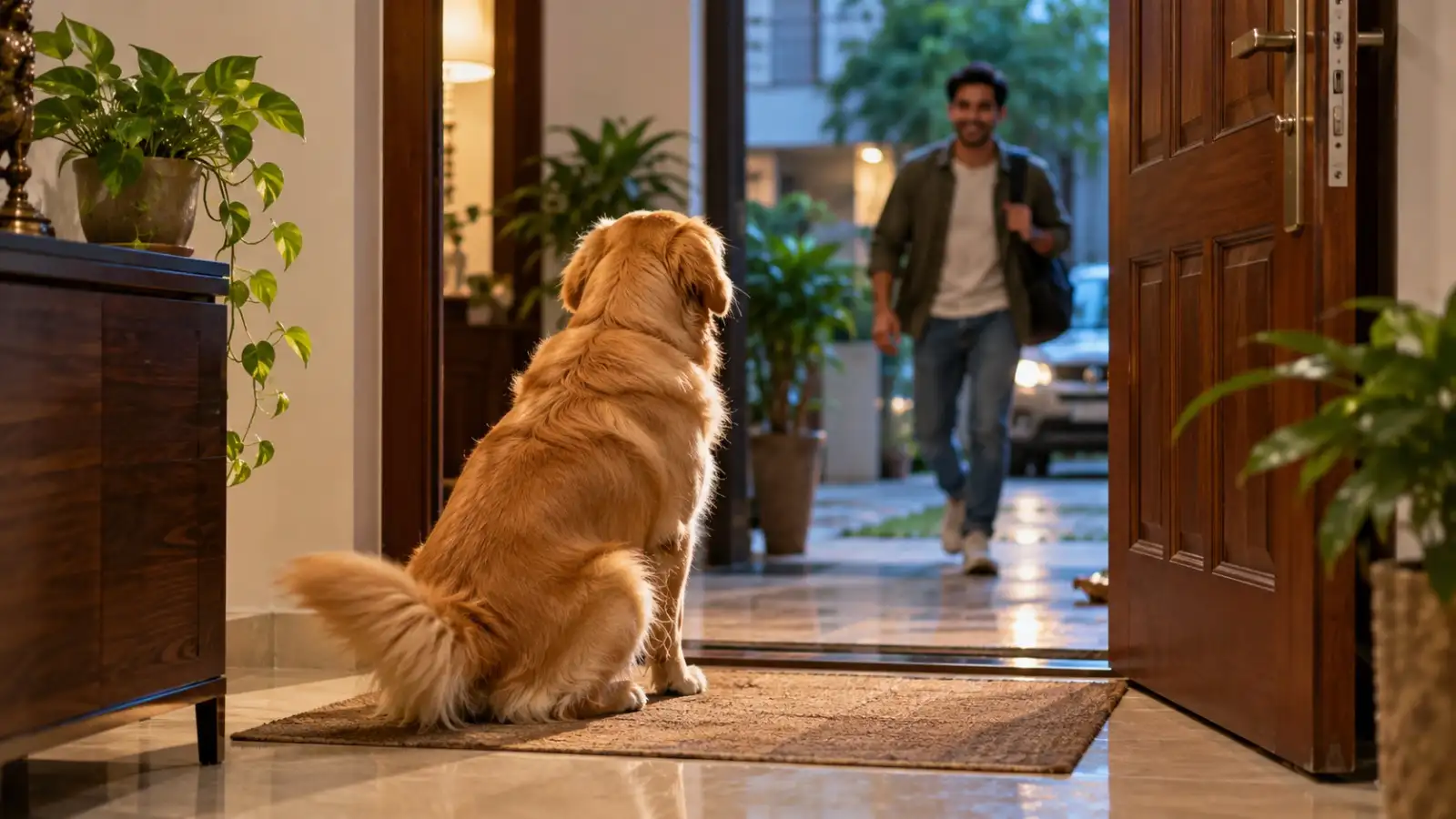
While dogs cannot predict the future, their remarkable senses and ability to recognise patterns can make their behaviour look surprisingly accurate. They constantly gather information from sounds, smells, routines and changes in their surroundings.
The explanation may be less about a mysterious sixth sense and more about how closely dogs observe the world around them.
Dogs quickly learn what normally happens throughout the day. If you usually leave home at a particular time and return several hours later, your dog can become familiar with that pattern.
They may not understand time in the same way humans do, but they can associate certain environmental changes with particular events.
For example, the household may become quieter after everyone leaves. Later, the sounds of neighbours returning, traffic increasing or other household routines changing can signal that the day is moving towards the time when you normally come home.
Your dog may respond to these repeated patterns before you even reach the front door.
Your dog may recognise the sound of your car approaching, your footsteps outside the building, a familiar lift stopping on your floor or even the particular way you open a gate.
These sounds can become associated with your arrival over time.
This is particularly noticeable in dogs living in houses or flats where there are consistent sounds connected to their owner's return. What seems like anticipation may simply be an extremely well-trained recognition system.
An engine has a distinctive sound, and dogs can become familiar with it through repeated exposure. They may also recognise the sound of the car door closing, keys being handled or footsteps following shortly afterwards.
If your dog suddenly becomes alert when a particular vehicle approaches, it may be because they have connected that sound with you.
This can make their behaviour look almost like a prediction, even though they are responding to information that has already reached their senses.
Dogs can recognise familiar human scents and may notice subtle changes in their environment. Air movement can also carry odours through buildings and outdoor spaces.
However, there is not strong evidence that dogs can routinely smell an owner from a great distance and then accurately predict their arrival.
The more cautious explanation is that smell is one part of a much larger collection of clues that dogs process constantly.
Picking up your keys, putting on certain shoes, grabbing a bag or switching off lights can become familiar cues.
The same principle can work in reverse.
If a household follows a fairly predictable daily schedule, your dog may learn the sequence of events that normally surrounds your return. Even small changes in the environment can therefore attract their attention.
Over time, your dog can learn tiny details that you may not realise you are communicating.
For example, perhaps you normally call someone at home shortly before arriving, change your route at a particular time or follow a familiar routine during your journey. Your dog may not understand what these actions mean, but other people or animals in the household might respond to them.
Dogs can then associate those changes with your eventual arrival.
Imagine your dog is familiar with the sound of your car. At roughly the same time each day, traffic outside increases, a particular neighbour returns home and the household becomes more active.
Your dog may notice these signals individually and collectively.
By the time you are walking towards the front door, your dog may already have enough information to expect you.
Humans tend to notice the occasions when this prediction is correct and remember them particularly well. We may be less likely to remember all the times our dog waited by the door and we arrived much later.
This can make the behaviour seem even more mysterious.
What they clearly do possess is an impressive ability to learn routines and detect sensory information.
Their hearing, smell, observational skills and memory allow them to notice details that humans frequently overlook. When these abilities work together, the result can look remarkably like anticipation.
That does not make the behaviour any less fascinating. In fact, it shows just how closely dogs pay attention to the people and environments around them.
They could have heard your car, recognised your footsteps, noticed a familiar household pattern or simply learnt that certain environmental cues usually mean you are coming home.
Dogs spend much of their lives observing us. Their ability to connect tiny clues with familiar events is one of the reasons they can seem remarkably intuitive.
So while your dog may not literally know that you are around the corner, there is a good chance they have become very good at recognising the signs that you are on your way.
While dogs cannot predict the future, their remarkable senses and ability to recognise patterns can make their behaviour look surprisingly accurate. They constantly gather information from sounds, smells, routines and changes in their surroundings.
The explanation may be less about a mysterious sixth sense and more about how closely dogs observe the world around them.
Dogs Are Extremely Good at Recognising Routines
One of the simplest explanations is routine.Dogs quickly learn what normally happens throughout the day. If you usually leave home at a particular time and return several hours later, your dog can become familiar with that pattern.
They may not understand time in the same way humans do, but they can associate certain environmental changes with particular events.
For example, the household may become quieter after everyone leaves. Later, the sounds of neighbours returning, traffic increasing or other household routines changing can signal that the day is moving towards the time when you normally come home.
Your dog may respond to these repeated patterns before you even reach the front door.
Their Hearing Picks Up Sounds You May Ignore
A dog's hearing is considerably more sensitive than ours, allowing it to detect sounds that humans may barely notice.Your dog may recognise the sound of your car approaching, your footsteps outside the building, a familiar lift stopping on your floor or even the particular way you open a gate.
These sounds can become associated with your arrival over time.
This is particularly noticeable in dogs living in houses or flats where there are consistent sounds connected to their owner's return. What seems like anticipation may simply be an extremely well-trained recognition system.
Your Dog May Recognise Your Car
Many dogs seem to react before their owner has even entered the house because they have learnt the sound of a particular vehicle.An engine has a distinctive sound, and dogs can become familiar with it through repeated exposure. They may also recognise the sound of the car door closing, keys being handled or footsteps following shortly afterwards.
If your dog suddenly becomes alert when a particular vehicle approaches, it may be because they have connected that sound with you.
This can make their behaviour look almost like a prediction, even though they are responding to information that has already reached their senses.
Smell May Also Play a Role
A dog's sense of smell is extraordinarily powerful, although exactly how scent might explain predictions about an owner's return is much less certain than explanations based on sound and routine.Dogs can recognise familiar human scents and may notice subtle changes in their environment. Air movement can also carry odours through buildings and outdoor spaces.
However, there is not strong evidence that dogs can routinely smell an owner from a great distance and then accurately predict their arrival.
The more cautious explanation is that smell is one part of a much larger collection of clues that dogs process constantly.
Dogs Notice What Happens Before You Leave
Dogs do not only pay attention to your return. They also learn the signals that happen when you leave.Picking up your keys, putting on certain shoes, grabbing a bag or switching off lights can become familiar cues.
The same principle can work in reverse.
If a household follows a fairly predictable daily schedule, your dog may learn the sequence of events that normally surrounds your return. Even small changes in the environment can therefore attract their attention.
They Can Become Experts at Reading Their Humans
Dogs are highly attentive to human behaviour. They observe body language, movements, voices and daily habits.Over time, your dog can learn tiny details that you may not realise you are communicating.
For example, perhaps you normally call someone at home shortly before arriving, change your route at a particular time or follow a familiar routine during your journey. Your dog may not understand what these actions mean, but other people or animals in the household might respond to them.
Dogs can then associate those changes with your eventual arrival.
Why Does It Sometimes Feel Spookily Accurate?
The most impressive part is that dogs can combine several clues at once.Imagine your dog is familiar with the sound of your car. At roughly the same time each day, traffic outside increases, a particular neighbour returns home and the household becomes more active.
Your dog may notice these signals individually and collectively.
By the time you are walking towards the front door, your dog may already have enough information to expect you.
Humans tend to notice the occasions when this prediction is correct and remember them particularly well. We may be less likely to remember all the times our dog waited by the door and we arrived much later.
This can make the behaviour seem even more mysterious.
You may also like
- Where Kolkata's old Puja stories met the flavours of home
- Banks to Remain Open on Sunday; Government's Major Decision Ahead of Strike
- Gold prices stabilize ahead of Chhath and Diwali; gold shines again after a two-day slump
- Why Do Premature Babies Need Incubators?
- TOI UP Transformation Dialogues: How eastern UP is building a stronger healthcare future
Can Dogs Actually Sense When Their Owners Are Coming Home?
There is no solid scientific evidence that dogs possess a supernatural ability to predict an owner's arrival.What they clearly do possess is an impressive ability to learn routines and detect sensory information.
Their hearing, smell, observational skills and memory allow them to notice details that humans frequently overlook. When these abilities work together, the result can look remarkably like anticipation.
That does not make the behaviour any less fascinating. In fact, it shows just how closely dogs pay attention to the people and environments around them.
Your Dog May Simply Know You Better Than You Think
The next time your dog runs towards the door moments before you arrive, there may be no mystery involved.They could have heard your car, recognised your footsteps, noticed a familiar household pattern or simply learnt that certain environmental cues usually mean you are coming home.
Dogs spend much of their lives observing us. Their ability to connect tiny clues with familiar events is one of the reasons they can seem remarkably intuitive.
So while your dog may not literally know that you are around the corner, there is a good chance they have become very good at recognising the signs that you are on your way.






Loving Newspoint? Download the app now
