
Why Your Home Feels Messier Than It Actually Is: The Psychology of Visual Clutter

Have you ever cleaned your living room, put everything away and still felt that the space looked somehow messy?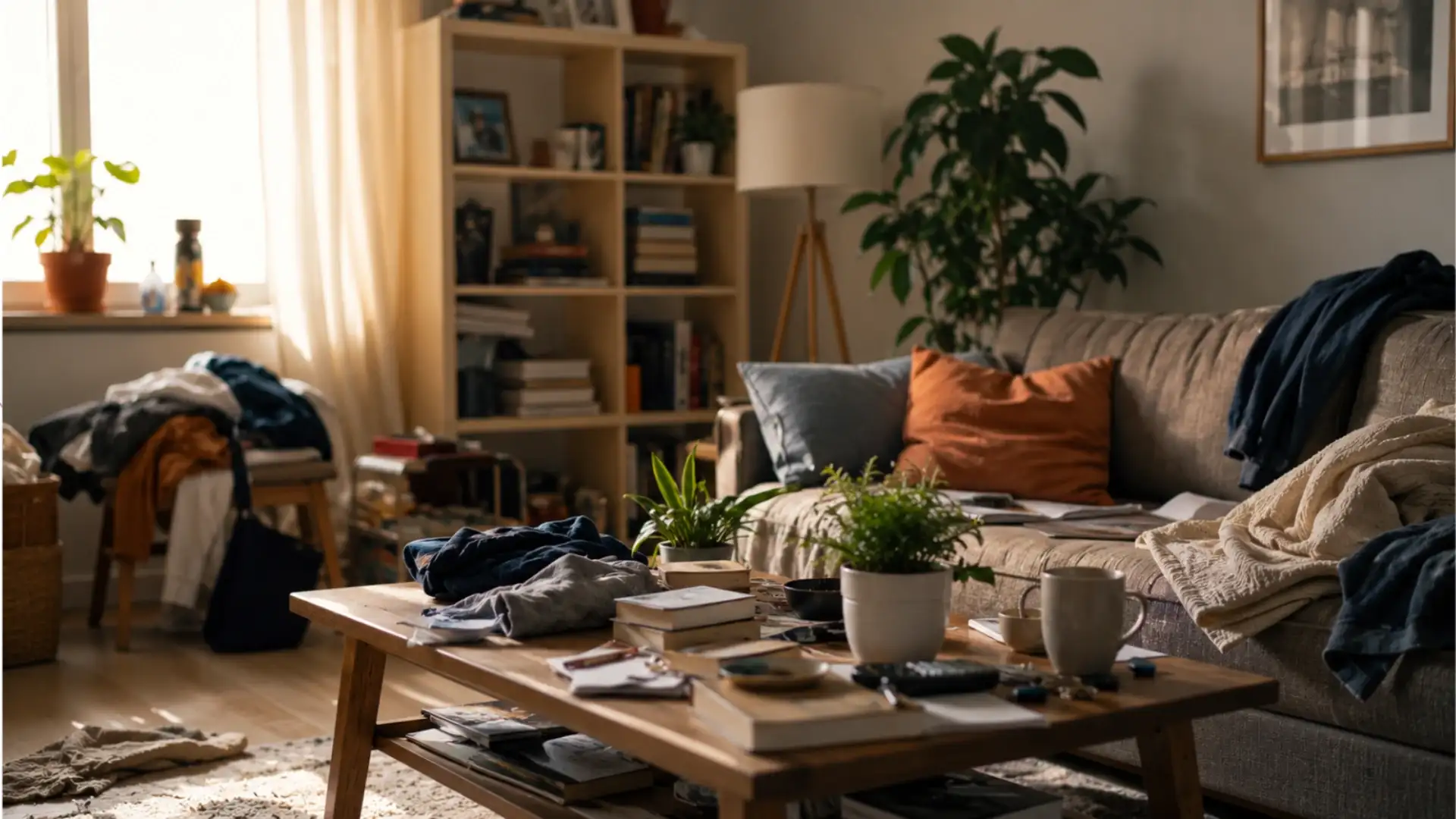
You may not be imagining it.
A home can be physically clean and reasonably organised while still feeling visually overwhelming. A kitchen counter covered with appliances, a sofa surrounded by cushions, open shelves packed with objects, cables near the television and paperwork waiting to be dealt with can all create the impression of disorder, even when every object technically has a place.
This is the psychology of visual clutter .
Visual clutter is not simply about dirt or untidiness. It is about how much information your eyes and brain have to process at once. Research on home environments has found links between how people perceive and describe their homes and physiological measures associated with stress. A UCLA-linked study of 60 dual-income couples found that women who described their homes in more stressful, clutter-related terms showed flatter daily cortisol patterns, while more restorative descriptions were associated with steeper cortisol slopes.
The interesting part is that the solution may not be to own fewer things. It may be to reduce the number of things demanding your attention.
Your brain, however, is constantly processing shapes, colours, edges, movement, patterns and objects. It decides what deserves attention and what can be ignored.
A room with a few large, visually coherent elements gives your attention relatively clear signals. A room with dozens of unrelated objects creates more competing signals.
This is why a coffee table with a lamp, book and vase may feel calm, while another table of the same size covered with receipts, chargers, remote controls, mugs, shopping bags and small decorative items can feel chaotic.
The physical amount of space has not changed.
The amount of information your eyes are processing has.
It isn't.
A bookshelf can be perfectly dusted and carefully arranged but still feel visually crowded. A kitchen can be spotless while its counters are filled with appliances, containers and utensils. A bedroom can be clean while an open wardrobe creates a constant wall of colours, patterns and objects.
This distinction is increasingly recognised in discussions of home design and environmental psychology. Visual clutter can include excessive objects, colours and shapes that make it harder for the eye to find a clear visual hierarchy.
In other words, your home can be organised but still noisy.
A pile of unopened mail is not just paper. It can represent something you still need to read.
A chair covered with clothes can remind you that laundry needs to be folded.
A half-finished DIY project can silently tell you that something remains incomplete.
A desk covered with paperwork can make relaxation harder because the objects themselves represent pending tasks.
This is one reason a visually busy home can feel mentally demanding. The brain is not merely seeing objects. It may be interpreting them as unfinished business.
Research into home environments has found that residents who described their homes using words associated with clutter and unfinished tasks showed physiological patterns linked with stress.
The kitchen is where food, appliances, packaging, utensils and paperwork often meet. The entryway collects shoes, bags, keys, parcels and jackets. The living room becomes the place where chargers, books, toys, remotes and everyday objects temporarily land.
These areas become visually busy because they have high traffic.
The solution is not necessarily to make them empty. Instead, it can help to create clear visual zones.
For example, a kitchen counter can have one designated area for frequently used appliances rather than several objects scattered across the entire surface. An entryway can have one obvious location for keys and bags.
When objects have predictable homes, the room becomes easier for the brain to scan.
A closed cabinet may contain twenty objects while visually presenting only one clean surface.
An open shelf containing the same twenty objects asks your eyes to process every box, bottle, book, colour and shape.
This does not mean open shelving is bad. It simply means that visible storage has a psychological cost: everything stored there becomes part of the room's visual landscape.
That is why closed storage, baskets and visually consistent containers can sometimes make a room feel calmer without reducing the amount of stuff inside it. Current design guidance similarly recommends reducing visible visual noise through selective storage and editing.
You can give everything a place and still have too much visible information.
Imagine a desk with ten perfectly labelled containers. Technically, it is organised. Visually, however, it may still feel busy.
Organisation answers the question, “Where does this belong?”
Visual editing asks a different question:
“Does this need to be visible?”
That second question can make a surprisingly large difference.
In design, negative space gives the eye somewhere to rest. The same principle can apply inside a home.
A mostly clear countertop can make the remaining objects look more intentional. A wall with one large artwork can sometimes feel calmer than a wall covered with many small frames.
The objective is not extreme minimalism.
It is visual breathing room.
Your home does not need to look like a showroom. It simply needs areas where your eyes are not constantly being asked to make decisions.
Start with the areas you see most often.
Clear one section of the kitchen counter. Remove unused objects from the bedside table. Hide unnecessary cables. Reduce the number of small decorative objects on one shelf. Create a basket for things that repeatedly migrate around the house.
Another useful technique is the “one surface at a time” approach.
Instead of attempting to declutter the entire home, choose one visually prominent surface and simplify it.
You may be surprised by how much calmer the entire room feels.
It is to create a home that asks less of your attention.
Research from UCLA's Center on Everyday Lives of Families highlighted how household object density and residents' perceptions of clutter can intersect with stress and everyday life.
So the next time your home feels messy despite being clean, look beyond the dust and laundry.
Ask yourself how many things are competing for your eyes.
Sometimes the room does not need a deep clean.
It simply needs a little less visual noise.
You may not be imagining it.
A home can be physically clean and reasonably organised while still feeling visually overwhelming. A kitchen counter covered with appliances, a sofa surrounded by cushions, open shelves packed with objects, cables near the television and paperwork waiting to be dealt with can all create the impression of disorder, even when every object technically has a place.
This is the psychology of visual clutter .
Visual clutter is not simply about dirt or untidiness. It is about how much information your eyes and brain have to process at once. Research on home environments has found links between how people perceive and describe their homes and physiological measures associated with stress. A UCLA-linked study of 60 dual-income couples found that women who described their homes in more stressful, clutter-related terms showed flatter daily cortisol patterns, while more restorative descriptions were associated with steeper cortisol slopes.
The interesting part is that the solution may not be to own fewer things. It may be to reduce the number of things demanding your attention.
Your Brain Does Not See a Room the Way You Do
When you enter a room, you probably think you are simply looking around.Your brain, however, is constantly processing shapes, colours, edges, movement, patterns and objects. It decides what deserves attention and what can be ignored.
A room with a few large, visually coherent elements gives your attention relatively clear signals. A room with dozens of unrelated objects creates more competing signals.
This is why a coffee table with a lamp, book and vase may feel calm, while another table of the same size covered with receipts, chargers, remote controls, mugs, shopping bags and small decorative items can feel chaotic.
The physical amount of space has not changed.
The amount of information your eyes are processing has.
Clean Does Not Always Mean Visually Calm
One of the biggest misunderstandings about visual clutter is assuming that it is identical to mess.It isn't.
A bookshelf can be perfectly dusted and carefully arranged but still feel visually crowded. A kitchen can be spotless while its counters are filled with appliances, containers and utensils. A bedroom can be clean while an open wardrobe creates a constant wall of colours, patterns and objects.
This distinction is increasingly recognised in discussions of home design and environmental psychology. Visual clutter can include excessive objects, colours and shapes that make it harder for the eye to find a clear visual hierarchy.
In other words, your home can be organised but still noisy.
Why Unfinished Things Feel Especially Distracting
There is another reason certain objects bother us more than others: they can act as reminders.A pile of unopened mail is not just paper. It can represent something you still need to read.
A chair covered with clothes can remind you that laundry needs to be folded.
A half-finished DIY project can silently tell you that something remains incomplete.
A desk covered with paperwork can make relaxation harder because the objects themselves represent pending tasks.
This is one reason a visually busy home can feel mentally demanding. The brain is not merely seeing objects. It may be interpreting them as unfinished business.
Research into home environments has found that residents who described their homes using words associated with clutter and unfinished tasks showed physiological patterns linked with stress.
Why the Kitchen and Entryway Often Feel the Messiest
Some areas naturally accumulate visual clutter because they are transition points.The kitchen is where food, appliances, packaging, utensils and paperwork often meet. The entryway collects shoes, bags, keys, parcels and jackets. The living room becomes the place where chargers, books, toys, remotes and everyday objects temporarily land.
These areas become visually busy because they have high traffic.
The solution is not necessarily to make them empty. Instead, it can help to create clear visual zones.
For example, a kitchen counter can have one designated area for frequently used appliances rather than several objects scattered across the entire surface. An entryway can have one obvious location for keys and bags.
When objects have predictable homes, the room becomes easier for the brain to scan.
Why Open Storage Can Make a Room Feel Busier
Open shelves are convenient, but they also expose everything.A closed cabinet may contain twenty objects while visually presenting only one clean surface.
An open shelf containing the same twenty objects asks your eyes to process every box, bottle, book, colour and shape.
This does not mean open shelving is bad. It simply means that visible storage has a psychological cost: everything stored there becomes part of the room's visual landscape.
That is why closed storage, baskets and visually consistent containers can sometimes make a room feel calmer without reducing the amount of stuff inside it. Current design guidance similarly recommends reducing visible visual noise through selective storage and editing.
The Problem With “Everything Has a Place”
There is a strange paradox in home organisation.You can give everything a place and still have too much visible information.
Imagine a desk with ten perfectly labelled containers. Technically, it is organised. Visually, however, it may still feel busy.
Organisation answers the question, “Where does this belong?”
Visual editing asks a different question:
“Does this need to be visible?”
That second question can make a surprisingly large difference.
Why Empty Space Feels So Good
Empty space is not necessarily wasted space.In design, negative space gives the eye somewhere to rest. The same principle can apply inside a home.
A mostly clear countertop can make the remaining objects look more intentional. A wall with one large artwork can sometimes feel calmer than a wall covered with many small frames.
The objective is not extreme minimalism.
It is visual breathing room.
Your home does not need to look like a showroom. It simply needs areas where your eyes are not constantly being asked to make decisions.
How to Reduce Visual Clutter Without Becoming a Minimalist
You do not have to throw away half your belongings.Start with the areas you see most often.
Clear one section of the kitchen counter. Remove unused objects from the bedside table. Hide unnecessary cables. Reduce the number of small decorative objects on one shelf. Create a basket for things that repeatedly migrate around the house.
Another useful technique is the “one surface at a time” approach.
Instead of attempting to declutter the entire home, choose one visually prominent surface and simplify it.
You may be surprised by how much calmer the entire room feels.
You may also like
- Kerala to be renamed 'Keralam': Rajya Sabha clears name change bill; what it means for travellers
- A big gift from EPFO to the workforce! Instantly withdraw 75% of your PF if you lose your job...
- “Aastha ke naam pe gandagi macha rakhi hai”: Haridwar struggles with 7,000 tonnes of post-Kanwar Yatra garbage as plastic, urine bottles pile up at Har-Ki-Pauri
- At 17, Dubai teen has helped 8,750 underprivileged children in India learn STEM
- He put his 1-year-old daughter in a stroller for a race; 4 minutes later, they may have made history
A Calmer Home Is About Attention, Not Perfection
The goal of reducing visual clutter is not to create a perfect home.It is to create a home that asks less of your attention.
Research from UCLA's Center on Everyday Lives of Families highlighted how household object density and residents' perceptions of clutter can intersect with stress and everyday life.
So the next time your home feels messy despite being clean, look beyond the dust and laundry.
Ask yourself how many things are competing for your eyes.
Sometimes the room does not need a deep clean.
It simply needs a little less visual noise.






Loving Newspoint? Download the app now
