
Why Your Plant's Soil Stays Wet for Too Long

Watering a plant usually feels like one of the easiest parts of plant care. But what happens when you water your plant once and the soil still feels wet several days later?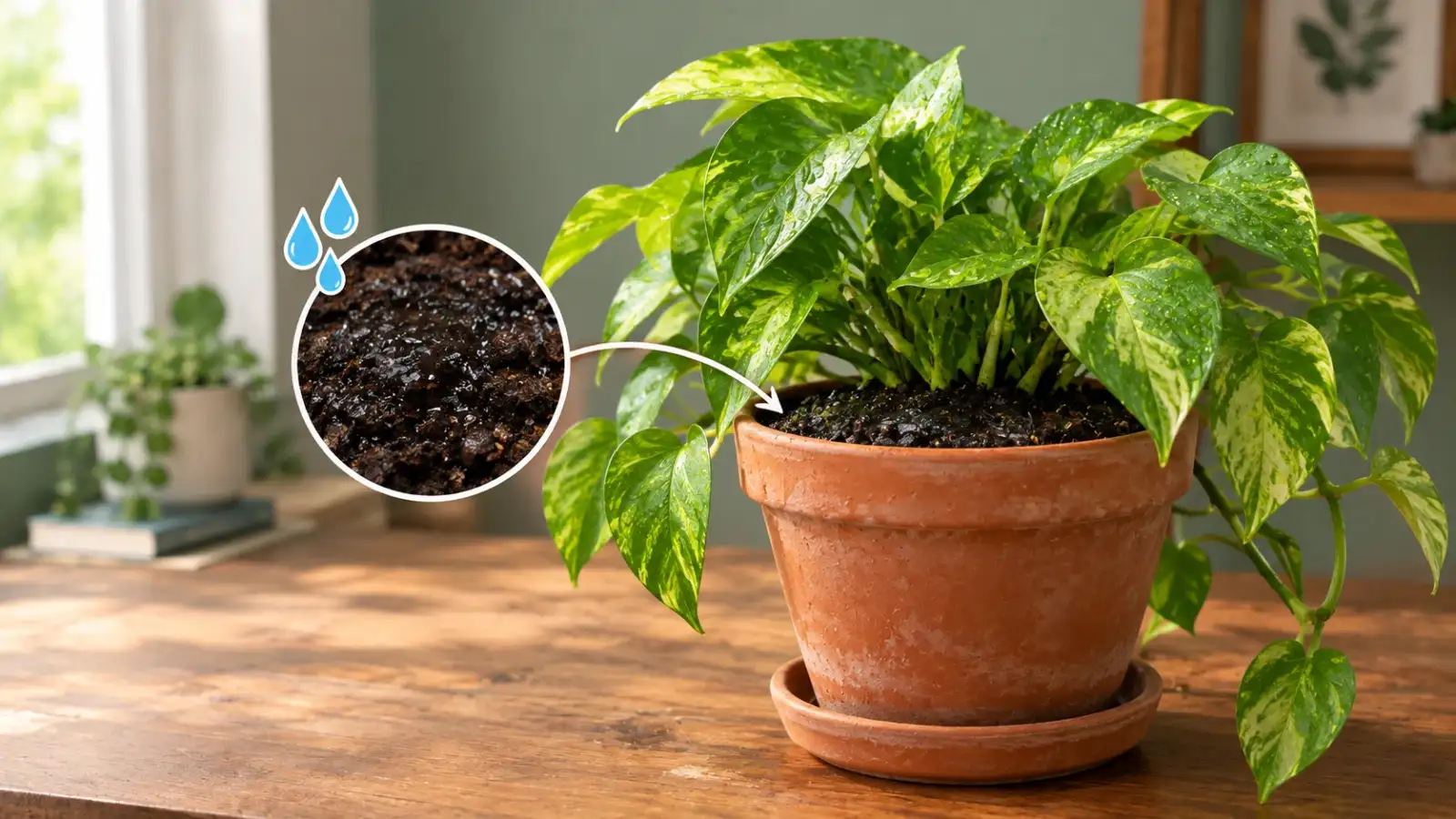
This can be a warning that something about the pot, soil, light or watering routine is preventing excess moisture from leaving the container.
While different plants have different watering needs, many common houseplants prefer soil that is moist rather than constantly saturated. Poorly drained soil can reduce the air available around roots and increase the risk of root problems.
A decorative planter without a drainage hole can trap water underneath the soil. Even if the surface looks fine, the lower part of the pot may remain saturated for much longer.
A proper drainage hole allows excess water to escape after watering. If your plant is sitting inside a decorative cover pot, check whether water has collected at the bottom and empty it rather than allowing the roots to remain submerged.
Ordinary garden soil can become dense when used inside containers, especially when it becomes compacted. Water may struggle to move through the pot, leaving the roots sitting in damp conditions.
A good houseplant potting mix should provide a balance between moisture retention and drainage. If your soil has become hard, heavy or tightly packed, repotting the plant into a more suitable mix may make a noticeable difference.
If the root system occupies only a small part of a very large pot, a considerable amount of soil may remain unused. That extra soil can stay wet for a long time after watering.
This is one reason repotting is generally better done gradually rather than moving a small houseplant into an enormous container.
A plant kept in a darker location may grow more slowly and therefore use less water. If you combine low light with frequent watering, the soil can remain damp for longer.
Check whether the plant is receiving the amount of light appropriate for its species. Avoid moving a shade-loving plant straight into harsh sunlight, but make sure it is not sitting in an unnecessarily dark corner either.
Instead, check the soil before watering. The right approach depends on the plant, pot size, season and indoor conditions, but many container plants benefit from being watered when the soil has dried to an appropriate level.
Also make sure excess water is allowed to drain away fully.
If you notice yellowing leaves, wilting despite wet soil, an unpleasant smell or soft, dark roots, the plant may already be experiencing root problems. Constantly wet conditions are associated with root rot and other issues.
Fixing wet soil early is much easier than trying to rescue a plant after serious root damage has developed.
This can be a warning that something about the pot, soil, light or watering routine is preventing excess moisture from leaving the container.
While different plants have different watering needs, many common houseplants prefer soil that is moist rather than constantly saturated. Poorly drained soil can reduce the air available around roots and increase the risk of root problems.
The Pot May Not Have Enough Drainage
The first thing to check is the bottom of the pot.A decorative planter without a drainage hole can trap water underneath the soil. Even if the surface looks fine, the lower part of the pot may remain saturated for much longer.
A proper drainage hole allows excess water to escape after watering. If your plant is sitting inside a decorative cover pot, check whether water has collected at the bottom and empty it rather than allowing the roots to remain submerged.
Your Soil Could Be Too Heavy
Another common reason for wet soil is the growing medium itself.Ordinary garden soil can become dense when used inside containers, especially when it becomes compacted. Water may struggle to move through the pot, leaving the roots sitting in damp conditions.
A good houseplant potting mix should provide a balance between moisture retention and drainage. If your soil has become hard, heavy or tightly packed, repotting the plant into a more suitable mix may make a noticeable difference.
The Pot Could Be Too Large
A bigger pot may look like a better option because the plant has more room to grow, but oversized containers can create watering problems.If the root system occupies only a small part of a very large pot, a considerable amount of soil may remain unused. That extra soil can stay wet for a long time after watering.
This is one reason repotting is generally better done gradually rather than moving a small houseplant into an enormous container.
Low Light Can Slow Things Down
Light also plays a role in how quickly a plant uses water.A plant kept in a darker location may grow more slowly and therefore use less water. If you combine low light with frequent watering, the soil can remain damp for longer.
Check whether the plant is receiving the amount of light appropriate for its species. Avoid moving a shade-loving plant straight into harsh sunlight, but make sure it is not sitting in an unnecessarily dark corner either.
Change Your Watering Routine
Do not water simply because it is a particular day of the week.Instead, check the soil before watering. The right approach depends on the plant, pot size, season and indoor conditions, but many container plants benefit from being watered when the soil has dried to an appropriate level.
Also make sure excess water is allowed to drain away fully.
If you notice yellowing leaves, wilting despite wet soil, an unpleasant smell or soft, dark roots, the plant may already be experiencing root problems. Constantly wet conditions are associated with root rot and other issues.
Fixing wet soil early is much easier than trying to rescue a plant after serious root damage has developed.
Next Story