
10 Wildlife Safari Destinations Around the World That Are Not in Africa

When people hear the word safari, the first image that usually comes to mind is an African savannah filled with elephants, lions and giraffes. Africa remains one of the world's great wildlife destinations, but the safari experience is by no means limited to the continent.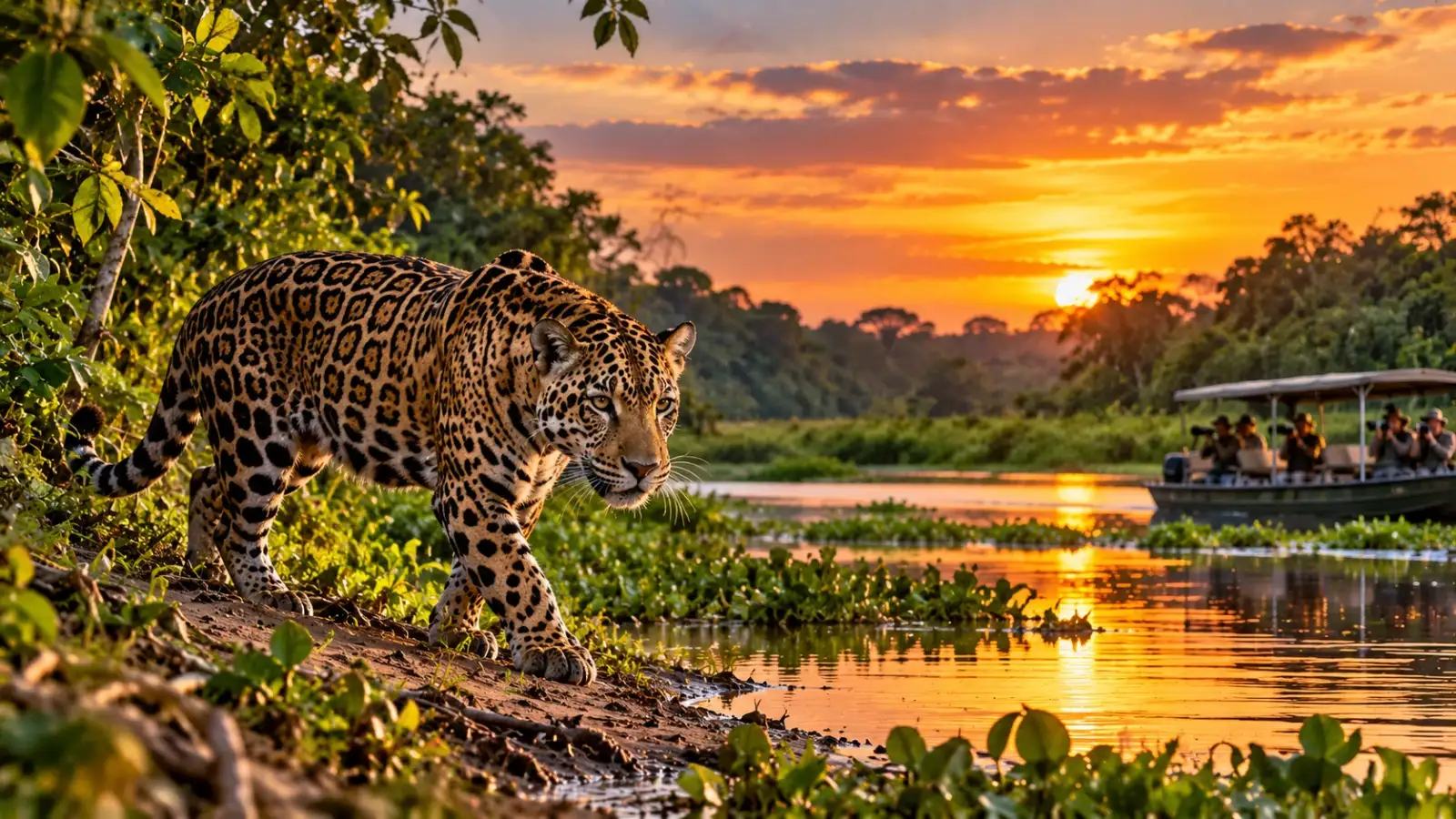
Across Asia, South America, North America and the islands of the Indian Ocean, travellers can explore protected landscapes where completely different animals dominate the experience. Instead of searching for lions, visitors might track Bengal tigers through Indian forests, watch jaguars along Brazilian waterways or look for sloth bears and leopards in Sri Lanka.
The landscapes are equally varied. Some safaris take place in tropical forests, others across wetlands, grasslands, mountains or even cold northern wildernesses. The result is a different kind of wildlife holiday, one where the environment itself becomes a major part of the adventure.
Here are some of the world's most fascinating safari destinations beyond Africa.
Brazil's official tourism authority describes the Pantanal as the world's largest floodplain and highlights its extraordinary biodiversity, including hundreds of bird species and more than 100 mammal species. Jaguars, capybaras, giant otters, caimans, tapirs and an enormous variety of birds can all be encountered here.
Water is central to the experience. Depending on the season and location, wildlife viewing can involve boats, safari vehicles, walking routes or even horseback excursions. The Brazilian Ministry of Tourism highlights the Transpantaneira road, river trips, photographic safaris and traditional farm stays among the ways visitors can explore the region.
For wildlife photographers, the Pantanal is particularly famous for jaguar encounters. Rather than scanning a huge open savannah, visitors often explore riverbanks and waterways where these powerful cats may appear.
The landscape changes dramatically between the wet and dry seasons, meaning the same region can offer very different safari conditions at different times of year.
The reserve combines dry deciduous forests, grasslands, lakes and rocky terrain, creating an unusually varied backdrop for wildlife viewing. Rajasthan Tourism lists tigers alongside leopards, sloth bears, hyenas, crocodiles, deer and numerous bird species found within the park.
What makes Ranthambore visually distinctive is its history. The ruins of Ranthambore Fort, ancient temples and old structures are scattered through the wider landscape, creating scenes where wildlife and medieval architecture exist remarkably close together.
Tiger sightings are never guaranteed, which is an important part of the experience. A safari involves following tracks, listening for alarm calls and watching waterholes and forest edges rather than simply driving directly towards animals.
That uncertainty is part of what makes an Indian tiger safari so different from the conventional African safari image. The forest itself becomes a puzzle that the guide and visitors have to read.
Yala National Park is particularly famous for leopard sightings and has become one of the island's most recognised safari destinations. But Sri Lanka's wildlife experience extends far beyond big cats.
Elephants can be encountered in several national parks, while birdwatchers can find an impressive variety of resident and migratory species. The island's forests also support monkeys, reptiles and many smaller mammals that can be overlooked when visitors focus exclusively on leopards.
The combination of wildlife and landscape makes Sri Lanka especially interesting. A safari can take place against a backdrop of dry forests, wetlands, lagoons or coastal scenery, sometimes within relatively short distances of historic sites and beaches.
The country is particularly well known for its biodiversity, with protected areas providing habitats for sloths, monkeys, toucans, crocodiles, sea turtles, frogs and numerous other species. Corcovado National Park is one of the most important destinations for visitors looking for a deeper rainforest experience, while Tortuguero is famous for its waterways and sea turtles.
Recent travel coverage continues to highlight Corcovado, Tortuguero and Monteverde among Costa Rica's major wildlife destinations, with opportunities to see species such as Baird's tapir and the resplendent quetzal.
The way wildlife is observed is also different. Boat trips can replace conventional game drives, while guided forest walks allow visitors to search the canopy for animals that may be almost invisible from the ground.
Costa Rica shows that a safari does not need a large open vehicle or a vast grassland. Sometimes the challenge is simply finding the animal hidden inside a rainforest.
The landscape is strongly influenced by the Brahmaputra River. Tall grasses, wetlands and woodland create a habitat for rhinos, elephants, tigers, wild water buffaloes and numerous bird species.
Unlike a dry Rajasthan tiger reserve, Kaziranga often feels much more open and lush. Tall grass can conceal enormous animals almost completely, meaning guides have to interpret movement, tracks and changes in the vegetation.
The park is also important for migratory and resident birds, making it an appealing destination for visitors interested in more than large mammals.
A safari here demonstrates how dramatically India's wildlife landscapes can change from one region to another.
The Bornean orangutan is perhaps the most famous. Seeing one moving through the rainforest canopy can be an unforgettable experience, particularly because these animals spend much of their time above ground.
The island also supports proboscis monkeys, pygmy elephants, clouded leopards, hornbills and a huge variety of insects, reptiles and amphibians.
Wildlife viewing in Borneo is often slower and more observational than a conventional vehicle safari. River journeys, canopy walks and guided rainforest excursions allow visitors to explore different layers of the ecosystem.
The forest itself is part of the attraction. Even when an animal does not appear, the sounds, vegetation and enormous trees make the experience feel completely immersive.
Here, the species are adapted to a dramatically different environment. Visitors may encounter American bison, elk, black bears, grizzly bears, wolves, moose and pronghorn against a backdrop of mountains, rivers, forests and geothermal landscapes.
Instead of travelling across a tropical savannah, visitors follow roads and trails through one of the most geologically active and ecologically varied regions in North America.
Wildlife watching can also require considerable patience. Wolves may appear briefly in distant valleys, bears can remain hidden in forested areas and large herds of bison can move across enormous landscapes.
This is a safari experience where binoculars and long lenses become particularly useful, and where the changing seasons can completely alter what visitors see.
Giant tortoises, marine iguanas, sea lions, penguins and numerous endemic birds live across the archipelago's islands and surrounding waters. The isolation of the Galápagos played a major role in the evolution of its distinctive species.
Rather than traditional jeep safaris, wildlife exploration often involves boats, guided walks and snorkelling. Animals can appear on beaches, rocky shorelines, volcanic landscapes and underwater environments.
The marine side of the experience is particularly important. Sea turtles, rays, penguins, sharks and other marine species can become part of the same journey.
The Galápagos therefore feels less like a conventional safari destination and more like a natural-history expedition.
Visitors generally explore by boat and on foot, often staying at rainforest lodges far from major towns. Early-morning excursions and night walks can reveal completely different wildlife from what appears during daylight.
The dense vegetation makes spotting animals challenging, but that difficulty is part of the appeal. A bright macaw flying over the canopy, a monkey moving through the trees or a caiman appearing along a riverbank can turn an ordinary-looking section of rainforest into an unforgettable wildlife encounter.
The Amazon also demonstrates the importance of sound. In dense forest, visitors may hear an animal long before they can see it.
The reserve contains dry deciduous forests, grasslands, cliffs and the Aravalli hills. Rajasthan Tourism lists tigers alongside jungle cats, sambar, chital, wild boar and a wide variety of birds.
What makes Sariska particularly distinctive is the combination of wildlife and heritage. The reserve contains historic structures including Kankwadi Fort and ancient temples, creating an unusual setting for a tiger safari.
Birdwatching can also form an important part of the experience, with the reserve supporting more than 220 bird species according to Rajasthan Tourism.
For travellers based around Delhi and Jaipur, Sariska also offers a relatively accessible introduction to India's wildlife, while retaining the unpredictability that makes tiger safaris so compelling.
In the Pantanal, waterways are essential to finding jaguars. In Sri Lanka, dense forest and wetlands create a compact habitat for leopards and elephants. In Borneo, much of the wildlife lives above the ground in the rainforest canopy. In the Galápagos, the ocean is as important as the land.
India offers perhaps the greatest contrast to the traditional African safari image. Its wildlife reserves range from dry forests and grasslands to Himalayan foothills and tropical wetlands, with tigers, rhinos, elephants and leopards replacing the familiar African Big Five.
The biggest lesson is that the word safari does not describe one particular type of landscape. At its heart, it is about entering a natural environment and learning how to observe wildlife within it.
From a jaguar appearing beside a Brazilian river to a tiger disappearing into an Indian forest, these encounters can be every bit as memorable as the classic African safari. They simply tell a different wildlife story.
Across Asia, South America, North America and the islands of the Indian Ocean, travellers can explore protected landscapes where completely different animals dominate the experience. Instead of searching for lions, visitors might track Bengal tigers through Indian forests, watch jaguars along Brazilian waterways or look for sloth bears and leopards in Sri Lanka.
The landscapes are equally varied. Some safaris take place in tropical forests, others across wetlands, grasslands, mountains or even cold northern wildernesses. The result is a different kind of wildlife holiday, one where the environment itself becomes a major part of the adventure.
Here are some of the world's most fascinating safari destinations beyond Africa.
The Pantanal, Brazil Is One of the Best Places to Look for Jaguars
The Pantanal offers one of the most distinctive safari experiences outside Africa. This enormous tropical wetland stretches across central South America and is particularly famous for its jaguars.Brazil's official tourism authority describes the Pantanal as the world's largest floodplain and highlights its extraordinary biodiversity, including hundreds of bird species and more than 100 mammal species. Jaguars, capybaras, giant otters, caimans, tapirs and an enormous variety of birds can all be encountered here.
Water is central to the experience. Depending on the season and location, wildlife viewing can involve boats, safari vehicles, walking routes or even horseback excursions. The Brazilian Ministry of Tourism highlights the Transpantaneira road, river trips, photographic safaris and traditional farm stays among the ways visitors can explore the region.
For wildlife photographers, the Pantanal is particularly famous for jaguar encounters. Rather than scanning a huge open savannah, visitors often explore riverbanks and waterways where these powerful cats may appear.
The landscape changes dramatically between the wet and dry seasons, meaning the same region can offer very different safari conditions at different times of year.
Ranthambore, India Turns Tiger Tracking Into a Safari Adventure
Ranthambore National Park in Rajasthan is one of India's best-known wildlife destinations and offers a safari experience built around one extraordinary animal, the Bengal tiger.The reserve combines dry deciduous forests, grasslands, lakes and rocky terrain, creating an unusually varied backdrop for wildlife viewing. Rajasthan Tourism lists tigers alongside leopards, sloth bears, hyenas, crocodiles, deer and numerous bird species found within the park.
What makes Ranthambore visually distinctive is its history. The ruins of Ranthambore Fort, ancient temples and old structures are scattered through the wider landscape, creating scenes where wildlife and medieval architecture exist remarkably close together.
Tiger sightings are never guaranteed, which is an important part of the experience. A safari involves following tracks, listening for alarm calls and watching waterholes and forest edges rather than simply driving directly towards animals.
That uncertainty is part of what makes an Indian tiger safari so different from the conventional African safari image. The forest itself becomes a puzzle that the guide and visitors have to read.
Sri Lanka Offers Leopards, Elephants and Wildlife in a Compact Island
Sri Lanka may be relatively small, but its wildlife diversity is remarkable. The country's official tourism authority highlights elephants, leopards, sloth bears, sambar, wild buffaloes and numerous endemic species among the animals found across its protected areas.Yala National Park is particularly famous for leopard sightings and has become one of the island's most recognised safari destinations. But Sri Lanka's wildlife experience extends far beyond big cats.
Elephants can be encountered in several national parks, while birdwatchers can find an impressive variety of resident and migratory species. The island's forests also support monkeys, reptiles and many smaller mammals that can be overlooked when visitors focus exclusively on leopards.
The combination of wildlife and landscape makes Sri Lanka especially interesting. A safari can take place against a backdrop of dry forests, wetlands, lagoons or coastal scenery, sometimes within relatively short distances of historic sites and beaches.
Costa Rica Makes Rainforest Safari Feel Completely Different
Costa Rica does not offer the classic savannah-style safari. Instead, wildlife experiences here take place in dense tropical forests, wetlands, rivers and coastal ecosystems.The country is particularly well known for its biodiversity, with protected areas providing habitats for sloths, monkeys, toucans, crocodiles, sea turtles, frogs and numerous other species. Corcovado National Park is one of the most important destinations for visitors looking for a deeper rainforest experience, while Tortuguero is famous for its waterways and sea turtles.
Recent travel coverage continues to highlight Corcovado, Tortuguero and Monteverde among Costa Rica's major wildlife destinations, with opportunities to see species such as Baird's tapir and the resplendent quetzal.
The way wildlife is observed is also different. Boat trips can replace conventional game drives, while guided forest walks allow visitors to search the canopy for animals that may be almost invisible from the ground.
Costa Rica shows that a safari does not need a large open vehicle or a vast grassland. Sometimes the challenge is simply finding the animal hidden inside a rainforest.
Kaziranga, India Is a Stronghold for the One-Horned Rhinoceros
Assam's Kaziranga National Park provides one of the world's most distinctive wildlife safari experiences. Its floodplains and grasslands are particularly important for the greater one-horned rhinoceros, with the park recognised for supporting the world's largest population of this endangered species.The landscape is strongly influenced by the Brahmaputra River. Tall grasses, wetlands and woodland create a habitat for rhinos, elephants, tigers, wild water buffaloes and numerous bird species.
Unlike a dry Rajasthan tiger reserve, Kaziranga often feels much more open and lush. Tall grass can conceal enormous animals almost completely, meaning guides have to interpret movement, tracks and changes in the vegetation.
The park is also important for migratory and resident birds, making it an appealing destination for visitors interested in more than large mammals.
A safari here demonstrates how dramatically India's wildlife landscapes can change from one region to another.
Borneo Offers Orangutans and a Deep Rainforest Experience
The rainforests of Borneo provide an entirely different kind of wildlife adventure. The island is divided between several countries, and protected areas across Malaysian Borneo and Indonesian Borneo offer opportunities to encounter species that are difficult to find elsewhere.The Bornean orangutan is perhaps the most famous. Seeing one moving through the rainforest canopy can be an unforgettable experience, particularly because these animals spend much of their time above ground.
The island also supports proboscis monkeys, pygmy elephants, clouded leopards, hornbills and a huge variety of insects, reptiles and amphibians.
Wildlife viewing in Borneo is often slower and more observational than a conventional vehicle safari. River journeys, canopy walks and guided rainforest excursions allow visitors to explore different layers of the ecosystem.
The forest itself is part of the attraction. Even when an animal does not appear, the sounds, vegetation and enormous trees make the experience feel completely immersive.
Wyoming, USA Offers Wildlife Safaris in the Rocky Mountains
North America's wildlife can be just as impressive as the famous African game reserves, particularly around Yellowstone and the wider Greater Yellowstone Ecosystem.Here, the species are adapted to a dramatically different environment. Visitors may encounter American bison, elk, black bears, grizzly bears, wolves, moose and pronghorn against a backdrop of mountains, rivers, forests and geothermal landscapes.
Instead of travelling across a tropical savannah, visitors follow roads and trails through one of the most geologically active and ecologically varied regions in North America.
Wildlife watching can also require considerable patience. Wolves may appear briefly in distant valleys, bears can remain hidden in forested areas and large herds of bison can move across enormous landscapes.
This is a safari experience where binoculars and long lenses become particularly useful, and where the changing seasons can completely alter what visitors see.
The Galápagos Islands Turn Wildlife Watching Into an Island Expedition
The Galápagos Islands offer one of the world's most unusual wildlife experiences because many of the animals show remarkably little fear of humans.Giant tortoises, marine iguanas, sea lions, penguins and numerous endemic birds live across the archipelago's islands and surrounding waters. The isolation of the Galápagos played a major role in the evolution of its distinctive species.
Rather than traditional jeep safaris, wildlife exploration often involves boats, guided walks and snorkelling. Animals can appear on beaches, rocky shorelines, volcanic landscapes and underwater environments.
The marine side of the experience is particularly important. Sea turtles, rays, penguins, sharks and other marine species can become part of the same journey.
The Galápagos therefore feels less like a conventional safari destination and more like a natural-history expedition.
The Peruvian Amazon Takes Wildlife Safaris Deep Into the Rainforest
The Peruvian Amazon offers another rainforest-based alternative to the African safari model. Protected areas such as Tambopata and the Manu region contain extraordinary biodiversity, including monkeys, macaws, giant otters, caimans and countless insects and bird species.Visitors generally explore by boat and on foot, often staying at rainforest lodges far from major towns. Early-morning excursions and night walks can reveal completely different wildlife from what appears during daylight.
The dense vegetation makes spotting animals challenging, but that difficulty is part of the appeal. A bright macaw flying over the canopy, a monkey moving through the trees or a caiman appearing along a riverbank can turn an ordinary-looking section of rainforest into an unforgettable wildlife encounter.
The Amazon also demonstrates the importance of sound. In dense forest, visitors may hear an animal long before they can see it.
Sariska, India Combines Tigers With Historic Ruins
Sariska Tiger Reserve in Rajasthan offers another Indian safari experience, but its character is different from Ranthambore.The reserve contains dry deciduous forests, grasslands, cliffs and the Aravalli hills. Rajasthan Tourism lists tigers alongside jungle cats, sambar, chital, wild boar and a wide variety of birds.
You may also like
- 'You put underdeveloped brains together': Psychiatrist on why parents should rethink sending children away to college
- King George III built this London observatory to watch the stars; 250 years later, it is a $24 million private home
- Is It Safe to Lift Heavy Objects During Pregnancy?
- AI mural inspired by Banksy sparks backlash in Bristol: Artists spot wrong landmarks and a bizarre version of the famous Mild Mild West as debate over AI art grows
- 4 Hacks to keep your kitchen free from flies and bugs
What makes Sariska particularly distinctive is the combination of wildlife and heritage. The reserve contains historic structures including Kankwadi Fort and ancient temples, creating an unusual setting for a tiger safari.
Birdwatching can also form an important part of the experience, with the reserve supporting more than 220 bird species according to Rajasthan Tourism.
For travellers based around Delhi and Jaipur, Sariska also offers a relatively accessible introduction to India's wildlife, while retaining the unpredictability that makes tiger safaris so compelling.
What Makes a Safari Outside Africa Different?
Wildlife safaris outside Africa are not simply substitutes for an African game drive. Each destination offers a completely different relationship between animals and landscape.In the Pantanal, waterways are essential to finding jaguars. In Sri Lanka, dense forest and wetlands create a compact habitat for leopards and elephants. In Borneo, much of the wildlife lives above the ground in the rainforest canopy. In the Galápagos, the ocean is as important as the land.
India offers perhaps the greatest contrast to the traditional African safari image. Its wildlife reserves range from dry forests and grasslands to Himalayan foothills and tropical wetlands, with tigers, rhinos, elephants and leopards replacing the familiar African Big Five.
The biggest lesson is that the word safari does not describe one particular type of landscape. At its heart, it is about entering a natural environment and learning how to observe wildlife within it.
From a jaguar appearing beside a Brazilian river to a tiger disappearing into an Indian forest, these encounters can be every bit as memorable as the classic African safari. They simply tell a different wildlife story.






Loving Newspoint? Download the app now
