
World Elephant Day: What Would Happen If Elephants Disappeared From Our Ecosystems?

It is terrifying to imagine a wild world stripped of its largest land mammals, yet poaching, human encroachment, and climate change push these gentle giants closer to extinction every single day. As conservationists mark World Elephant Day across the globe, the focus often turns to protecting individual herds and stopping illegal ivory trade. However, losing these magnificent creatures would trigger a devastating chain reaction throughout natural habitats. Elephants maintain fragile ecological balances across savannas, grasslands, and dense tropical forests. Understanding what would happen if elephants disappeared from our ecosystems reveals why these keystone animals are completely irreplaceable.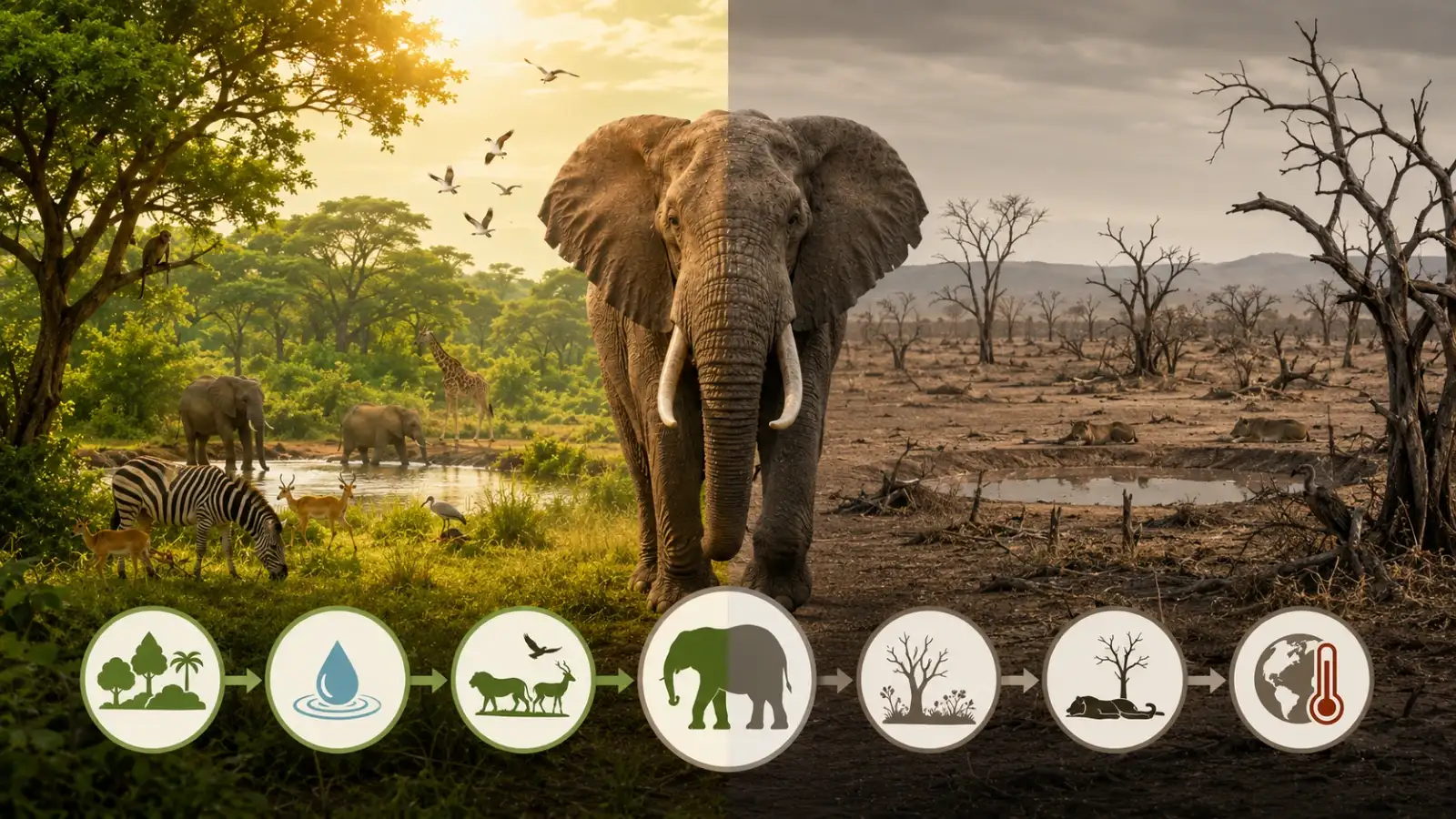
If these animals vanished, hundreds of rare plant and tree species that rely exclusively on elephant digestion for germination would stop reproducing. Over time, fast growing invasive weeds and dense underbrush would choke out ancient, slow growing hardwood trees. This loss of plant diversity would alter forest canopies, reducing the capacity of tropical forests to capture atmospheric carbon and ultimately worsening global climate change.
Without these natural well diggers, small wildlife species would perish from severe dehydration during extended droughts. Furthermore, the wide pathways cleared by moving herds through dense jungle vegetation serve as vital transit routes for smaller animals. If these corridors overgrown and closed up, smaller creatures would become trapped in isolated pockets, making it difficult for them to hunt, find mates, or escape devastating wildfires.
Without elephants to prune tree growth, savannas would quickly transform into dense, impenetrable thickets. Grasses would wither beneath the shade of overgrown scrub, driving away grazing herds and the carnivores that hunt them. As communities commemorate World Elephant Day, we must recognise that saving these iconic animals is not just about preserving a single species, but about protecting entire living ecosystems from complete environmental collapse.
Widespread Collapse of Plant Diversity and Forest Canopies
Without these massive herbivores roaming the wilderness, tropical plant communities would suffer almost immediate collapse. Elephants are premier seed dispersers, consuming vast quantities of fruits, pods, and vegetation daily. They carry seeds inside their digestive systems over dozens of miles before depositing them in nutrient rich piles of natural fertiliser.If these animals vanished, hundreds of rare plant and tree species that rely exclusively on elephant digestion for germination would stop reproducing. Over time, fast growing invasive weeds and dense underbrush would choke out ancient, slow growing hardwood trees. This loss of plant diversity would alter forest canopies, reducing the capacity of tropical forests to capture atmospheric carbon and ultimately worsening global climate change.
Devastating Impacts on Smaller Wildlife and Water Access
The absence of heavy pachyderms would also spell disaster for hundreds of smaller animal species that depend on elephant engineering for daily survival. During dry spells, elephants dig deep water holes into dry riverbeds using their powerful tusks and feet. These emergency wells provide lifelines for birds, lions, antelopes, and insects when surface water vanishes completely.Without these natural well diggers, small wildlife species would perish from severe dehydration during extended droughts. Furthermore, the wide pathways cleared by moving herds through dense jungle vegetation serve as vital transit routes for smaller animals. If these corridors overgrown and closed up, smaller creatures would become trapped in isolated pockets, making it difficult for them to hunt, find mates, or escape devastating wildfires.
Transformation of Savannas into Impenetrable Bushland
On open plains and savannas, the extinction of these giants would permanently alter the physical landscape. By pulling down mature trees and stripping away thorny bushes, elephants prevent grasslands from turning into thick scrubland. This constant clearance keeps plains open, allowing grasses to thrive and feeding vast herds of grazing animals such as zebras, wildebeests, and gazelles.Without elephants to prune tree growth, savannas would quickly transform into dense, impenetrable thickets. Grasses would wither beneath the shade of overgrown scrub, driving away grazing herds and the carnivores that hunt them. As communities commemorate World Elephant Day, we must recognise that saving these iconic animals is not just about preserving a single species, but about protecting entire living ecosystems from complete environmental collapse.
Next Story