
World Elephant Day: How Elephants Protect Biodiversity and Reshape Nature

Every year on World Elephant Day , people across the globe pause to celebrate the world's largest land mammals. We marvel at their intelligence, deep family bonds, and impressive physical size. However, these gentle giants are far more than just beautiful wildlife species to admire on a safari. Elephants are true ecosystem engineers , carrying out vital ecological work that maintains balance across African savannahs and Asian rainforests. Without their daily physical routines, entire landscapes would collapse, threatening thousands of other plant and animal species. Understanding why elephants matter more than we think reveals why protecting them on World Elephant Day safeguards the future of the natural world.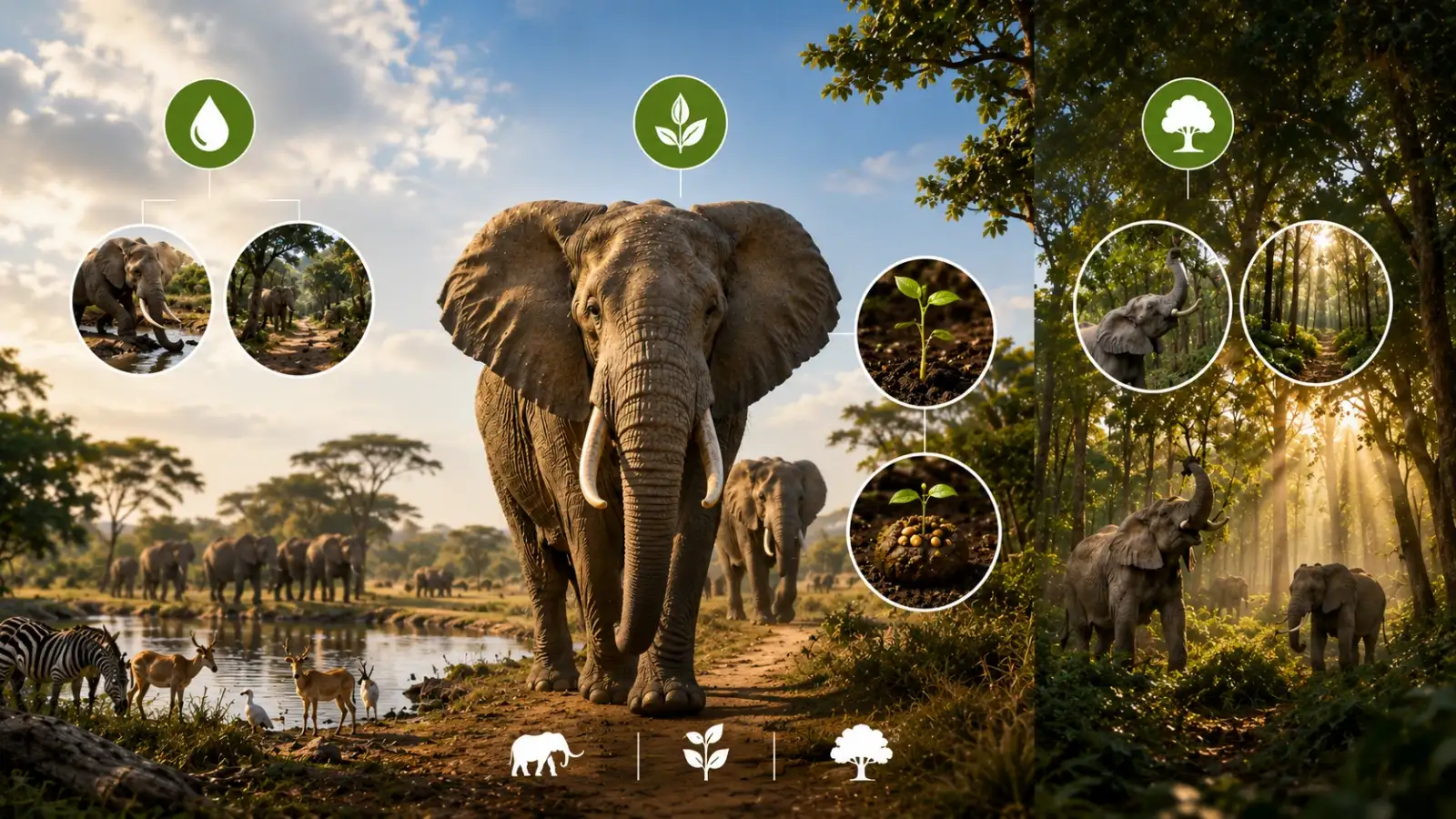
Furthermore, as these heavy animals trek across dense forests and thick grasslands, their sheer weight clears wide natural corridors. These animal highways allow smaller wildlife species to travel safely through impenetrable jungle terrain to find food and shelter. By constantly knocking down overgrown brush and clearing paths, elephants prevent destructive wildfires from spreading rapidly through dense vegetation.
When these seeds pass through the elephant digestive system, stomach acids soften the outer shells, encouraging rapid germination. The seeds are then deposited across miles of land inside nutrient rich piles of dung, which act as a natural, moist fertiliser. Without elephants constantly planting fresh trees and expanding forest canopies, numerous unique plant species would face complete extinction, drastically reducing global biodiversity.
Surprisingly, this feeding habit also plays a significant role in fighting global climate change. By removing smaller, fast growing vegetation, elephants allow slow growing, dense trees to absorb more nutrients and survive longer. These large, ancient trees store massive amounts of carbon dioxide over centuries. As we mark World Elephant Day, it becomes clear that these magnificent animals are active defenders of global climate balance. Protecting elephants means preserving the complex, living machinery that keeps our planet healthy and thriving.
Creating Water Sources and Clearing Pathways
During severe droughts, water becomes scarce across tropical landscapes. Elephants possess a remarkable ability to detect hidden underground water beneath dry riverbeds. Using their powerful tusks and large feet, they dig deep watering holes into the dry earth. These man made wells provide essential drinking water not only for the elephant herd but also for birds, small mammals, predators, and livestock living nearby.Furthermore, as these heavy animals trek across dense forests and thick grasslands, their sheer weight clears wide natural corridors. These animal highways allow smaller wildlife species to travel safely through impenetrable jungle terrain to find food and shelter. By constantly knocking down overgrown brush and clearing paths, elephants prevent destructive wildfires from spreading rapidly through dense vegetation.
Mega Gardeners and Seed Dispersal Experts
Elephants possess massive appetites, consuming hundreds of kilograms of leaves, bark, fruits, and branches every single day. As they travel vast distances across their territories, they serve as the ultimate mega gardeners of the wilderness. Many tropical tree species rely entirely on elephants to digest their heavy, hard shelled seeds.When these seeds pass through the elephant digestive system, stomach acids soften the outer shells, encouraging rapid germination. The seeds are then deposited across miles of land inside nutrient rich piles of dung, which act as a natural, moist fertiliser. Without elephants constantly planting fresh trees and expanding forest canopies, numerous unique plant species would face complete extinction, drastically reducing global biodiversity.
Balancing Forest Structure and Carbon Storage
By pulling down old trees and snapping thick branches while feeding, elephants reshape the physical structure of woodlands. This canopy pruning allows essential sunlight to penetrate down to the forest floor. Sunlight encourages lower grasses, shrubs, and young plants to flourish, providing crucial food for grazing animals like zebras, deer, and antelopes.Surprisingly, this feeding habit also plays a significant role in fighting global climate change. By removing smaller, fast growing vegetation, elephants allow slow growing, dense trees to absorb more nutrients and survive longer. These large, ancient trees store massive amounts of carbon dioxide over centuries. As we mark World Elephant Day, it becomes clear that these magnificent animals are active defenders of global climate balance. Protecting elephants means preserving the complex, living machinery that keeps our planet healthy and thriving.
Next Story