
10 Incredible Places Around the World to Watch Whales in the Wild

Few wildlife experiences compare with seeing a whale surface in the open ocean. One moment the water appears completely empty, and the next, an enormous body breaks through the surface, followed by a plume of spray, a sweeping tail or the unmistakable rise of a curved back. Unlike visiting a zoo or aquarium, whale watching takes place in the animals' natural environment, where sightings depend on migration patterns, feeding grounds, weather and the behaviour of wild marine life.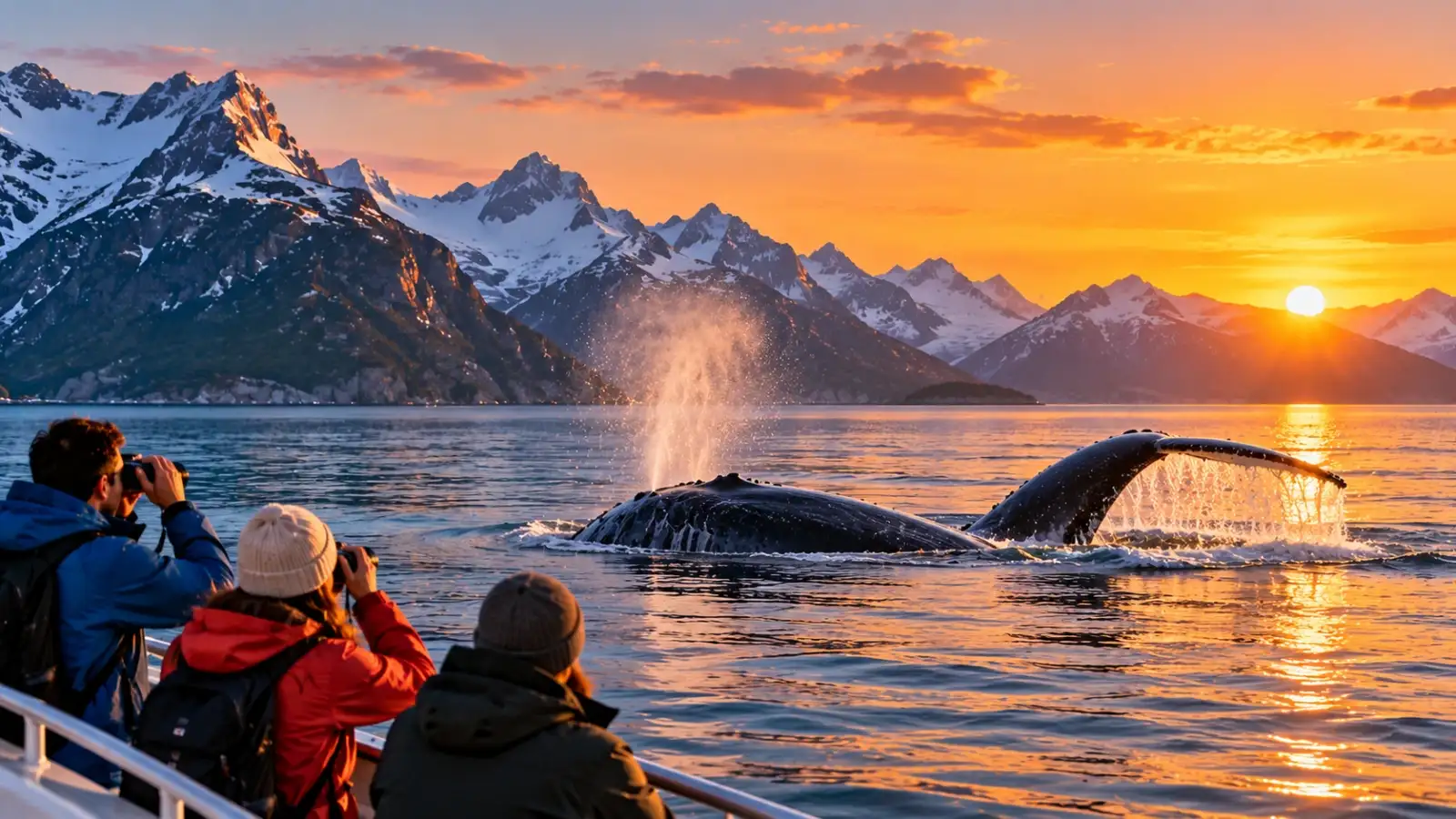
Whales travel enormous distances throughout their lives, following seasonal movements between feeding and breeding areas. This creates particular periods when certain coastlines become excellent places to look for specific species. Humpback whales , blue whales , orcas, sperm whales and southern right whales can all be encountered in different parts of the world, depending on the season.
From the nutrient-rich waters of California to the fjords of Iceland and the remote coastline of Argentina, these destinations offer opportunities to witness some of the ocean's largest animals in the wild.
The area is particularly known for sightings of humpback whales, blue whales and gray whales, while other marine mammals can also appear during excursions. NOAA describes the productive waters along California's coast as important habitats for migrating whales and identifies Monterey Bay among the renowned whale watching destinations on the Pacific coast.
One of the advantages of Monterey Bay is that whale watching is not limited to a single short seasonal window. Different species pass through the region at different times, giving visitors opportunities to encounter whales across much of the year.
What makes Hermanus particularly interesting is that visitors do not necessarily need to take a boat to see whales. From coastal viewpoints and walking routes, whales can sometimes be observed close to shore. This gives the destination a different character from conventional whale watching trips, where visitors travel offshore in search of animals.
The surrounding cliffs, bays and walking trails also make Hermanus a scenic coastal destination even when whales are not immediately visible.
Sperm whales are among the species associated with the Azores, while several species of dolphins and migrating baleen whales can also be encountered. The deep waters close to the islands make it possible to reach productive marine habitats without travelling extremely far offshore.
The experience is particularly appealing because the volcanic islands themselves provide a dramatic backdrop. Dark cliffs, green hills and deep blue Atlantic water create a setting very different from many other whale watching destinations.
The waters around Iceland can support encounters with minke whales, humpback whales, dolphins and, depending on location and season, other species. Northern Iceland is also known for whale watching, particularly around areas such as Húsavík.
The appeal extends beyond the animals themselves. A whale watching trip can place visitors among Iceland's volcanic coastline, mountains and open Atlantic waters, making the journey part of the experience even when sightings take time.
The lagoons along Mexico's Pacific coast are associated with seasonal gray whale activity, creating opportunities to see mothers and calves in relatively sheltered waters. The sight of a whale travelling alongside a boat can be particularly memorable because these coastal lagoons provide a very different environment from the open-ocean encounters common elsewhere.
The region also demonstrates why timing matters so much in whale watching. A destination can be extraordinary during one part of the year and comparatively quiet outside the main migration period.
The calmer conditions can make encounters feel different from trips conducted in exposed offshore waters. Whales may surface, travel through the bay or display behaviours that give observers an opportunity to appreciate their size and movement.
Australia's whale watching season varies by region, so travellers should check current local information before planning a trip. The country's coastline offers several other opportunities to see migrating whales, meaning Hervey Bay can also form part of a wider coastal wildlife itinerary.
Sperm whales are particularly associated with the area, while dolphins, albatrosses and other seabirds can also become part of the experience. The combination of deep water close to shore and dramatic mountains rising behind the coastline makes Kaikōura visually distinctive.
The location also highlights an important principle of whale watching. You are not simply travelling to a place where whales happen to pass. You are visiting an ecosystem whose underwater geography helps explain why large marine animals gather there.
The area's location at the intersection of different oceanographic conditions helps support a rich food supply. Humpback whales are among the species commonly associated with the region, and whale watching has become an important part of the area's marine tourism.
For visitors, the experience can also be educational. Responsible operators and sanctuary programmes emphasise identifying species, understanding whale behaviour and maintaining appropriate distances rather than treating the animals as attractions that boats should pursue.
The steep underwater terrain around Dominica means that visitors do not necessarily need to travel vast distances into the ocean to reach deep water. The combination of tropical scenery above the surface and large marine mammals below it makes the experience distinctive.
Whale watching here can also provide an opportunity to understand how underwater geography influences marine life. Deep channels, currents and food availability all help determine where different species spend their time.
Humpback whales are among the animals visitors may encounter, while minke whales and dolphins can also be seen. The surrounding mountains and quiet northern setting add to the atmosphere, particularly when a whale surfaces against the distant Icelandic landscape.
Summer is a popular period for whale watching in this part of Iceland, although sightings are never guaranteed because these are wild animals moving through a natural environment.
Humpback whales are among the species encountered in Antarctic waters, alongside other cetaceans. The setting is unlike almost any other whale watching destination, with icebergs, glaciers and vast stretches of open water forming the background.
Access is more complicated and expensive than a conventional coastal whale watching trip, and journeys are strongly dependent on weather and sea conditions. The remoteness is precisely what gives the experience its distinctive character.
Humpback whales, for example, undertake long seasonal migrations, while gray whales are particularly associated with their journeys between northern feeding grounds and breeding areas in the eastern Pacific. Southern right whales follow seasonal patterns in the Southern Hemisphere, while sperm whales can be encountered in deep-water habitats in several regions.
For this reason, choosing the species you want to see first can be more useful than choosing a destination and hoping for whales. Check the local migration calendar, typical sighting periods and species information before booking.
Choosing a responsible operator is equally important. NOAA's Whale SENSE programme recognises operators that commit to practices designed to minimise disturbance and promote responsible wildlife viewing.
Travellers should also remember that a whale approaching a boat does not mean people should move closer. The responsible response is to give the animal space and allow it to decide how close it wants to pass. Avoiding sudden movements, excessive noise and attempts to attract wildlife helps keep the encounter natural.
That uncertainty is part of what makes the experience memorable. When a whale finally surfaces, the moment feels earned rather than staged.
Whether you are watching humpbacks in Alaska, sperm whales in the Azores, gray whales in Baja California or southern right whales from the coast of South Africa, the most important part of the experience is seeing these animals as wild creatures in an ecosystem rather than as performers.
Whales travel enormous distances throughout their lives, following seasonal movements between feeding and breeding areas. This creates particular periods when certain coastlines become excellent places to look for specific species. Humpback whales , blue whales , orcas, sperm whales and southern right whales can all be encountered in different parts of the world, depending on the season.
From the nutrient-rich waters of California to the fjords of Iceland and the remote coastline of Argentina, these destinations offer opportunities to witness some of the ocean's largest animals in the wild.
Monterey Bay, California, USA
Monterey Bay is one of the most celebrated whale watching regions on the American West Coast. Its deep underwater canyon and nutrient-rich waters support an abundance of marine life, creating productive feeding grounds for several whale species.The area is particularly known for sightings of humpback whales, blue whales and gray whales, while other marine mammals can also appear during excursions. NOAA describes the productive waters along California's coast as important habitats for migrating whales and identifies Monterey Bay among the renowned whale watching destinations on the Pacific coast.
One of the advantages of Monterey Bay is that whale watching is not limited to a single short seasonal window. Different species pass through the region at different times, giving visitors opportunities to encounter whales across much of the year.
Hermanus, South Africa
Hermanus sits beside Walker Bay and has developed a strong reputation for land-based whale watching. During the southern winter and spring, southern right whales arrive in the coastal waters to breed and raise their young.What makes Hermanus particularly interesting is that visitors do not necessarily need to take a boat to see whales. From coastal viewpoints and walking routes, whales can sometimes be observed close to shore. This gives the destination a different character from conventional whale watching trips, where visitors travel offshore in search of animals.
The surrounding cliffs, bays and walking trails also make Hermanus a scenic coastal destination even when whales are not immediately visible.
The Azores, Portugal
The Azores sit in the middle of the Atlantic Ocean, making the Portuguese archipelago an important location for marine wildlife encounters. The deep ocean surrounding the islands attracts several cetacean species, and whale watching has become one of the region's notable nature-based activities.Sperm whales are among the species associated with the Azores, while several species of dolphins and migrating baleen whales can also be encountered. The deep waters close to the islands make it possible to reach productive marine habitats without travelling extremely far offshore.
The experience is particularly appealing because the volcanic islands themselves provide a dramatic backdrop. Dark cliffs, green hills and deep blue Atlantic water create a setting very different from many other whale watching destinations.
Reykjavík and Iceland's Coastline
Iceland offers a combination of dramatic landscapes and marine wildlife. Whale watching trips operate from several coastal locations, with Reykjavík providing an accessible starting point for visitors staying in the capital.The waters around Iceland can support encounters with minke whales, humpback whales, dolphins and, depending on location and season, other species. Northern Iceland is also known for whale watching, particularly around areas such as Húsavík.
The appeal extends beyond the animals themselves. A whale watching trip can place visitors among Iceland's volcanic coastline, mountains and open Atlantic waters, making the journey part of the experience even when sightings take time.
Baja California, Mexico
Baja California is particularly significant for visitors hoping to see gray whales. Each year, these whales undertake one of the longest migrations of any mammal, travelling between feeding areas in the Arctic and breeding and calving areas farther south.The lagoons along Mexico's Pacific coast are associated with seasonal gray whale activity, creating opportunities to see mothers and calves in relatively sheltered waters. The sight of a whale travelling alongside a boat can be particularly memorable because these coastal lagoons provide a very different environment from the open-ocean encounters common elsewhere.
The region also demonstrates why timing matters so much in whale watching. A destination can be extraordinary during one part of the year and comparatively quiet outside the main migration period.
Hervey Bay, Australia
Hervey Bay in Queensland is well known for seasonal humpback whale activity. The bay's relatively sheltered waters provide an important resting area for humpback whales during their migration along Australia's eastern coastline.The calmer conditions can make encounters feel different from trips conducted in exposed offshore waters. Whales may surface, travel through the bay or display behaviours that give observers an opportunity to appreciate their size and movement.
Australia's whale watching season varies by region, so travellers should check current local information before planning a trip. The country's coastline offers several other opportunities to see migrating whales, meaning Hervey Bay can also form part of a wider coastal wildlife itinerary.
Kaikōura, New Zealand
Kaikōura is one of New Zealand's best-known marine wildlife destinations. The coastline sits close to deep underwater environments where nutrient-rich currents help support an impressive variety of marine life.Sperm whales are particularly associated with the area, while dolphins, albatrosses and other seabirds can also become part of the experience. The combination of deep water close to shore and dramatic mountains rising behind the coastline makes Kaikōura visually distinctive.
The location also highlights an important principle of whale watching. You are not simply travelling to a place where whales happen to pass. You are visiting an ecosystem whose underwater geography helps explain why large marine animals gather there.
Stellwagen Bank, Massachusetts, USA
Stellwagen Bank National Marine Sanctuary lies off the coast of Massachusetts and is recognised for its productive waters and returning whale populations. NOAA describes the region as one of the world's premier whale watching destinations.The area's location at the intersection of different oceanographic conditions helps support a rich food supply. Humpback whales are among the species commonly associated with the region, and whale watching has become an important part of the area's marine tourism.
For visitors, the experience can also be educational. Responsible operators and sanctuary programmes emphasise identifying species, understanding whale behaviour and maintaining appropriate distances rather than treating the animals as attractions that boats should pursue.
Dominica, Caribbean
Dominica offers a very different whale watching experience because of its unusually deep waters close to the island. The Caribbean island is particularly associated with sperm whales, which inhabit deep offshore environments.The steep underwater terrain around Dominica means that visitors do not necessarily need to travel vast distances into the ocean to reach deep water. The combination of tropical scenery above the surface and large marine mammals below it makes the experience distinctive.
Whale watching here can also provide an opportunity to understand how underwater geography influences marine life. Deep channels, currents and food availability all help determine where different species spend their time.
Husavík, Iceland
Often described as one of Iceland's leading whale watching centres, Húsavík sits on the northern coast overlooking Skjálfandi Bay. The bay attracts a range of marine species and has become closely associated with whale watching tourism.Humpback whales are among the animals visitors may encounter, while minke whales and dolphins can also be seen. The surrounding mountains and quiet northern setting add to the atmosphere, particularly when a whale surfaces against the distant Icelandic landscape.
Summer is a popular period for whale watching in this part of Iceland, although sightings are never guaranteed because these are wild animals moving through a natural environment.
The Antarctic Peninsula
For travellers willing to venture much farther south, the Antarctic Peninsula provides one of the most extraordinary whale watching environments on Earth. During the Antarctic summer, whales can be found in waters around the continent and nearby islands as marine life responds to the seasonal abundance of food.Humpback whales are among the species encountered in Antarctic waters, alongside other cetaceans. The setting is unlike almost any other whale watching destination, with icebergs, glaciers and vast stretches of open water forming the background.
Access is more complicated and expensive than a conventional coastal whale watching trip, and journeys are strongly dependent on weather and sea conditions. The remoteness is precisely what gives the experience its distinctive character.
When Is the Best Time to Go Whale Watching?
There is no single global whale watching season. Different species migrate at different times, and some populations remain in particular areas throughout the year.Humpback whales, for example, undertake long seasonal migrations, while gray whales are particularly associated with their journeys between northern feeding grounds and breeding areas in the eastern Pacific. Southern right whales follow seasonal patterns in the Southern Hemisphere, while sperm whales can be encountered in deep-water habitats in several regions.
For this reason, choosing the species you want to see first can be more useful than choosing a destination and hoping for whales. Check the local migration calendar, typical sighting periods and species information before booking.
You may also like
- Travelling, but chasing film sets!
- 'You put underdeveloped brains together': Psychiatrist on why parents should rethink sending children away to college
- King George III built this London observatory to watch the stars; 250 years later, it is a $24 million private home
- Is It Safe to Lift Heavy Objects During Pregnancy?
- AI mural inspired by Banksy sparks backlash in Bristol: Artists spot wrong landmarks and a bizarre version of the famous Mild Mild West as debate over AI art grows
How to Watch Whales Responsibly
A good whale watching experience should not come at the expense of the animals. Boats should never chase whales, cut across their path or attempt to force a close encounter. NOAA recommends observing large whales from at least 100 yards away unless species-specific or local regulations require a greater distance. In some American waters, additional rules apply to particular species, including larger minimum distances for North Atlantic right whales and killer whales.Choosing a responsible operator is equally important. NOAA's Whale SENSE programme recognises operators that commit to practices designed to minimise disturbance and promote responsible wildlife viewing.
Travellers should also remember that a whale approaching a boat does not mean people should move closer. The responsible response is to give the animal space and allow it to decide how close it wants to pass. Avoiding sudden movements, excessive noise and attempts to attract wildlife helps keep the encounter natural.
The Real Magic Is in the Waiting
Whale watching is different from many conventional wildlife experiences because there is no guarantee that an animal will appear exactly when you expect it. You may spend a long period looking across an apparently empty ocean before suddenly seeing a distant blow or a dark shape moving through the water.That uncertainty is part of what makes the experience memorable. When a whale finally surfaces, the moment feels earned rather than staged.
Whether you are watching humpbacks in Alaska, sperm whales in the Azores, gray whales in Baja California or southern right whales from the coast of South Africa, the most important part of the experience is seeing these animals as wild creatures in an ecosystem rather than as performers.






Loving Newspoint? Download the app now
