
Adhik Jyeshtha Begins: The extra month that changes the whole festival season


The first clue that the calendar is about to do something unusual often comes from a phone call. A cousin wants a wedding date. A temple group is fixing its yatra. Someone in the family WhatsApp group asks, “So when is Jyeshtha actually starting?” This year, the answer comes with an extra beat.
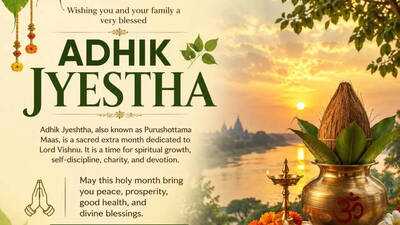
In 2026, the Hindu lunar calendar makes room for an intercalary month, Adhik Maas , and because it falls in the Jyeshtha zone, many panchangs will call it Adhik Jyeshtha Maas . For devotees, it’s not just a technical correction. It changes the feel of the season. It nudges the timing of later vrata, utsav, and even the practical “when do we plan what” rhythm that families live by.
Why this “extra month” matters to the way we keep time
Our festivals don’t float randomly. They’re anchored to tithi, the lunar day, and to the month names that come from the Moon’s cycle. But our seasons follow the Sun. Left unchecked, a purely lunar year would drift away from the heat of Jyeshtha, the rains of Shravan, and the crisp light of Kartik.
So the calendar does something quietly intelligent. When a lunar month passes without a sankranti, meaning the Sun does not enter a new rashi, a zodiac sign, that month is marked as Adhik Maas, an “additional month.” In 2026, this happens in the Jyeshtha stretch, which is why you’ll hear Adhik Jyeshtha. Many traditions also call it Purushottam Maas, associating the month with Purushottama, a name of Vishnu that means “the highest person,” the supreme.
For householders, the month often becomes a pause with purpose. A bit more japa, the soft repetition of a mantra. A few more rounds of nama smaran, remembering the Divine Name. Less rush to “finish” a puja. The calendar gives you time back, then asks what you’ll do with it.
So when is Adhik Jyeshtha in 2026, and why do dates look different?
Most widely circulated panchang-based windows for Adhik Maas 2026 place it from May 17 to June 15, and that May 17 to June 15 span is a helpful editorial window for planning. Several public festival listings also use these dates.
Still, readers should expect variation in naming and even in what a given region calls “beginning.” India follows two common month systems. In the amanta system, the lunar month ends with amavasya, the new moon. In the purnimanta system, the month ends with purnima, the full moon. The tithi sequence is the same, but the month label can shift. So what one panchang calls “Adhik Jyeshtha” another may present with a slightly different emphasis, or place the “start” at a different local sunrise rule.
That’s why the most useful action, especially if you’re outside India, is simple. Check your local panchang for your city and time zone. A tithi that begins late night in Delhi can land on a different civil date in Toronto or Sydney.
The story devotees tell when they say “Purushottam Maas”
Adhik Maas has long carried a double reputation in popular speech. Some families call it Mal Maas, “impure month,” and avoid big life ceremonies. Yet devotional communities speak of it as Purushottam Maas, a month offered to Vishnu when no other devata is assigned as its presiding deity.
Puranic tradition, retold in many regional kathas, describes the extra month approaching Vishnu with a kind of plaintive dignity: everyone has a place in the calendar, but what about me? Vishnu grants it refuge, and with that, a special devotional character. The emotional note in that story is hard to miss. Even what seems “left out” can become a vessel for bhakti, loving devotion.
So if you’ve grown up hearing elders say, “This month is for more naam-jap,” they’re not being poetic. They’re following a cultural memory that treats the extra month as a chance to turn inward without withdrawing from life.
What changes in your 2026 festival season, in plain terms
An extra month doesn’t add new festivals out of nowhere, but it stretches the runway. The later cycle shifts. Dates you mentally associate with “by then it’s already Ashadh” may arrive a little later on the civil calendar because the lunar calendar has inserted a whole extra month.
You’ll also see certain observances appear twice within the broader Jyeshtha period. That’s why 2026 is being discussed in the context of “four Ekadashis in Jyeshtha.” Some calendars list Apara Ekadashi, Padmini Ekadashi, Parama Ekadashi, and Nirjala Ekadashi across the extended span, with Padmini and Parama tied to the Adhik Maas framework in many Vaishnava traditions. One widely shared schedule places Parama Ekadashi on June 11, 2026, with parana, the fast-breaking window, on June 12 morning. Another listing notes Nirjala Ekadashi tithi beginning on June 24 evening, which falls after the May 17 to June 15 Adhik Maas window, reminding us again that “Jyeshtha season” and “Adhik Jyeshtha month” are not the same thing.
For many households, the most immediate effect is not philosophical. It’s practical. Auspicious ceremonies like weddings and griha pravesh, house entry, are often postponed during Adhik Maas by custom in several regions. Families who plan early avoid last-minute disappointments.
A simple devotional rhythm that fits most homes
If you’re wondering what you’re “supposed” to do, don’t overcomplicate it. Adhik Maas is not a month that demands grand arrangements. It rewards steadiness.
Start with your nitya karma, your daily worship. Light a diya, a lamp, at your mandir space at home. Offer water, flowers, or tulsi, holy basil, if you keep it. Read a few pages of a text you already love. Many choose Vishnu Sahasranama, the thousand names of Vishnu, or a chapter of the Bhagavad Gita. Others sit with the Ramcharitmanas, or regional stotras that feel intimate.
Dana, charitable giving, is another natural thread. A sack of rice to a nearby need. A quiet online contribution to a gaushala, cow shelter, or a temple annadanam kitchen. If you can’t give money, give time. Call an elder who lives alone. Feed a stray. Wash the water bowls outside your gate.
And if you keep vrata, choose one that you can keep without strain. The point is not to punish the body. It’s to make the mind a little clearer, the heart a little softer.
Mark these mid-month moments if you like keeping a clean calendar
Even people who don’t observe every tithi like to anchor the month with one or two bigger days.
Adhika Jyeshtha Purnima is one such marker, and several widely cited calendars place it on Sunday, May 31, 2026, with purnima tithi beginning May 30 late morning and ending May 31 afternoon. Many devotees use purnima for satyanarayan katha, a narrated worship of Satyanarayana, a form of Vishnu, or for simple evening arati with family.
Ekadashi observances during this period can feel dense because the month structure creates additional Ekadashi names in some traditions. If you observe Ekadashi, don’t rely on a generic chart forwarded in a group. Confirm for your location, then follow the parana timing carefully, since that’s where most errors happen.
If you’re outside India, one small habit saves a lot of confusion
Diaspora families often keep the heart of the practice but lose time to date-matching. The fix is easy. Use a panchang that lets you set your city, then follow the tithi at local sunrise. Many temple websites also publish city-specific calendars for their congregations.
And remember the amanta and purnimanta difference when you compare notes with relatives back home. You may both be correct, just speaking in different month-names for the same lunar days.
Adhik Jyeshtha doesn’t ask you to perform more. It asks you to pay attention. On a warm May evening, when the diya flame steadies and the house finally quietens, open your panchang once, circle the days you care about, and let the extra month do what it came to do, give time its proper place.
In 2026, the Hindu lunar calendar makes room for an intercalary month, Adhik Maas , and because it falls in the Jyeshtha zone, many panchangs will call it Adhik Jyeshtha Maas . For devotees, it’s not just a technical correction. It changes the feel of the season. It nudges the timing of later vrata, utsav, and even the practical “when do we plan what” rhythm that families live by.
Why this “extra month” matters to the way we keep time
Our festivals don’t float randomly. They’re anchored to tithi, the lunar day, and to the month names that come from the Moon’s cycle. But our seasons follow the Sun. Left unchecked, a purely lunar year would drift away from the heat of Jyeshtha, the rains of Shravan, and the crisp light of Kartik.
So the calendar does something quietly intelligent. When a lunar month passes without a sankranti, meaning the Sun does not enter a new rashi, a zodiac sign, that month is marked as Adhik Maas, an “additional month.” In 2026, this happens in the Jyeshtha stretch, which is why you’ll hear Adhik Jyeshtha. Many traditions also call it Purushottam Maas, associating the month with Purushottama, a name of Vishnu that means “the highest person,” the supreme.
For householders, the month often becomes a pause with purpose. A bit more japa, the soft repetition of a mantra. A few more rounds of nama smaran, remembering the Divine Name. Less rush to “finish” a puja. The calendar gives you time back, then asks what you’ll do with it.
So when is Adhik Jyeshtha in 2026, and why do dates look different?
Most widely circulated panchang-based windows for Adhik Maas 2026 place it from May 17 to June 15, and that May 17 to June 15 span is a helpful editorial window for planning. Several public festival listings also use these dates.
Still, readers should expect variation in naming and even in what a given region calls “beginning.” India follows two common month systems. In the amanta system, the lunar month ends with amavasya, the new moon. In the purnimanta system, the month ends with purnima, the full moon. The tithi sequence is the same, but the month label can shift. So what one panchang calls “Adhik Jyeshtha” another may present with a slightly different emphasis, or place the “start” at a different local sunrise rule.
That’s why the most useful action, especially if you’re outside India, is simple. Check your local panchang for your city and time zone. A tithi that begins late night in Delhi can land on a different civil date in Toronto or Sydney.
The story devotees tell when they say “Purushottam Maas”
Adhik Maas has long carried a double reputation in popular speech. Some families call it Mal Maas, “impure month,” and avoid big life ceremonies. Yet devotional communities speak of it as Purushottam Maas, a month offered to Vishnu when no other devata is assigned as its presiding deity.
Puranic tradition, retold in many regional kathas, describes the extra month approaching Vishnu with a kind of plaintive dignity: everyone has a place in the calendar, but what about me? Vishnu grants it refuge, and with that, a special devotional character. The emotional note in that story is hard to miss. Even what seems “left out” can become a vessel for bhakti, loving devotion.
So if you’ve grown up hearing elders say, “This month is for more naam-jap,” they’re not being poetic. They’re following a cultural memory that treats the extra month as a chance to turn inward without withdrawing from life.
What changes in your 2026 festival season, in plain terms
An extra month doesn’t add new festivals out of nowhere, but it stretches the runway. The later cycle shifts. Dates you mentally associate with “by then it’s already Ashadh” may arrive a little later on the civil calendar because the lunar calendar has inserted a whole extra month.
You’ll also see certain observances appear twice within the broader Jyeshtha period. That’s why 2026 is being discussed in the context of “four Ekadashis in Jyeshtha.” Some calendars list Apara Ekadashi, Padmini Ekadashi, Parama Ekadashi, and Nirjala Ekadashi across the extended span, with Padmini and Parama tied to the Adhik Maas framework in many Vaishnava traditions. One widely shared schedule places Parama Ekadashi on June 11, 2026, with parana, the fast-breaking window, on June 12 morning. Another listing notes Nirjala Ekadashi tithi beginning on June 24 evening, which falls after the May 17 to June 15 Adhik Maas window, reminding us again that “Jyeshtha season” and “Adhik Jyeshtha month” are not the same thing.
For many households, the most immediate effect is not philosophical. It’s practical. Auspicious ceremonies like weddings and griha pravesh, house entry, are often postponed during Adhik Maas by custom in several regions. Families who plan early avoid last-minute disappointments.
A simple devotional rhythm that fits most homes
If you’re wondering what you’re “supposed” to do, don’t overcomplicate it. Adhik Maas is not a month that demands grand arrangements. It rewards steadiness.
Start with your nitya karma, your daily worship. Light a diya, a lamp, at your mandir space at home. Offer water, flowers, or tulsi, holy basil, if you keep it. Read a few pages of a text you already love. Many choose Vishnu Sahasranama, the thousand names of Vishnu, or a chapter of the Bhagavad Gita. Others sit with the Ramcharitmanas, or regional stotras that feel intimate.
Dana, charitable giving, is another natural thread. A sack of rice to a nearby need. A quiet online contribution to a gaushala, cow shelter, or a temple annadanam kitchen. If you can’t give money, give time. Call an elder who lives alone. Feed a stray. Wash the water bowls outside your gate.
And if you keep vrata, choose one that you can keep without strain. The point is not to punish the body. It’s to make the mind a little clearer, the heart a little softer.
Mark these mid-month moments if you like keeping a clean calendar
Even people who don’t observe every tithi like to anchor the month with one or two bigger days.
Adhika Jyeshtha Purnima is one such marker, and several widely cited calendars place it on Sunday, May 31, 2026, with purnima tithi beginning May 30 late morning and ending May 31 afternoon. Many devotees use purnima for satyanarayan katha, a narrated worship of Satyanarayana, a form of Vishnu, or for simple evening arati with family.
If you’re outside India, one small habit saves a lot of confusion
And remember the amanta and purnimanta difference when you compare notes with relatives back home. You may both be correct, just speaking in different month-names for the same lunar days.
Adhik Jyeshtha doesn’t ask you to perform more. It asks you to pay attention. On a warm May evening, when the diya flame steadies and the house finally quietens, open your panchang once, circle the days you care about, and let the extra month do what it came to do, give time its proper place.
Next Story