
Why Diyas Are Lit on Diwali: 3 Stories Behind the Festival of Lights

Why are diyas lit on Diwali, and what do they symbolise? Every year, millions of homes across India glow with rows of small clay lamps during the festival of lights. Lighting diyas is more than just a festive tradition; it represents the victory of good over evil, light over darkness and hope over despair. Rooted in Hindu mythology and ancient traditions, this ritual has several fascinating stories behind it. Here are three popular stories that explain the significance of lighting diyas on Diwali.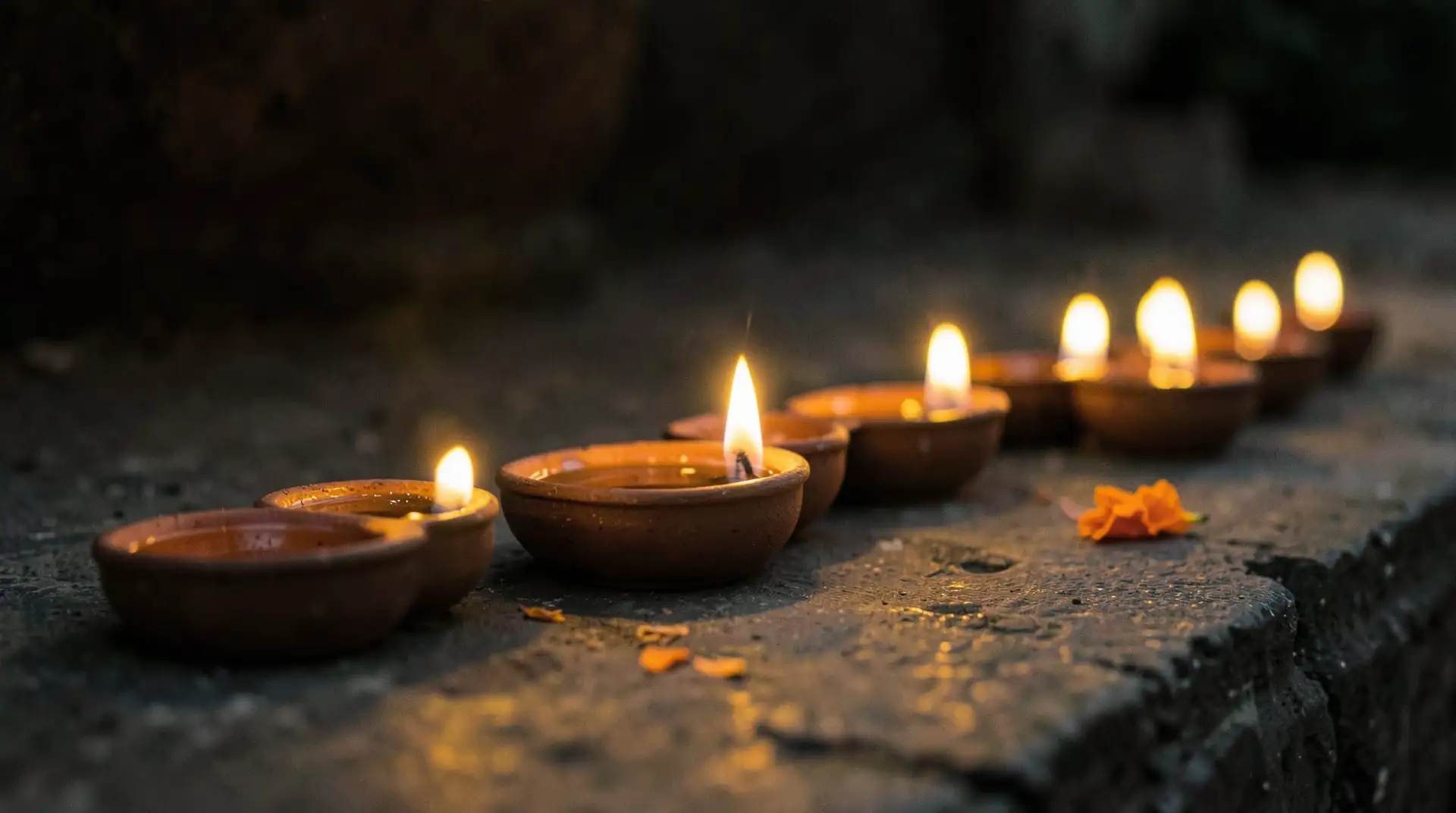
The diya in this telling is not a ritual object. It is a greeting. It says: we have been waiting, and now we see you. Households that follow this story light their lamps facing outward, toward the street, as if still welcoming someone home. The Ramayana's account of this homecoming is found across its many regional versions, Valmiki's Sanskrit original, Tulsidas's Awadhi Ramcharitmanas, and dozens of regional retellings, each with its own texture, though the central image of the lit city remains constant.
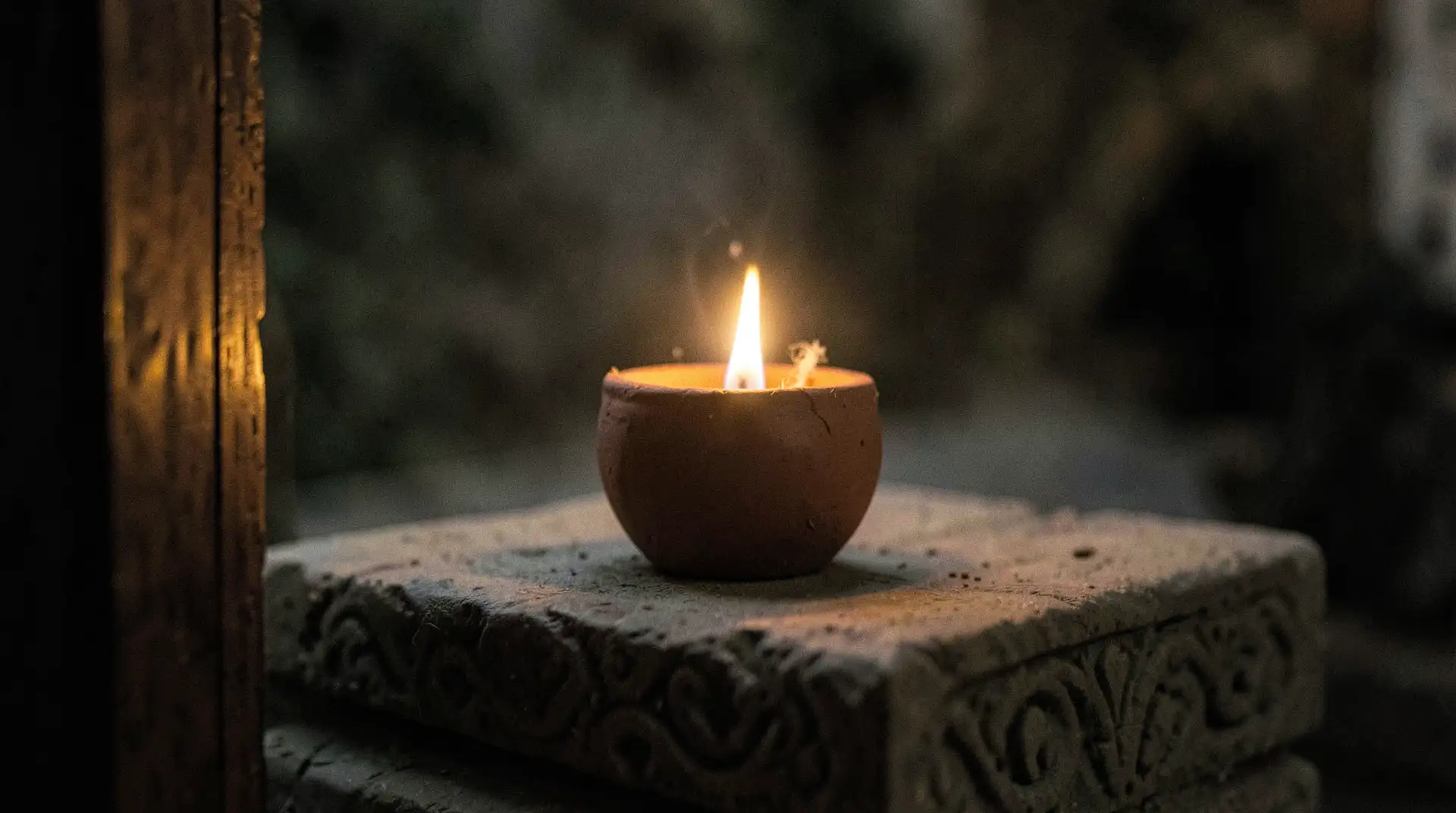
The diya here is an invitation. Lamps are placed at the entrance, on the puja thali, near the tulsi plant, and at the edges of the courtyard. Rangoli marks the threshold. The logic is not decorative; it is welcoming. Lakshmi's association with light, prosperity, and the lotus, a flower that blooms in water and opens toward the sun, runs through the Puranas and through popular tradition in ways that are not always easy to separate. What the tradition agrees on is this: she moves toward what is lit and tended, and away from what is neglected.
This story gives the diya a different weight. It is not welcoming a king or calling a goddess; it is marking the end of something oppressive. In some households, an effigy is burned before the lamps are lit, the darkness named and then dismissed. The Bhagavata Purana contains accounts of Narakasura, though the details of the story vary across regional tellings. In Maharashtra, the day is sometimes called Abhyanga Snan, a ritual oil bath taken before dawn, another form of the same idea: washing away what was dark before the light comes in.
The diya holds all three answers at once. It is clay and cotton and oil, and it is also a welcome, an invitation, and a declaration, depending on which story your family carries to the threshold.
Ram's Return to Ayodhya
The story most widely told across northern and central India traces Diwali's light to the Ramayana. After fourteen years of exile and the defeat of Ravana in Lanka, Ram, Sita, and Lakshman returned to Ayodhya. The people of the city, the Ramayana tells, lit lamps along every road and rooftop to welcome them home. It was an act of joy and recognition, the rightful king, long absent, finally seen again.The diya in this telling is not a ritual object. It is a greeting. It says: we have been waiting, and now we see you. Households that follow this story light their lamps facing outward, toward the street, as if still welcoming someone home. The Ramayana's account of this homecoming is found across its many regional versions, Valmiki's Sanskrit original, Tulsidas's Awadhi Ramcharitmanas, and dozens of regional retellings, each with its own texture, though the central image of the lit city remains constant.
Lakshmi's Arrival at the Threshold
A second tradition, particularly strong in western India and among merchant communities, centres not on Ram's return but on Lakshmi's movement. In this telling, Diwali is the night Lakshmi moves through the world, and she enters only homes that are clean, open, and bright. Darkness, in this reading, is not merely the absence of light, it is a closed door.The diya here is an invitation. Lamps are placed at the entrance, on the puja thali, near the tulsi plant, and at the edges of the courtyard. Rangoli marks the threshold. The logic is not decorative; it is welcoming. Lakshmi's association with light, prosperity, and the lotus, a flower that blooms in water and opens toward the sun, runs through the Puranas and through popular tradition in ways that are not always easy to separate. What the tradition agrees on is this: she moves toward what is lit and tended, and away from what is neglected.
The Defeat of Narakasura
In southern India, and particularly in Maharashtra, a third story carries the night. Narakasura, a demon king who had imprisoned thousands and spread darkness across the earth, was killed by Krishna, or, in some versions of the tale, by Satyabhama, Krishna's wife, who struck the final blow herself. The day before Diwali, called Naraka Chaturdashi, marks this defeat. The lamps lit that evening celebrate not a homecoming or an arrival, but a liberation.This story gives the diya a different weight. It is not welcoming a king or calling a goddess; it is marking the end of something oppressive. In some households, an effigy is burned before the lamps are lit, the darkness named and then dismissed. The Bhagavata Purana contains accounts of Narakasura, though the details of the story vary across regional tellings. In Maharashtra, the day is sometimes called Abhyanga Snan, a ritual oil bath taken before dawn, another form of the same idea: washing away what was dark before the light comes in.
One Festival, Many Flames
What is striking about these three stories is not that they contradict each other but that they do not need to. Each answers a slightly different question. Why do we welcome the light? Because a king came home. Why do we keep our homes bright and open? Because prosperity moves toward what is tended. Why do we celebrate at all? Because something that held people in darkness was ended.The diya holds all three answers at once. It is clay and cotton and oil, and it is also a welcome, an invitation, and a declaration, depending on which story your family carries to the threshold.
Next Story