
Hampi's Vittala Temple: How Its Stone Pillars Produce Musical Notes

The Sabha Mandapa of the Vittala Temple at Hampi holds a colonnade of pillars that, when struck gently, produce what sound like the notes of a musical scale.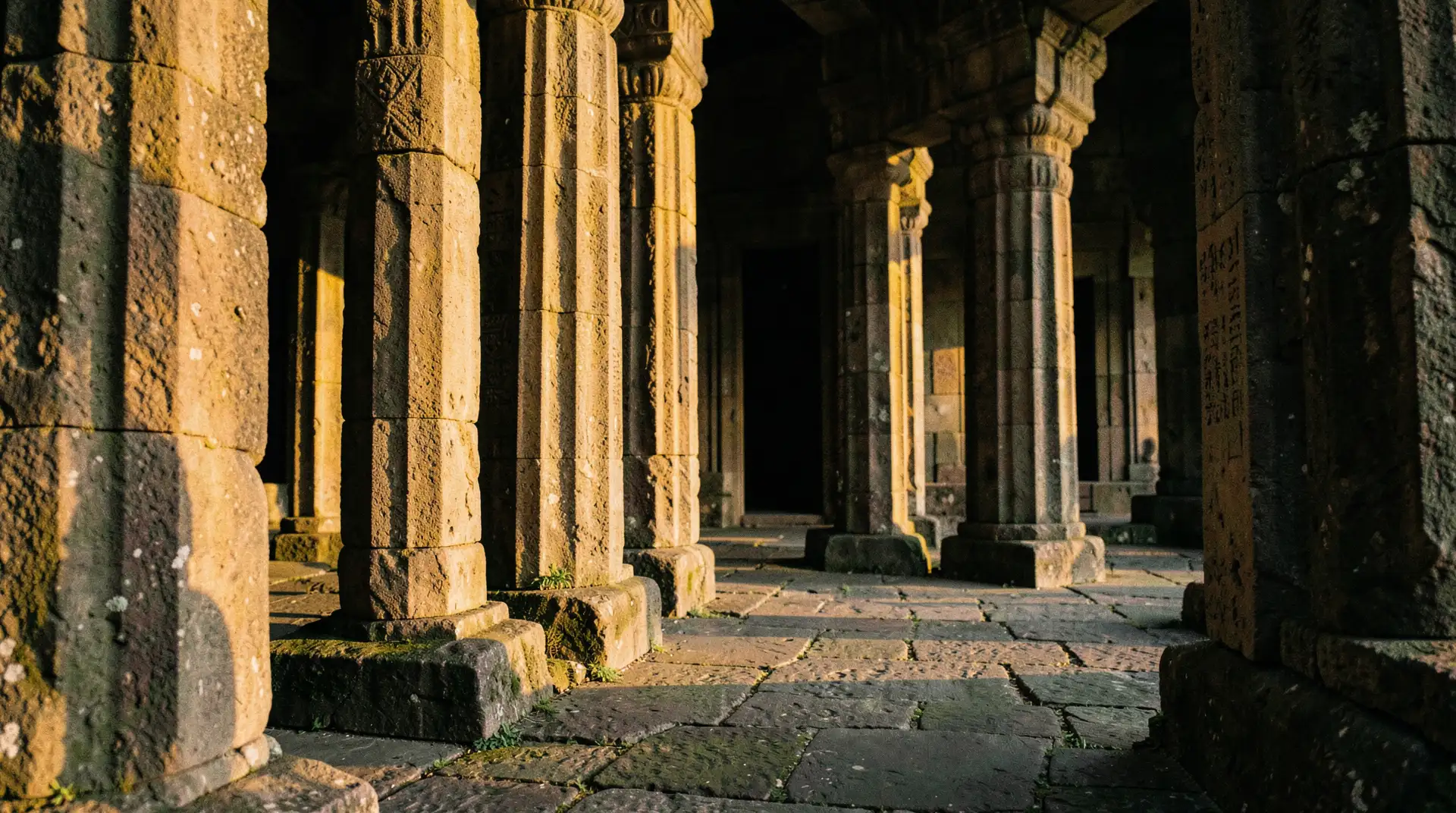
Travellers have described the experience for generations, and the pillars have come to be known as the musical pillars or Saregama pillars.
The stone is granite, the setting is a Vijayanagara-era hall, and the sound is real, though the explanation for it is more grounded than the legends suggest.
These surrounding shafts are not decorative additions. They are part of a single continuous piece of stone, shaped so that each shaft has a different cross-section, a different length, and a different mass.
When you tap one, the vibration travels through that shaft alone, producing a tone that depends on its dimensions. Different shafts, different tones. The effect across the cluster resembles the notes of a percussion instrument.
The shafts are carved so that each one is effectively isolated at its base and top, allowing it to ring rather than thud. The precision required to achieve this in stone, without the ability to shave a millimetre off and test again the way a metalworker might, points to a deep familiarity with how the material behaves.
The craftsmen were not working from a theory of acoustics. They were working from accumulated knowledge of what granite does when shaped in particular ways.
Music is central to Vaishnava worship, the Haridasa saints of Karnataka composed and sang devotional poetry, and the temple's design reflects that musical inheritance. Pillars that could produce sound were not a curiosity to be marvelled at.
They were, in the tradition's own understanding, instruments built into the house of god, so that the very structure of the temple participated in worship. Whether a visitor approaches this as architecture, as acoustics, or as faith, the intent encoded in the stone is the same: sound as devotion.
The pillars are solid granite throughout. The cuts are still visible, and those particular shafts no longer ring as they once did. The episode is often cited as an example of the gap between the assumption that a trick must involve a hidden mechanism and the reality that the mechanism is the shape itself.
The remaining intact pillars still produce their tones, and the Archaeological Survey of India now manages the site with restrictions on touching them, so the experience today is more visual than auditory for most visitors.
The temple complex was never fully completed, the famous stone chariot in the courtyard still has its wheels partly unfinished, yet what was built represents the fullest expression of Vijayanagara temple craft.
The musical pillars are the most visited element, but the complex also contains some of the finest relief carving of the period: panels of horses, elephants, dancers, and scenes from the Puranas cut into the same hard granite with a delicacy that the material seems to resist. The sound the pillars make is one note in a much larger composition that the builders left behind.
Travellers have described the experience for generations, and the pillars have come to be known as the musical pillars or Saregama pillars.
The stone is granite, the setting is a Vijayanagara-era hall, and the sound is real, though the explanation for it is more grounded than the legends suggest.
What the Pillars Actually Are
The musical pillars stand in the main hall, or Ranga Mandapa, of the Vittala Temple. Each central pillar is surrounded by a cluster of thinner shafts carved from the same block of granite.These surrounding shafts are not decorative additions. They are part of a single continuous piece of stone, shaped so that each shaft has a different cross-section, a different length, and a different mass.
When you tap one, the vibration travels through that shaft alone, producing a tone that depends on its dimensions. Different shafts, different tones. The effect across the cluster resembles the notes of a percussion instrument.
The Craft Behind the Sound
Vijayanagara craftsmen were working in a tradition that understood stone as a material with acoustic properties. Granite is dense and elastic enough to carry vibration cleanly if the piece is well-proportioned and not in contact with a dampening surface.The shafts are carved so that each one is effectively isolated at its base and top, allowing it to ring rather than thud. The precision required to achieve this in stone, without the ability to shave a millimetre off and test again the way a metalworker might, points to a deep familiarity with how the material behaves.
The craftsmen were not working from a theory of acoustics. They were working from accumulated knowledge of what granite does when shaped in particular ways.
You may also like
- Guru Nanak Jayanti 2026: Nov 24 or 25? Date & Prakash Parv Guide
- Devuthani Ekadashi: 'Utho Dev Baitho Dev' Song & Awakening Ritual
- Sun Enters Anuradha Nakshatra Nov 20: Key Shifts From Aries to Virgo
- 2 Bhagavad Gita Verses That Keep Your Mind Calm in Success & Failure
- Why Shri Ram Called Hanuman His Brother Like Bharat: Chalisa Verse
What the Tradition Says
In the devotional tradition surrounding the Vittala Temple, the musical pillars are understood as an offering. The Vittala Temple is dedicated to Vittala, a form of Vishnu worshipped especially in the Varkari tradition of Maharashtra and Karnataka.Music is central to Vaishnava worship, the Haridasa saints of Karnataka composed and sang devotional poetry, and the temple's design reflects that musical inheritance. Pillars that could produce sound were not a curiosity to be marvelled at.
They were, in the tradition's own understanding, instruments built into the house of god, so that the very structure of the temple participated in worship. Whether a visitor approaches this as architecture, as acoustics, or as faith, the intent encoded in the stone is the same: sound as devotion.
The British-Era Damage and What Remains
Colonial-era accounts record that British officials, curious about how the sound was produced, cut two of the pillars open to look for hollow chambers inside. They found none.The pillars are solid granite throughout. The cuts are still visible, and those particular shafts no longer ring as they once did. The episode is often cited as an example of the gap between the assumption that a trick must involve a hidden mechanism and the reality that the mechanism is the shape itself.
The remaining intact pillars still produce their tones, and the Archaeological Survey of India now manages the site with restrictions on touching them, so the experience today is more visual than auditory for most visitors.
Hampi and the Vijayanagara Legacy
The Vittala Temple sits within the ruins of Vijayanagara, the capital of an empire that, at its height, was among the largest cities in the world.The temple complex was never fully completed, the famous stone chariot in the courtyard still has its wheels partly unfinished, yet what was built represents the fullest expression of Vijayanagara temple craft.
The musical pillars are the most visited element, but the complex also contains some of the finest relief carving of the period: panels of horses, elephants, dancers, and scenes from the Puranas cut into the same hard granite with a delicacy that the material seems to resist. The sound the pillars make is one note in a much larger composition that the builders left behind.






Loving Newspoint? Download the app now
