
Karah Prasad: Why the Gurdwara Offering Uses Three Equal Parts

When Karah Prasad is placed in a cupped palm, it arrives the same way for every person in the Gurdwara: the same warmth, the same weight, and the same three-part simplicity. That sameness is the point, and it has been the point since the tradition took its settled form under the Sikh Gurus.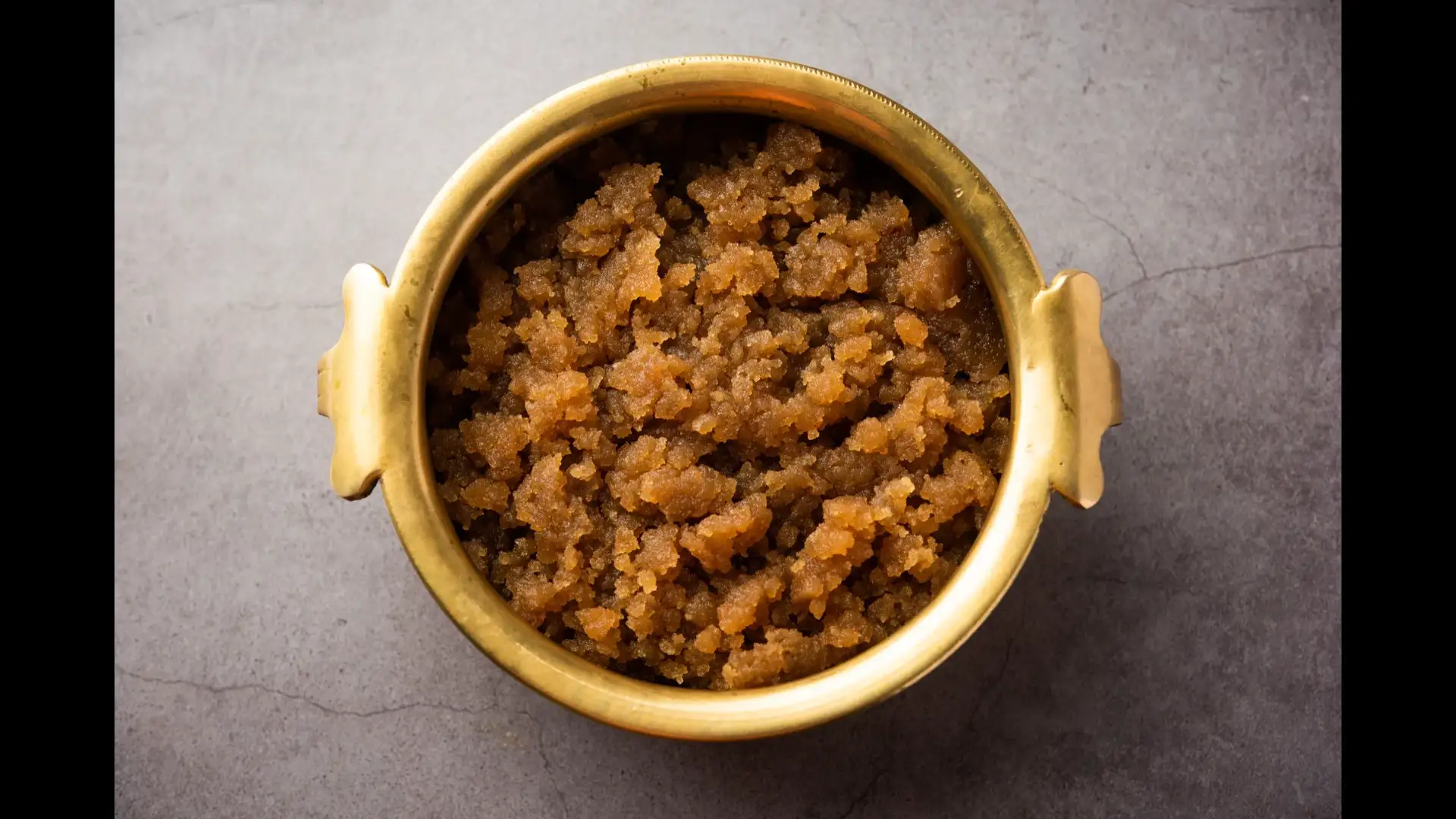
No shortcut changes the ratio without changing the meaning. In Sikh tradition, the equality of the three measured parts is understood as a deliberate teaching: no single element dominates, and no ingredient is more important than the others. The recipe is, in this sense, a small model of the principle it serves.
The karahi is not decorative. It is chosen because it holds heat evenly and because iron, in this tradition, carries connotations of strength and humility together. The prasad made in it takes the vessel's name.
Both practices express the same Sikh teaching of seva (selfless service) and sangat (community of equals). Where the langar feeds the body across a long shared meal, Karah Prasad delivers the same principle in a single handful. The offering is also understood as prasad in the sense of grace, something received rather than earned, which is why it is accepted with both hands cupped and never refused.
The preparation itself is considered an act of worship rather than ordinary cooking. Under standard Rehat Maryada (Sikh code of conduct) practice, the degh of Karah Prasad is placed before the Guru Granth Sahib and touched with a kirpan (kirpan bhet) as part of the offering during Ardas before distribution.
This sequence, made in prayer, offered to the Guru, then shared with all, reflects the Sikh understanding that what comes from devotion belongs to everyone equally.
The act of distributing Karah Prasad is one of the most visible expressions of the Sikh concept of equality, that before the Guru Granth Sahib, no hierarchy of caste, wealth, or standing applies.
Accepting it with cupped hands and eating it right away, rather than pocketing it, is the customary practice, though the tradition is gentle rather than enforced.
What the equal measure of flour, ghee, and sugar represents cannot be separated from how it is given: one hand serves, and every other hand receives the same.
The Three Ingredients and Their Measure
Karah Prasad is made from atta (whole wheat flour), ghee, and sugar, each used in equal weight, with water added to dissolve the sugar and bring the mixture together. The flour is roasted slowly in the ghee until it deepens in colour and releases a nutty fragrance, then the sugar syrup is folded in.No shortcut changes the ratio without changing the meaning. In Sikh tradition, the equality of the three measured parts is understood as a deliberate teaching: no single element dominates, and no ingredient is more important than the others. The recipe is, in this sense, a small model of the principle it serves.
Why It Is Called Karah
The name comes from the karah or karahi, the wide, heavy-bottomed vessel in which the prasad is prepared. Metal and iron carry deep significance in Sikh practice: iron or steel appears in the kara (bracelet) and kirpan (ceremonial blade) among the Five Ks (Panje Kakar), and large cauldrons known as deghs are used for communal preparation.The karahi is not decorative. It is chosen because it holds heat evenly and because iron, in this tradition, carries connotations of strength and humility together. The prasad made in it takes the vessel's name.
You may also like
- Cosmic connection of Dev Deepawali: Understanding the divine relationship between energy, spirituality, and universe
- Short on Time on Tuesday: 5 Powerful Hanuman Chalisa Chaupais to Chant
- Kartik Purnima 2026: How Many Lamps to Light Near Tulsi Tonight
- Vaikuntha Chaturdashi 2026: How Worship Rules Change Across India
- Kartik Purnima 2026: Simple Daan Remedies on This Auspicious Full Moon
The Langar Principle Made Tangible
Karah Prasad is distributed after Ardas, the congregational prayer, and it is given to every person present without distinction: Sikh or not, known or unknown, arriving late or seated from the start. This mirrors the langar, the community kitchen that serves a full meal to anyone who walks through the Gurdwara's doors.Both practices express the same Sikh teaching of seva (selfless service) and sangat (community of equals). Where the langar feeds the body across a long shared meal, Karah Prasad delivers the same principle in a single handful. The offering is also understood as prasad in the sense of grace, something received rather than earned, which is why it is accepted with both hands cupped and never refused.
Preparation as an Act of Devotion
In Gurdwara practice, Karah Prasad is not prepared casually. The person making it recites Gurbani, verses from the Guru Granth Sahib, throughout the process.The preparation itself is considered an act of worship rather than ordinary cooking. Under standard Rehat Maryada (Sikh code of conduct) practice, the degh of Karah Prasad is placed before the Guru Granth Sahib and touched with a kirpan (kirpan bhet) as part of the offering during Ardas before distribution.
This sequence, made in prayer, offered to the Guru, then shared with all, reflects the Sikh understanding that what comes from devotion belongs to everyone equally.
A Single Handful, the Same for Everyone
The portion given to each person is modest and consistent. A Granthi or sewadar does not give more to a prominent visitor or less to a child.The act of distributing Karah Prasad is one of the most visible expressions of the Sikh concept of equality, that before the Guru Granth Sahib, no hierarchy of caste, wealth, or standing applies.
Accepting it with cupped hands and eating it right away, rather than pocketing it, is the customary practice, though the tradition is gentle rather than enforced.
What the equal measure of flour, ghee, and sugar represents cannot be separated from how it is given: one hand serves, and every other hand receives the same.






Loving Newspoint? Download the app now
