
How To Make Traditional Dhaniya Panjiri For Janmashtami Bhog

Janmashtami prasad recipe ideas often include makhan-mishri, panchamrit and kheer, but dhaniya panjiri is another traditional offering that has a special place in many homes during Krishna Janmashtami. Made with roasted coriander seeds, ghee, makhana, dry fruits, coconut, sugar and cardamom, this vrat-friendly prasad is aromatic, mildly sweet and wonderfully crunchy.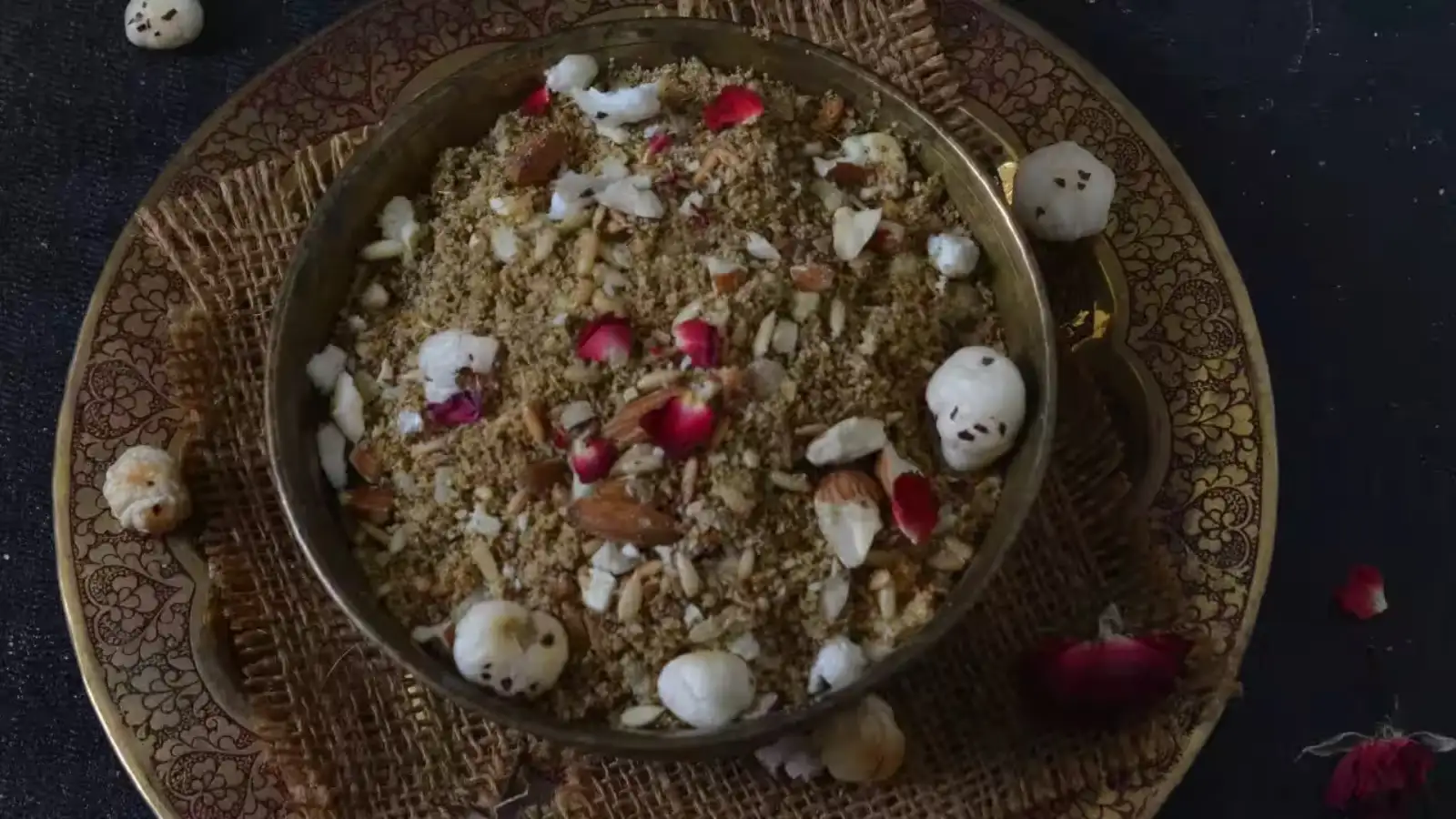
Unlike the flour-based panjiri commonly prepared for other occasions, dhaniya panjiri uses coriander seeds as its main ingredient. The ingredients are roasted separately before being combined, giving the prasad a rich flavour and distinctive texture. It is also simple enough to prepare at home before the Janmashtami puja.
Also Read: Janmashtami 2026 Date: September 4 or 5? Check Krishna Janmashtami Puja Time, City-Wise Celebrations
Once the coriander becomes fragrant, remove it from the pan and spread it on a plate. Let it cool completely before grinding.
Transfer the roasted mixture to a large bowl and allow it to cool.
The makhana should become crisp without turning brown. Transfer it to the bowl containing the roasted nuts and seeds.
Be careful at this stage because coconut can burn quickly. Once lightly roasted and fragrant, transfer it to the same bowl and let it cool.
Heat the remaining teaspoon of ghee in the pan and add the ground coriander. Roast it gently for another 1–2 minutes. Transfer it to the bowl with the other roasted ingredients.
Add the sugar and green cardamom powder to the mixture. Combine everything well so that the dry fruits, makhana, coconut and coriander are evenly distributed.
Your homemade dhaniya panjiri for Janmashtami bhog is ready.
Also Read: Janmashtami 2026 Fasting Rules: Who Should Avoid the Fast and What to Follow
After the puja, dhaniya panjiri can be enjoyed on its own or served alongside panchamrit and sliced banana. If there is any leftover panjiri, allow it to cool completely before transferring it to a clean, airtight container.
With its nutty crunch, gentle sweetness and fragrant coriander flavour, this traditional Janmashtami prasad recipe makes a simple yet special addition to the festive bhog.
Unlike the flour-based panjiri commonly prepared for other occasions, dhaniya panjiri uses coriander seeds as its main ingredient. The ingredients are roasted separately before being combined, giving the prasad a rich flavour and distinctive texture. It is also simple enough to prepare at home before the Janmashtami puja.
Also Read: Janmashtami 2026 Date: September 4 or 5? Check Krishna Janmashtami Puja Time, City-Wise Celebrations
Dhaniya Panjiri Ingredients For Janmashtami Bhog
- ¾ cup whole coriander seeds
- 3 tablespoons + 1 teaspoon ghee
- 3–4 tablespoons chopped almonds
- 3–4 tablespoons chopped cashews
- 2 tablespoons melon seeds
- 2 tablespoons chironji
- ½ cup roughly broken makhana
- ½ cup grated dried coconut
- ½ cup powdered sugar or bhoora
- ½ teaspoon green cardamom powder
How To Make Dhaniya Panjiri For Janmashtami
Step 1: Roast The Coriander Seeds
Begin by sorting the coriander seeds and making sure they are completely dry. Heat a heavy-bottomed pan and add the seeds without any oil or ghee. Roast them on low heat for about 2–3 minutes, stirring continuously.Once the coriander becomes fragrant, remove it from the pan and spread it on a plate. Let it cool completely before grinding.
Step 2: Roast The Dry Fruits And Seeds
Add 2 tablespoons of ghee to the same pan. Put in the chopped almonds, cashews, melon seeds and chironji. Roast everything over low heat until the nuts turn lightly golden and aromatic.Transfer the roasted mixture to a large bowl and allow it to cool.
Step 3: Roast The Makhana Until Crisp
Add another tablespoon of ghee to the pan and put in the broken makhana. Roast on medium-low heat for 2–3 minutes, stirring regularly.The makhana should become crisp without turning brown. Transfer it to the bowl containing the roasted nuts and seeds.
Step 4: Roast The Dried Coconut
Now add the grated dried coconut to the pan. Roast it on low heat for around 2–3 minutes, stirring frequently.Be careful at this stage because coconut can burn quickly. Once lightly roasted and fragrant, transfer it to the same bowl and let it cool.
Step 5: Grind And Roast The Coriander
Once the roasted coriander seeds have cooled, grind them into a fine or slightly coarse powder. The texture can be adjusted according to your preference.Heat the remaining teaspoon of ghee in the pan and add the ground coriander. Roast it gently for another 1–2 minutes. Transfer it to the bowl with the other roasted ingredients.
Step 6: Add Sugar And Cardamom
This is an important step. Make sure the roasted ingredients have cooled completely before adding the powdered sugar or bhoora.You may also like
- The Perils of Vengeance: The Mythological Tale of Maharishi Pippalada and Lord Shiva's Third Eye
- The Divine Legend of Garuda: How the Bringer of Heavenly Nectar Became Lord Vishnu's Eternal Vehicle
- Sri Krishna Janmashtami 2026 Fasting Rules: Who Should Avoid Fasting and Essential Guidelines to Follow
- Janmashtami 2026: Follow These 4 Powerful Steps to Invite Prosperity and Blessings Into Your Home
- Peepal Tree Worship Guide: Best Days to Ward Off Saturn's Sade Sati, Pitru Dosh, and Please Ancestors
Add the sugar and green cardamom powder to the mixture. Combine everything well so that the dry fruits, makhana, coconut and coriander are evenly distributed.
Your homemade dhaniya panjiri for Janmashtami bhog is ready.
Also Read: Janmashtami 2026 Fasting Rules: Who Should Avoid the Fast and What to Follow
Tips For Making Perfect Dhaniya Panjiri
- Always use whole coriander seeds for a fresher and more pronounced aroma.
- Roast the ingredients separately because each one requires a different cooking time.
- Keep the heat low or medium-low to prevent the nuts, coconut and coriander from burning.
- Cool the coriander completely before grinding it.
- For a traditional texture, grind the coriander slightly coarse instead of making a completely fine powder.
- Never add powdered sugar while the roasted mixture is hot, as it can make the panjiri sticky or clumpy.
- Use clean and completely dry utensils when preparing prasad for the puja.
How To Serve Dhaniya Panjiri As Janmashtami Prasad
Transfer the prepared panjiri to a clean serving bowl and place it before Laddu Gopal during the Janmashtami puja. Some families also decorate the offering with a fresh tulsi leaf before distributing it as prasad.After the puja, dhaniya panjiri can be enjoyed on its own or served alongside panchamrit and sliced banana. If there is any leftover panjiri, allow it to cool completely before transferring it to a clean, airtight container.
With its nutty crunch, gentle sweetness and fragrant coriander flavour, this traditional Janmashtami prasad recipe makes a simple yet special addition to the festive bhog.






Loving Newspoint? Download the app now
