
Janmashtami 2026: 3 Auspicious Items to Place Near Laddu Gopal for Krishna’s Blessings

Janmashtami 2026 is a special occasion for devotees of Lord Krishna , who celebrate his birth with prayers, devotional songs, bhajans and elaborate puja rituals. As families prepare their home temples for Janmashtami 2026 puja, many also decorate Laddu Gopal with new clothes, jewellery, flowers and a beautiful crown. Traditional Hindu beliefs also give special significance to certain objects associated with Krishna.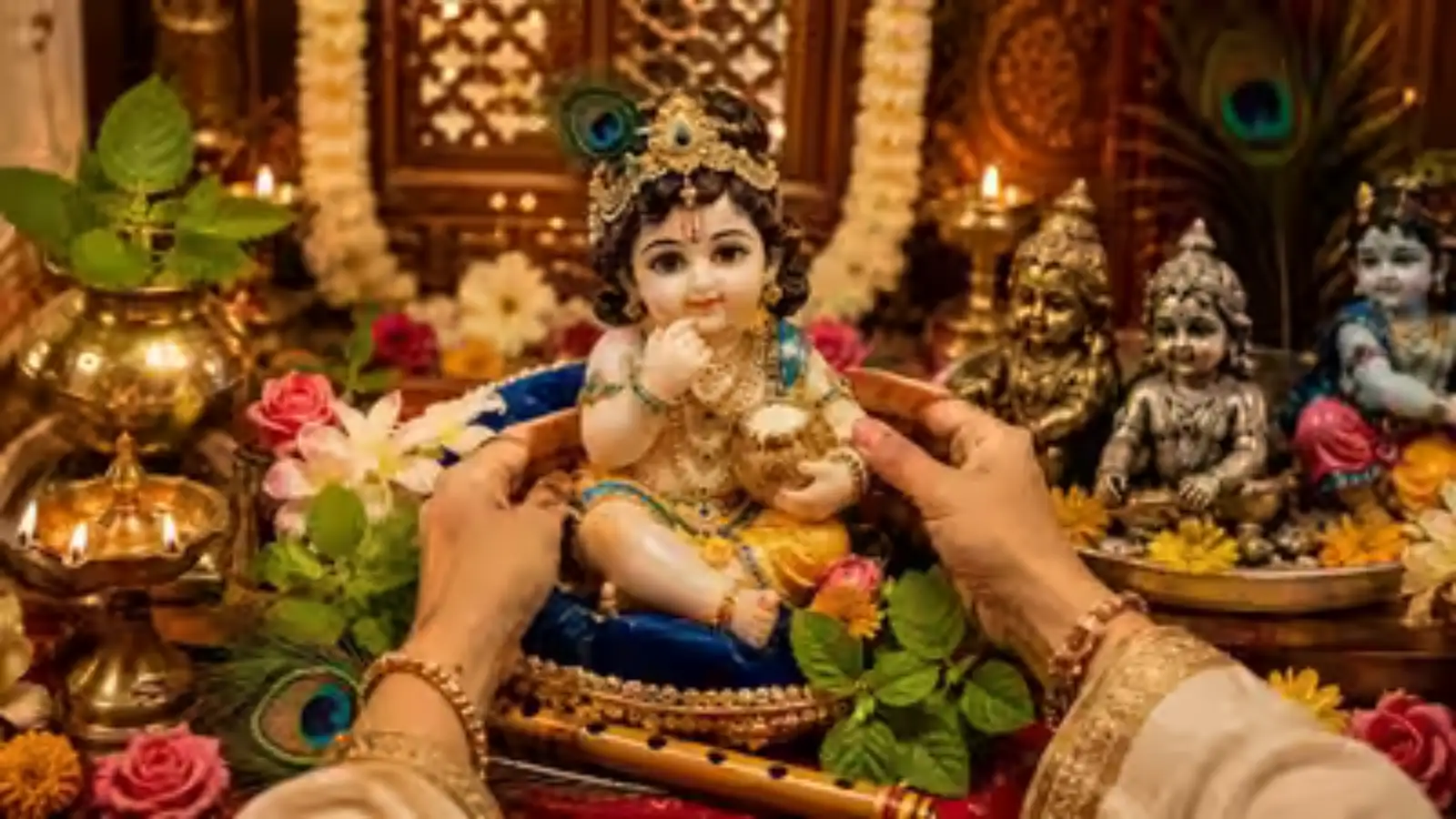
From the iconic bansuri to the peacock feather and Krishna's beloved makhan-mishri, these items have a deep connection with stories from his childhood and traditional depictions of the deity. Devotees often include them in the temple decoration or offer them during worship as a symbol of love and devotion.
If you are preparing your home temple for Janmashtami, here are three traditional items you can keep near Laddu Gopal.
Also Read: Janmashtami 2026 Fasting Rules: Who Should Avoid the Fast and What to Follow
Devotees may place a small decorative flute beside Laddu Gopal while setting up the temple for Janmashtami. If the idol is designed to hold a flute, it can also be placed in Krishna's hands as part of his shringar.
In Hindu tradition, Krishna's flute is associated with divine music, love and harmony. Stories from Krishna's life describe how the enchanting sound of his bansuri captivated the people of Vrindavan and his devotees.
For this reason, a flute can become more than just a decorative accessory during Janmashtami puja . It serves as a reminder of Krishna's divine presence and the devotion associated with his childhood stories.
A simple wooden flute is sufficient, although families can choose a decorative one that complements the size and appearance of their Laddu Gopal idol.
While dressing Bal Gopal for the festival, devotees can place a clean and suitable peacock feather in his mukut. Some families may also keep one separately in their home temple.
Traditional Vastu and religious beliefs sometimes associate the peacock feather with auspiciousness, positivity and protection from negative influences. These are spiritual and cultural beliefs rather than scientifically established effects.
Its strongest significance during Janmashtami, however, comes from its close association with Krishna himself. Adding a mor pankh to Laddu Gopal's crown can therefore make the deity's traditional appearance feel more complete while reflecting familiar Krishna imagery.
Krishna's childhood stories frequently portray him as being extremely fond of butter. His playful habit of taking butter from pots led to the affectionate name Makhan Chor. This beloved aspect of Bal Krishna's stories is remembered by devotees through offerings of fresh butter.
To prepare the traditional bhog, fresh makhan can be combined with mishri, or sugar crystals, and placed in a clean bowl before Laddu Gopal during the puja.
After the worship is completed, the offering can be shared with family members and devotees as prasad.
The preparation does not need to be elaborate. In traditional worship, the sentiment and devotion behind the offering are considered more important than making an elaborate dish.
Also Read: Janmashtami 2026 Date: September 4 or 5? Check Krishna Janmashtami Puja Time, City-Wise Celebrations
Laddu Gopal can be dressed in fresh or specially chosen festive clothes and adorned with jewellery, a mukut and a peacock feather. Many families also prepare a small jhula for Krishna, recreating the traditional celebration of Bal Gopal's birth.
Flowers, diyas and other puja essentials can be arranged around the temple. Some households also prepare several sweets and vegetarian dishes as bhog.
Devotional activities such as singing Krishna bhajans, chanting mantras and listening to or reading stories from Krishna's life can further add to the spiritual atmosphere.
There is no single way that every household must perform Janmashtami puja. Customs can vary significantly between regions and families, so devotees can follow their established traditions or consult a knowledgeable priest for specific rituals.
The bansuri represents the divine music associated with Krishna and his stories from Vrindavan. The peacock feather reflects his familiar traditional appearance and is an important part of his shringar. Makhan-mishri recalls the playful childhood stories of Bal Krishna and his legendary love for butter.
Together, these objects help bring some of the most cherished symbols from Krishna's stories into the Janmashtami celebration.
However, devotees need not feel that an elaborate arrangement is necessary for meaningful worship. The central spirit of Janmashtami remains faith, devotion and remembrance of Lord Krishna.
Keeping traditional symbols such as a flute and peacock feather near Laddu Gopal and offering makhan-mishri can make the celebration more meaningful for families who follow these customs. At the same time, religious practices differ across communities, so devotees can observe the festival in accordance with their family's traditions.
For many devotees, the most important part of Janmashtami puja is not the number of decorations or offerings but the sincerity with which prayers are offered to Lord Krishna.
From the iconic bansuri to the peacock feather and Krishna's beloved makhan-mishri, these items have a deep connection with stories from his childhood and traditional depictions of the deity. Devotees often include them in the temple decoration or offer them during worship as a symbol of love and devotion.
If you are preparing your home temple for Janmashtami, here are three traditional items you can keep near Laddu Gopal.
Also Read: Janmashtami 2026 Fasting Rules: Who Should Avoid the Fast and What to Follow
1. Keep a Bansuri Near Laddu Gopal
The flute, or bansuri, is perhaps one of the most recognisable symbols associated with Lord Krishna. Traditional paintings, sculptures and idols often portray Krishna playing his flute, reflecting the many stories surrounding his divine music.Devotees may place a small decorative flute beside Laddu Gopal while setting up the temple for Janmashtami. If the idol is designed to hold a flute, it can also be placed in Krishna's hands as part of his shringar.
In Hindu tradition, Krishna's flute is associated with divine music, love and harmony. Stories from Krishna's life describe how the enchanting sound of his bansuri captivated the people of Vrindavan and his devotees.
For this reason, a flute can become more than just a decorative accessory during Janmashtami puja . It serves as a reminder of Krishna's divine presence and the devotion associated with his childhood stories.
A simple wooden flute is sufficient, although families can choose a decorative one that complements the size and appearance of their Laddu Gopal idol.
2. Add a Peacock Feather to Krishna's Mukut
The peacock feather, or mor pankh, is another powerful visual symbol of Lord Krishna. He is traditionally depicted wearing a crown decorated with a peacock feather, making it a popular addition to Laddu Gopal's Janmashtami shringar .While dressing Bal Gopal for the festival, devotees can place a clean and suitable peacock feather in his mukut. Some families may also keep one separately in their home temple.
Traditional Vastu and religious beliefs sometimes associate the peacock feather with auspiciousness, positivity and protection from negative influences. These are spiritual and cultural beliefs rather than scientifically established effects.
Its strongest significance during Janmashtami, however, comes from its close association with Krishna himself. Adding a mor pankh to Laddu Gopal's crown can therefore make the deity's traditional appearance feel more complete while reflecting familiar Krishna imagery.
3. Offer Makhan-Mishri as Krishna's Favourite Bhog
When preparing Janmashtami bhog, one traditional offering that holds a special place is makhan-mishri.Krishna's childhood stories frequently portray him as being extremely fond of butter. His playful habit of taking butter from pots led to the affectionate name Makhan Chor. This beloved aspect of Bal Krishna's stories is remembered by devotees through offerings of fresh butter.
To prepare the traditional bhog, fresh makhan can be combined with mishri, or sugar crystals, and placed in a clean bowl before Laddu Gopal during the puja.
After the worship is completed, the offering can be shared with family members and devotees as prasad.
The preparation does not need to be elaborate. In traditional worship, the sentiment and devotion behind the offering are considered more important than making an elaborate dish.
Also Read: Janmashtami 2026 Date: September 4 or 5? Check Krishna Janmashtami Puja Time, City-Wise Celebrations
How to Decorate Laddu Gopal for Janmashtami 2026
Once the main puja arrangements are ready, devotees can decorate the home temple according to their family's customs.Laddu Gopal can be dressed in fresh or specially chosen festive clothes and adorned with jewellery, a mukut and a peacock feather. Many families also prepare a small jhula for Krishna, recreating the traditional celebration of Bal Gopal's birth.
Flowers, diyas and other puja essentials can be arranged around the temple. Some households also prepare several sweets and vegetarian dishes as bhog.
Devotional activities such as singing Krishna bhajans, chanting mantras and listening to or reading stories from Krishna's life can further add to the spiritual atmosphere.
There is no single way that every household must perform Janmashtami puja. Customs can vary significantly between regions and families, so devotees can follow their established traditions or consult a knowledgeable priest for specific rituals.
You may also like
- The Perils of Vengeance: The Mythological Tale of Maharishi Pippalada and Lord Shiva's Third Eye
- The Divine Legend of Garuda: How the Bringer of Heavenly Nectar Became Lord Vishnu's Eternal Vehicle
- Sri Krishna Janmashtami 2026 Fasting Rules: Who Should Avoid Fasting and Essential Guidelines to Follow
- Janmashtami 2026: Follow These 4 Powerful Steps to Invite Prosperity and Blessings Into Your Home
- Peepal Tree Worship Guide: Best Days to Ward Off Saturn's Sade Sati, Pitru Dosh, and Please Ancestors
Why Are Flute, Peacock Feather and Makhan-Mishri Important?
Each of these three items connects devotees with a different aspect of Lord Krishna's traditional identity.The bansuri represents the divine music associated with Krishna and his stories from Vrindavan. The peacock feather reflects his familiar traditional appearance and is an important part of his shringar. Makhan-mishri recalls the playful childhood stories of Bal Krishna and his legendary love for butter.
Together, these objects help bring some of the most cherished symbols from Krishna's stories into the Janmashtami celebration.
However, devotees need not feel that an elaborate arrangement is necessary for meaningful worship. The central spirit of Janmashtami remains faith, devotion and remembrance of Lord Krishna.
Janmashtami Puja Is Ultimately About Devotion
Whether your home temple is decorated elaborately or kept simple, Janmashtami is fundamentally a celebration of Lord Krishna's birth and devotion to him.Keeping traditional symbols such as a flute and peacock feather near Laddu Gopal and offering makhan-mishri can make the celebration more meaningful for families who follow these customs. At the same time, religious practices differ across communities, so devotees can observe the festival in accordance with their family's traditions.
For many devotees, the most important part of Janmashtami puja is not the number of decorations or offerings but the sincerity with which prayers are offered to Lord Krishna.






Loving Newspoint? Download the app now
