
Navratri 2026 Day 3: Maa Chandraghanta Puja Time, Colour, Bhog, Mantra and Puja Vidhi

Navratri 2026 Day 3 will be observed on Tuesday, October 13, when devotees worship Maa Chandraghanta , the third form of Goddess Durga. The day falls on Ashwin Shukla Tritiya during Sharad Navratri and follows the worship of Maa Brahmacharini. Maa Chandraghanta is revered as the goddess of courage, strength and protection. Her divine form represents the balance between peace and power, inspiring devotees to face challenges with confidence. Here is everything you need to know about Navratri Day 3, including the date, Tithi timings, auspicious colour, bhog, puja rituals and mantras.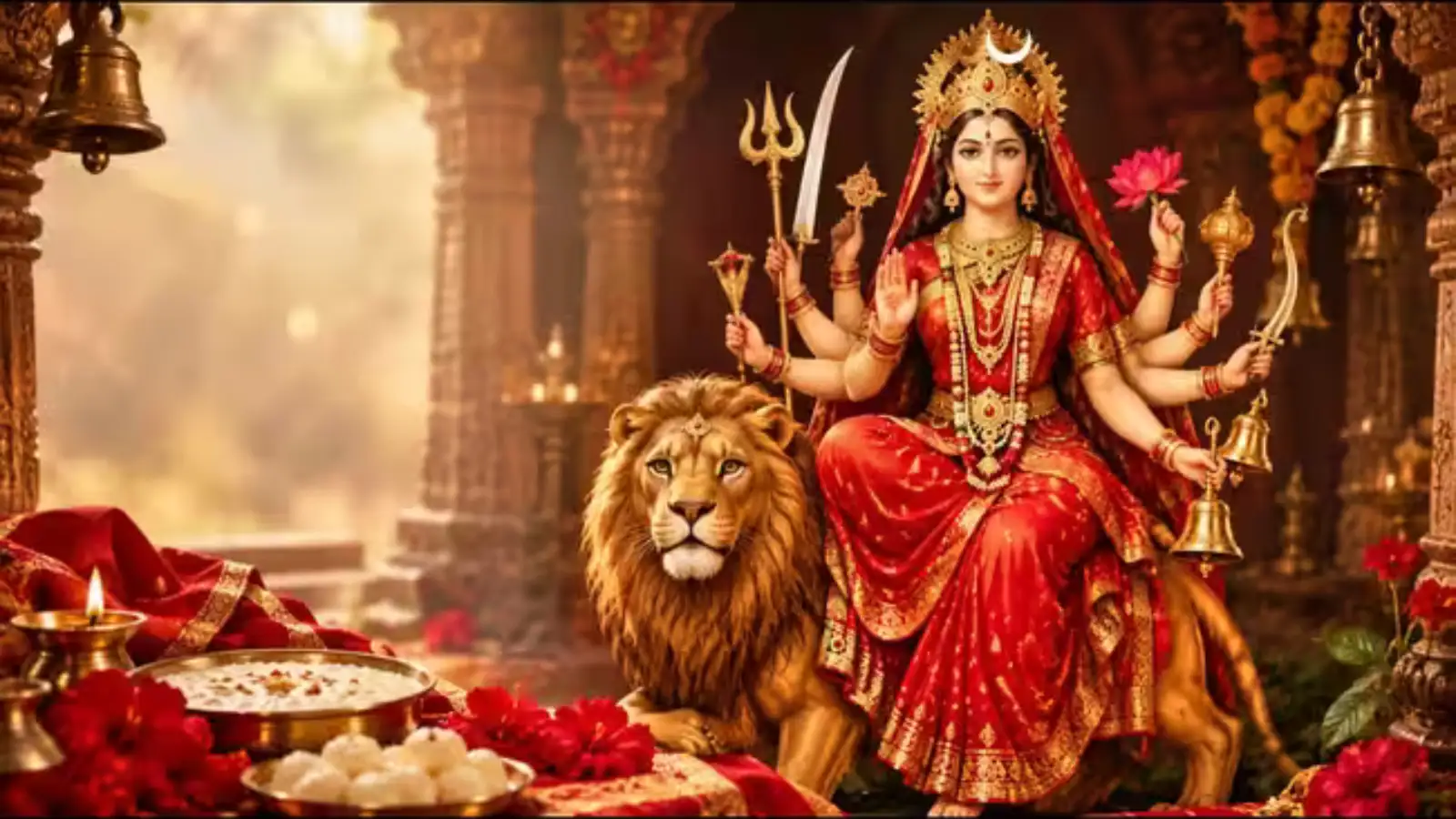
According to the provided Drik Panchang timings, the Tritiya Tithi begins on October 12 and continues until late evening on October 13.
The goddess is commonly depicted with ten arms, carrying divine weapons and sacred symbols. She is often shown riding a tiger or lion, representing courage, power and fearlessness. Despite her formidable warrior appearance, her expression is traditionally depicted as calm and compassionate towards her devotees.
Maa Chandraghanta is believed to protect her devotees from negative forces and help them overcome fear, uncertainty and adversity. Worshipping her on the third day of Navratri is associated with developing inner strength, confidence and mental peace.
Devotees can wear red clothes while performing the puja or use red flowers and decorations in their worship area. Red chunris and other traditional offerings are also commonly associated with the worship of Goddess Durga.
The colour serves as a symbolic reminder of Maa Chandraghanta's strength and protective energy.
Some commonly offered items include:
Maa Chandraghanta Beej Mantra
ॐ देवी चन्द्रघण्टायै नमः॥
Om Devi Chandraghantayai Namah.
Chanting this mantra is a traditional way to express devotion to the goddess and seek her blessings for strength, courage and protection.
Maa Chandraghanta Stuti Mantra
Devotees may also recite the following prayer during the worship of Maa Chandraghanta:
या देवी सर्वभूतेषु मां चंद्रघंटा रूपेण संस्थिता।
नमस्तस्यै नमस्तस्यै नमस्तस्यै नमो नमः॥
Transliteration:
Ya Devi Sarvabhuteshu Maa Chandraghanta Rupena Samsthita,
Namastasyai Namastasyai Namastasyai Namo Namah.
This prayer expresses reverence for the divine feminine form of the goddess. Devotees can recite it during meditation or as part of their daily Navratri prayers.
According to the legend, after Parvati's intense penance, Lord Shiva agreed to marry her. However, when Shiva arrived for the wedding, his unusual appearance and fearsome entourage frightened Parvati's family and created panic among those present.
To protect her family and restore calm, Parvati assumed a powerful divine form. This manifestation came to be associated with Maa Chandraghanta, who combines a warrior's strength with a compassionate nature.
Her crescent-shaped moon, resembling a bell, gives the goddess her distinctive name. Her weapons and powerful mount symbolise her ability to confront evil, while her calm expression reflects compassion and peace.
The legend highlights the importance of using strength to protect others and restore harmony in difficult situations.
Her symbolism is associated with:
Devotees observe the day through prayers, mantra chanting, offerings and aarti. Wearing red, offering traditional bhog and meditating on the goddess are among the practices associated with the occasion.
As Navratri progresses, the worship of Maa Chandraghanta encourages devotees to cultivate courage without losing their sense of peace and compassion. The day is an opportunity to seek divine blessings and reflect on the strength needed to face life's challenges with faith and determination.
Navratri 2026 Day 3 Date and Tithi Timings
The third day of Sharad Navratri will be celebrated on Tuesday, October 13, 2026. This day is dedicated to Maa Chandraghanta, the third manifestation of Navdurga.According to the provided Drik Panchang timings, the Tritiya Tithi begins on October 12 and continues until late evening on October 13.
- Navratri Day 3: Tuesday, October 13, 2026
- Tritiya Tithi Begins: October 12, 2026, at 10:14 PM
- Tritiya Tithi Ends: October 13, 2026, at 11:29 PM
- Goddess Worshipped: Maa Chandraghanta
- Navratri Day 3 Colour : Red
Who Is Maa Chandraghanta? Know the Significance of the Third Form of Durga
Maa Chandraghanta is the third form of Goddess Durga worshipped during the nine days of Navratri. Her name combines two Sanskrit words: Chandra, meaning moon, and Ghanta, meaning bell. She is named after the crescent moon on her forehead, which resembles a bell.The goddess is commonly depicted with ten arms, carrying divine weapons and sacred symbols. She is often shown riding a tiger or lion, representing courage, power and fearlessness. Despite her formidable warrior appearance, her expression is traditionally depicted as calm and compassionate towards her devotees.
Maa Chandraghanta is believed to protect her devotees from negative forces and help them overcome fear, uncertainty and adversity. Worshipping her on the third day of Navratri is associated with developing inner strength, confidence and mental peace.
Navratri 2026 Day 3 Colour: Why Is Red Auspicious?
Red is the colour associated with Navratri Day 3 in 2026. It represents energy, passion, courage and vitality. The colour also has a strong connection with Goddess Durga and the divine feminine power, known as Shakti.Devotees can wear red clothes while performing the puja or use red flowers and decorations in their worship area. Red chunris and other traditional offerings are also commonly associated with the worship of Goddess Durga.
The colour serves as a symbolic reminder of Maa Chandraghanta's strength and protective energy.
Maa Chandraghanta Bhog : What Should You Offer?
Offering bhog is an important part of Navratri worship. Devotees traditionally offer milk-based preparations and other fresh offerings to Maa Chandraghanta.Some commonly offered items include:
- Fresh milk: A simple and traditional offering.
- Kheer: A sweet dish prepared with milk, rice and sugar.
- Milk-based sweets: Devotees may offer sweets made with milk, depending on their family traditions.
- Fresh fruits: Seasonal fruits can be included in the bhog.
- White or yellow flowers: These may be offered during the puja.
- Silver coin: Some traditions include a silver coin as part of the offerings.
Maa Chandraghanta Puja Vidhi : How to Worship the Goddess
The third day of Navratri is an opportunity to seek Maa Chandraghanta's blessings for courage, protection and peace. Although the exact rituals may vary, devotees can follow this commonly practised sequence.1. Clean the Puja Area
Begin the day with a bath and wear clean clothes. Clean the place of worship and arrange the puja items. If a Kalash was established during Ghatasthapana on the first day, continue the worship according to your household tradition.2. Light a Diya and Begin the Prayers
Light a diya and incense in the puja area. Begin with a prayer to Lord Ganesha before proceeding with the worship of Maa Chandraghanta.3. Offer Flowers and Traditional Puja Items
Offer flowers, akshat, kumkum, sandalwood and other customary items to the goddess. You may also offer flowers and prayers to the Kalash established during Ghatasthapana.4. Meditate on Maa Chandraghanta
Focus on the divine form of Maa Chandraghanta and pray for courage, strength and protection. Devotees may reflect on the goddess's calm yet powerful appearance while offering their prayers.5. Offer Bhog to the Goddess
Present milk, kheer, fruits or other suitable offerings. Follow the customs observed by your family when selecting the bhog.6. Chant the Mantra and Perform Aarti
Chant Maa Chandraghanta's mantra with devotion. You may also recite a traditional stuti or prayer dedicated to the goddess. Complete the worship with aarti and prayers for the well-being of your family.7. Distribute Prasad
After the puja, distribute the bhog as prasad among family members, according to your religious tradition.Maa Chandraghanta Mantra for Navratri Day 3
Devotees can chant the following mantra while worshipping Maa Chandraghanta on the third day of Navratri.Maa Chandraghanta Beej Mantra
ॐ देवी चन्द्रघण्टायै नमः॥
Om Devi Chandraghantayai Namah.
Chanting this mantra is a traditional way to express devotion to the goddess and seek her blessings for strength, courage and protection.
Maa Chandraghanta Stuti Mantra
Devotees may also recite the following prayer during the worship of Maa Chandraghanta:
या देवी सर्वभूतेषु मां चंद्रघंटा रूपेण संस्थिता।
नमस्तस्यै नमस्तस्यै नमस्तस्यै नमो नमः॥
Transliteration:
Ya Devi Sarvabhuteshu Maa Chandraghanta Rupena Samsthita,
Namastasyai Namastasyai Namastasyai Namo Namah.
This prayer expresses reverence for the divine feminine form of the goddess. Devotees can recite it during meditation or as part of their daily Navratri prayers.
The Legend of Maa Chandraghanta: Why Does She Have a Bell-Shaped Moon?
A traditional story associated with Maa Chandraghanta connects her form with the marriage of Goddess Parvati and Lord Shiva.According to the legend, after Parvati's intense penance, Lord Shiva agreed to marry her. However, when Shiva arrived for the wedding, his unusual appearance and fearsome entourage frightened Parvati's family and created panic among those present.
To protect her family and restore calm, Parvati assumed a powerful divine form. This manifestation came to be associated with Maa Chandraghanta, who combines a warrior's strength with a compassionate nature.
Her crescent-shaped moon, resembling a bell, gives the goddess her distinctive name. Her weapons and powerful mount symbolise her ability to confront evil, while her calm expression reflects compassion and peace.
The legend highlights the importance of using strength to protect others and restore harmony in difficult situations.
What Does Maa Chandraghanta Symbolise?
Maa Chandraghanta represents the balance between courage and compassion. Her warrior form signifies the power to confront challenges, while her peaceful expression reflects emotional stability and kindness.Her symbolism is associated with:
- Courage: The confidence to face difficult circumstances.
- Protection: The strength to stand against negative forces.
- Inner peace: The ability to remain composed during challenging times.
- Fearlessness: The determination to overcome uncertainty and adversity.
- Compassion: The importance of combining power with kindness.
Significance of Navratri Day 3
The third day of Sharad Navratri holds special significance for devotees who worship Maa Chandraghanta as part of the nine forms of Goddess Durga. Her divine form represents strength, protection and the ability to overcome fear.Devotees observe the day through prayers, mantra chanting, offerings and aarti. Wearing red, offering traditional bhog and meditating on the goddess are among the practices associated with the occasion.
As Navratri progresses, the worship of Maa Chandraghanta encourages devotees to cultivate courage without losing their sense of peace and compassion. The day is an opportunity to seek divine blessings and reflect on the strength needed to face life's challenges with faith and determination.
Next Story