
Navratri 2026 Day 9: Maa Siddhidatri Puja Vidhi, Tithi Timings, Colour, Bhog and Mantra

Navratri 2026 Day 9 will be celebrated on Monday, October 19, marking Maha Navami, the final day of Sharadiya Navratri. The day is dedicated to Maa Siddhidatri , the ninth form of Goddess Durga, who is worshipped for wisdom, spiritual growth, success and fulfilment. Devotees observe the occasion with special prayers, traditional offerings and Kanya Puja to seek the Goddess's blessings. From Navami Tithi timings and puja rituals to the auspicious colour, bhog and mantras, here is everything you need to know about Navratri's ninth day.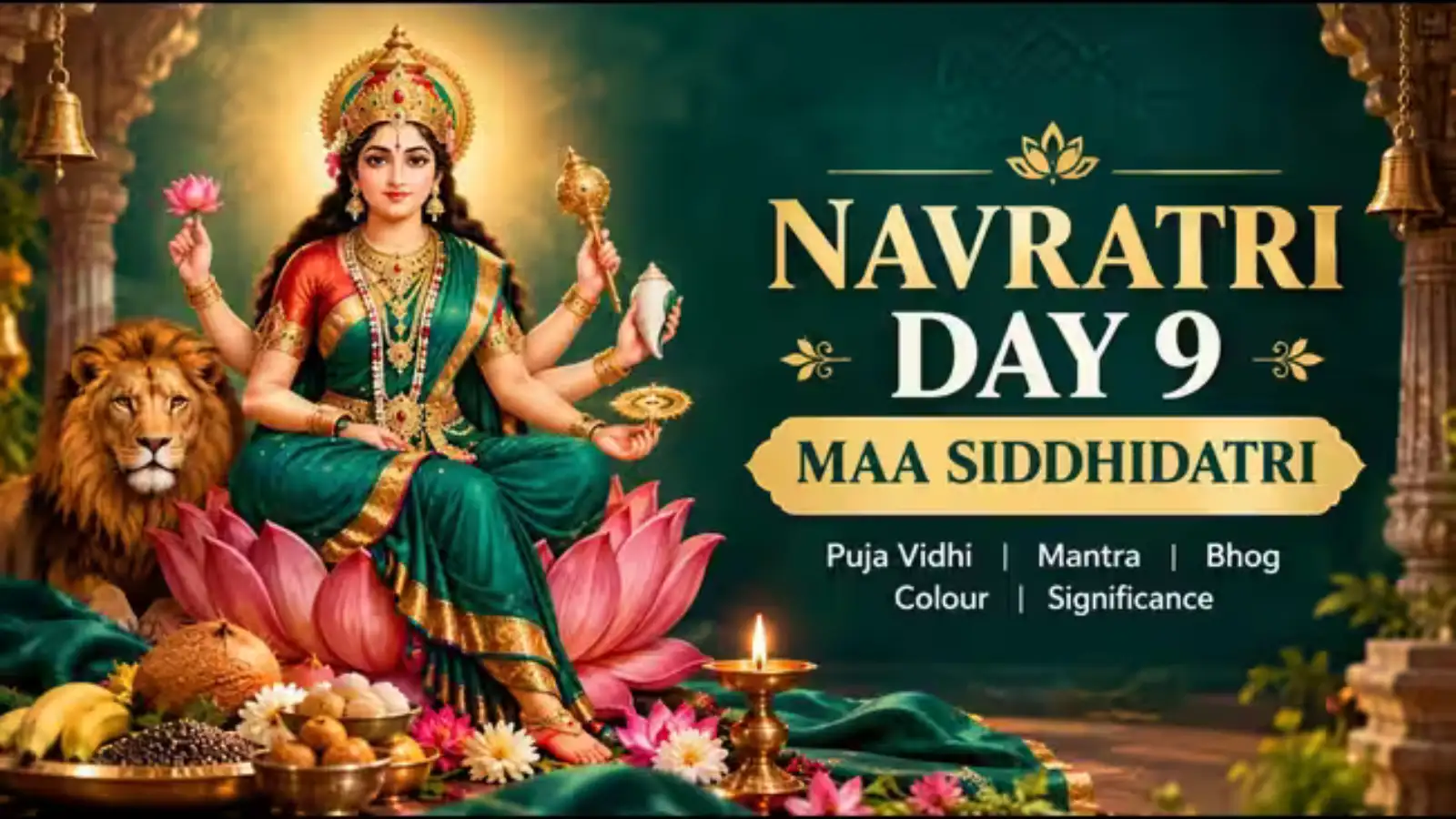
Here are the important details for Navratri Day 9:
Maa Siddhidatri is traditionally depicted with four arms, holding a discus or chakra, a mace or gada, a conch shell or shankh, and a lotus. She is commonly shown seated on a lotus or riding a lion.
According to Hindu religious traditions, she bestowed the eight divine siddhis upon Lord Shiva. Her worship is associated with the removal of ignorance, the development of inner wisdom and the pursuit of higher spiritual understanding.
As the final form of the nine manifestations of Durga, Maa Siddhidatri represents the culmination of the Navratri journey. Devotees seek her blessings for success in their endeavours, clarity of thought, inner peace and a deeper connection with the divine.
Devotees may wear peacock-green clothing while performing the day's rituals. The colour also reflects the sense of fulfilment and spiritual growth associated with Maa Siddhidatri's worship.
Colour traditions can differ across regional calendars and communities, so devotees may follow the colour sequence observed in their family or local tradition.
Halwa, puri and chana are also commonly prepared for Maha Navami, particularly for Kanya Puja. These foods are offered as part of the religious observance and later distributed as prasad.
The offerings may vary according to regional customs and family traditions. Devotees can prepare simple, freshly made food with devotion and share it with family members, guests and people in need.
Meaning: I bow to Goddess Siddhidatri and seek her divine blessings.
सेव्यमाना सदा भूयात् सिद्धिदा सिद्धिदायिनी॥
Devotees may chant these mantras with concentration and faith. Some follow a practice of repeating the Mula Mantra 108 times, although the number of repetitions depends on individual practice and family customs.
Here is a simple guide to the rituals.
Families traditionally welcome the girls, wash their feet as a mark of respect, offer food such as halwa, puri and chana, and give them gifts or other tokens of affection. Practices vary by household and region.
Finish the puja with Durga Aarti and prayers for peace, happiness and well-being. Distribute prasad among family members and other devotees.
In this account, Lord Shiva meditated upon the Supreme Goddess, Adi Parashakti, at the beginning of creation. Pleased with his devotion, the Goddess bestowed divine powers upon him. These powers are known as the Ashta Siddhis, or eight spiritual perfections.
They are traditionally described as follows:
This imagery conveys the idea that masculine and feminine principles are interconnected. Maa Siddhidatri is consequently revered as a source of divine wisdom and spiritual accomplishment.
The details of the legend differ across religious texts and devotional retellings, but the central theme remains the Goddess's role as the giver of spiritual powers and higher knowledge.
The Goddess is also associated with the Sahasrara, or crown chakra, in some yogic traditions. This chakra symbolises higher awareness, consciousness and spiritual connection. Such associations belong to religious and spiritual belief rather than scientifically established effects of worship.
As Navratri reaches its conclusion, Maa Siddhidatri's message encourages devotees to reflect on their personal journey, overcome ignorance and approach life with greater clarity and compassion.
Navratri 2026 Day 9 will be observed on October 19, celebrating Maha Navami and the worship of Maa Siddhidatri, the ninth form of Goddess Durga. Devotees mark the occasion with mantra chanting, traditional offerings of sesame seeds, aarti and Kanya Puja. Peacock green is associated with the day in the given colour sequence, while the Goddess's blessings are sought for wisdom, prosperity and spiritual fulfilment.
Beyond the rituals, Maa Siddhidatri represents the pursuit of inner knowledge and the belief that true success includes spiritual growth. Observing Maha Navami with devotion and following family traditions allows devotees to conclude the nine-day festival with prayers for peace, happiness and well-being.
Navratri 2026 Day 9: Date and Navami Tithi Timings
Maha Navami falls on October 19, 2026, and marks the culmination of the nine-day festival dedicated to Goddess Durga. Devotees worship Maa Siddhidatri on this day and offer prayers for prosperity, peace and spiritual progress.Here are the important details for Navratri Day 9:
- Date: Monday, October 19, 2026
- Navami Tithi Begins: October 19, 2026, at 8:51 AM
- Navami Tithi Ends: October 20, 2026, at 9:31 AM
Who Is Maa Siddhidatri? Significance of the Ninth Form of Durga
Maa Siddhidatri is the ninth and final manifestation of Goddess Durga in the Navadurga tradition. Her name comes from two Sanskrit words: Siddhi, meaning spiritual accomplishment or perfection, and Datri, meaning giver. She is therefore regarded as the Goddess who bestows wisdom, spiritual abilities and fulfilment upon her devotees.Maa Siddhidatri is traditionally depicted with four arms, holding a discus or chakra, a mace or gada, a conch shell or shankh, and a lotus. She is commonly shown seated on a lotus or riding a lion.
According to Hindu religious traditions, she bestowed the eight divine siddhis upon Lord Shiva. Her worship is associated with the removal of ignorance, the development of inner wisdom and the pursuit of higher spiritual understanding.
As the final form of the nine manifestations of Durga, Maa Siddhidatri represents the culmination of the Navratri journey. Devotees seek her blessings for success in their endeavours, clarity of thought, inner peace and a deeper connection with the divine.
Navratri 2026 Day 9 Colour: Significance of Peacock Green
The colour associated with Navratri Day 9 in the given festival colour sequence is peacock green. This vibrant shade symbolises wisdom, compassion, harmony and the beauty of nature.Devotees may wear peacock-green clothing while performing the day's rituals. The colour also reflects the sense of fulfilment and spiritual growth associated with Maa Siddhidatri's worship.
Colour traditions can differ across regional calendars and communities, so devotees may follow the colour sequence observed in their family or local tradition.
Navratri Day 9 Bhog: What to Offer Maa Siddhidatri?
Sesame seeds, known as til, are among the traditional offerings associated with Maa Siddhidatri. Devotees may offer sesame seeds or prepare sweets and other dishes using them as part of the puja.Halwa, puri and chana are also commonly prepared for Maha Navami, particularly for Kanya Puja. These foods are offered as part of the religious observance and later distributed as prasad.
The offerings may vary according to regional customs and family traditions. Devotees can prepare simple, freshly made food with devotion and share it with family members, guests and people in need.
Maa Siddhidatri Mantra for Navratri Day 9
Chanting Maa Siddhidatri's mantra is an important part of Maha Navami worship. Devotees recite it while meditating on the Goddess and seeking her blessings for knowledge, prosperity and spiritual development.Maa Siddhidatri Mula Mantra
ॐ देवी सिद्धिदात्र्यै नमः॥Meaning: I bow to Goddess Siddhidatri and seek her divine blessings.
Maa Siddhidatri Dhyan Mantra
सिद्धगन्धर्वयक्षाद्यैरसुरैरमरैरपि।सेव्यमाना सदा भूयात् सिद्धिदा सिद्धिदायिनी॥
Devotees may chant these mantras with concentration and faith. Some follow a practice of repeating the Mula Mantra 108 times, although the number of repetitions depends on individual practice and family customs.
Navratri Day 9 Puja Vidhi: How to Worship Maa Siddhidatri
Maa Siddhidatri is worshipped on Maha Navami with prayers, flowers, traditional offerings and aarti. Many households also observe Kanya Puja and perform Havan to mark the conclusion of Navratri.Here is a simple guide to the rituals.
1. Wake Up Early and Prepare the Puja Area
Wake up early, take a bath and wear clean clothes. Devotees following the day's colour tradition may choose peacock green. Clean the place of worship and sprinkle Gangajal if it is part of the household's customs.2. Begin with Lord Ganesha's Prayers
Start the puja by remembering Lord Ganesha, who is traditionally worshipped before other deities. Offer prayers to the Kalash established during Navratri and the Akhand Jyoti, if one has been lit. Devotees may also remember the Navagrahas according to their family traditions.3. Offer Prayers to Maa Siddhidatri
Place the Goddess's image or idol in the worship area. Meditate on her four-armed form and pray for wisdom, courage, prosperity and spiritual progress.4. Offer Flowers, Kumkum and Incense
Offer fresh flowers such as lotus, hibiscus or marigolds, depending on availability and local custom. Apply kumkum or sandalwood paste where appropriate, and light a diya and incense as part of the ritual.5. Present the Bhog
Offer sesame seeds or sweets made with sesame to Maa Siddhidatri. Halwa, puri and chana may also be prepared for Kanya Puja. Once the rituals are complete, the offerings can be distributed as prasad.6. Perform Kanya Puja
Kanya Puja, also known as Kanjak Puja, is an important Navratri tradition observed by many devotees on Ashtami or Navami. In this ritual, young girls are honoured as symbolic representations of the divine feminine.Families traditionally welcome the girls, wash their feet as a mark of respect, offer food such as halwa, puri and chana, and give them gifts or other tokens of affection. Practices vary by household and region.
7. Perform Havan and Aarti
Some devotees perform a Havan, or sacred fire ritual, to conclude their Navratri worship or fasting observance. Follow the customary procedure for the household and seek guidance from a priest if needed.Finish the puja with Durga Aarti and prayers for peace, happiness and well-being. Distribute prasad among family members and other devotees.
Maa Siddhidatri Vrat Katha: The Story of the Eight Siddhis
According to a traditional Hindu account, Maa Siddhidatri is associated with the origin of the eight divine siddhis and the manifestation of Ardhanarishvara, the combined form of Lord Shiva and Goddess Parvati.In this account, Lord Shiva meditated upon the Supreme Goddess, Adi Parashakti, at the beginning of creation. Pleased with his devotion, the Goddess bestowed divine powers upon him. These powers are known as the Ashta Siddhis, or eight spiritual perfections.
They are traditionally described as follows:
You may also like
- Sacred Bond: Who Is 'Languria' in Kaila Devi's Iconic Bhajan 'Ghutuman Khele'
- Goddess Durga Manifested as Maa Chamunda to Slay Chanda and Munda
- Kanya Pujan: Sacred Rules on Utensils for Navratri Ashtami & Navami Prasad
- Shardiya Navratri 2026 Day 7: Destroy Foes & Fears with Maa Kaalratri Puja
- How Goddess Durga's Fierce Manifestation Slain Demons Chanda and Munda in Markandeya Purana
- Anima: The ability to become extremely small.
- Mahima: The ability to expand to an immense size.
- Garima: The ability to become extraordinarily heavy.
- Laghima: The ability to become extremely light.
- Prapti: The ability to attain or reach what is sought.
- Prakamya: The ability to fulfil one's will.
- Ishitva: The power of lordship or divine authority.
- Vashitva: The ability to exercise control or mastery.
This imagery conveys the idea that masculine and feminine principles are interconnected. Maa Siddhidatri is consequently revered as a source of divine wisdom and spiritual accomplishment.
The details of the legend differ across religious texts and devotional retellings, but the central theme remains the Goddess's role as the giver of spiritual powers and higher knowledge.
Spiritual Significance of Maa Siddhidatri on Maha Navami
Maa Siddhidatri represents the idea that true fulfilment extends beyond material achievements. Her worship encourages devotees to seek wisdom, develop inner discipline and recognise the importance of spiritual growth.The Goddess is also associated with the Sahasrara, or crown chakra, in some yogic traditions. This chakra symbolises higher awareness, consciousness and spiritual connection. Such associations belong to religious and spiritual belief rather than scientifically established effects of worship.
As Navratri reaches its conclusion, Maa Siddhidatri's message encourages devotees to reflect on their personal journey, overcome ignorance and approach life with greater clarity and compassion.
Navratri 2026 Day 9 will be observed on October 19, celebrating Maha Navami and the worship of Maa Siddhidatri, the ninth form of Goddess Durga. Devotees mark the occasion with mantra chanting, traditional offerings of sesame seeds, aarti and Kanya Puja. Peacock green is associated with the day in the given colour sequence, while the Goddess's blessings are sought for wisdom, prosperity and spiritual fulfilment.
Beyond the rituals, Maa Siddhidatri represents the pursuit of inner knowledge and the belief that true success includes spiritual growth. Observing Maha Navami with devotion and following family traditions allows devotees to conclude the nine-day festival with prayers for peace, happiness and well-being.






Loving Newspoint? Download the app now
