
What Ancient Texts Say About the Benefits of Pumpkin Seeds

Pumpkin seeds benefits have been recognised in traditional Indian food practices and ancient wellness traditions for generations. While pumpkins often receive attention during festivals and rituals, their seeds have also held a special place in classical Indian texts and traditional kitchens. From their nutritional value to their traditional uses, pumpkin seeds offer an interesting connection between ancient food wisdom and everyday health practices.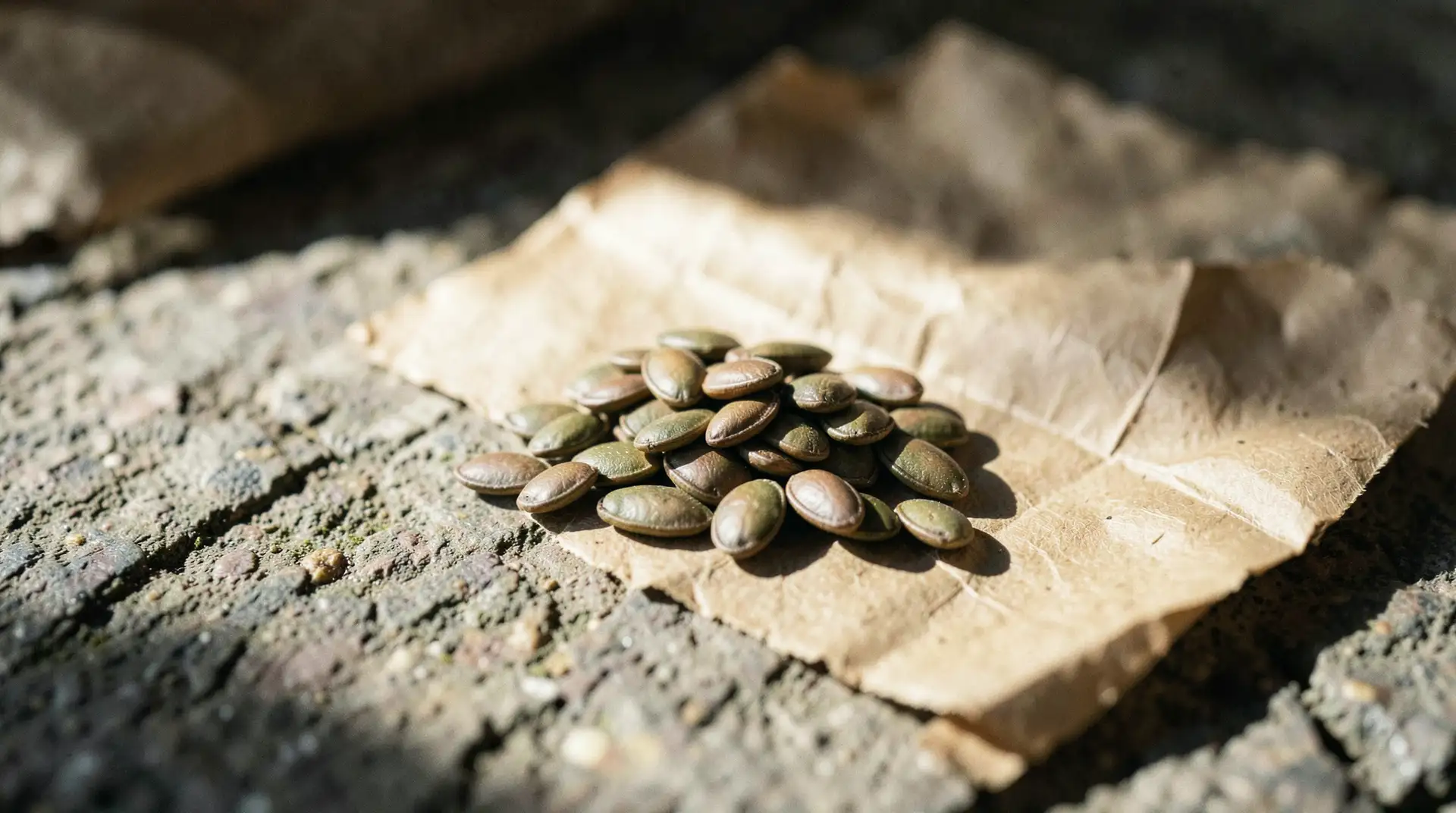
Kushmanda specifically appears in Charaka's Charaka Samhita as a fruit recommended for conditions involving mental agitation and disturbed sleep, not the seed alone, but the plant as a whole. The seed's role in this context was as the densest, most concentrated part of that plant. Ayurvedic preparation texts describe roasting the seeds lightly to reduce their heaviness before consuming them, a step that reflects the tradition's careful attention to how food is prepared, not just what it contains.
This is not a grand scriptural claim. It is the quieter record of temple economies, where nothing edible was wasted and seeds carried practical value. The tradition of keeping seeds from sacred offerings and incorporating them into food reflects a broader principle found across Indian ritual life: that what is offered to the divine returns to the community as nourishment.
The Unani tradition's presence in India, particularly in the courts of the Mughal era and in the hakims of North Indian cities, meant these ideas circulated alongside Ayurvedic ones. The two systems reached similar conclusions about gourd seeds through different frameworks, which is itself a point of interest for anyone tracing how food knowledge travels.
Some popular writing on Ayurveda reads ancient observations as if they anticipated modern findings on zinc, magnesium, or tryptophan in pumpkin seeds. The texts did not know these compounds existed. What they did record was careful, multigenerational observation of how certain foods affected the people who ate them regularly, which is its own kind of knowledge, distinct from clinical science and worth understanding on its own terms.
The honest reading of these traditions is that they found pumpkin seeds worth eating and worth preserving. They embedded that finding in ritual, in kitchen practice, and in medical texts. The reasons they gave were the reasons available to them. The seed itself has not changed.
What Ayurvedic Texts Recorded
The classical Ayurvedic corpus, principally the Charaka Samhita and the Ashtanga Hridayam, categorises foods by their guna, their inherent qualities. Pumpkin, known broadly as karkaru or kushmanda depending on variety, is described as cooling, light on digestion, and nourishing to the mind. The seeds, in the tradition's framework, were understood to share the plant's cooling nature while carrying a distinct heaviness and oiliness that made them useful as a sustained source of nourishment rather than a quick food.Kushmanda specifically appears in Charaka's Charaka Samhita as a fruit recommended for conditions involving mental agitation and disturbed sleep, not the seed alone, but the plant as a whole. The seed's role in this context was as the densest, most concentrated part of that plant. Ayurvedic preparation texts describe roasting the seeds lightly to reduce their heaviness before consuming them, a step that reflects the tradition's careful attention to how food is prepared, not just what it contains.
The Role of Seeds in Temple Prasad Traditions
In several South Indian temple kitchen traditions, seeds of the white pumpkin, ash gourd, or bel gourd, appear in ritual preparations. The ash gourd holds a specific place in certain Shaiva traditions as an offering associated with cooling the body and calming the mind, qualities the tradition connects symbolically to Shiva's nature. Seeds from this gourd were not discarded but dried and used in kitchen preparations for temple workers and pilgrims.This is not a grand scriptural claim. It is the quieter record of temple economies, where nothing edible was wasted and seeds carried practical value. The tradition of keeping seeds from sacred offerings and incorporating them into food reflects a broader principle found across Indian ritual life: that what is offered to the divine returns to the community as nourishment.
You may also like
- Aries, Aquarius & Pisces Face Karmic Test—3 Crucial Saturday Remedies to Ease Shani's Grip
- Buying a Broom on Choti Diwali: Attract Wealth Like a Magnet With Vastu Rules
- Ahoi Ashtami: Fasting Date, Puja Muhurat & Rituals to Bless Your Child's Future
- Jupiter Transit in Leo 2026: Why 7 Zodiac Signs Must Tread Carefully From October 31
- What to Do If the Karwa Breaks or Puja Items Are Missing on Karwa Chauth
Unani and Persian Traditions
Beyond the Indian subcontinent, pumpkin seeds appear in the Unani medical tradition, which reached the Indian subcontinent through Persian and Arabic scholarship. Ibn Sina, the Persian physician whose Canon of Medicine was studied across the Islamic world and later in European universities, wrote about gourd seeds as having cooling and moistening qualities in the humoral framework. Seeds of the gourd family were noted as beneficial for the bladder and kidneys, a claim the tradition attributed to their cooling nature within humoral theory.The Unani tradition's presence in India, particularly in the courts of the Mughal era and in the hakims of North Indian cities, meant these ideas circulated alongside Ayurvedic ones. The two systems reached similar conclusions about gourd seeds through different frameworks, which is itself a point of interest for anyone tracing how food knowledge travels.
What These Texts Do Not Say
It is worth being direct about the limits of this record. Ancient texts did not isolate compounds, run controlled trials, or write in the language of modern nutrition. When Charaka describes kushmanda as beneficial for the mind, he is writing within a system of qualities and correspondences, not reporting a clinical finding. The cooling guna is a conceptual category, not a measurable temperature.Some popular writing on Ayurveda reads ancient observations as if they anticipated modern findings on zinc, magnesium, or tryptophan in pumpkin seeds. The texts did not know these compounds existed. What they did record was careful, multigenerational observation of how certain foods affected the people who ate them regularly, which is its own kind of knowledge, distinct from clinical science and worth understanding on its own terms.
The honest reading of these traditions is that they found pumpkin seeds worth eating and worth preserving. They embedded that finding in ritual, in kitchen practice, and in medical texts. The reasons they gave were the reasons available to them. The seed itself has not changed.






Loving Newspoint? Download the app now
