
Why a Vrat Katha Is Read Before a Fast Is Broken

A fast without its katha is, in the understanding of Hindu tradition, incomplete. The two are not separate acts joined by habit, the katha is the vessel that holds the vrat's purpose, and hearing it is the moment the fast becomes an offering rather than an absence of food.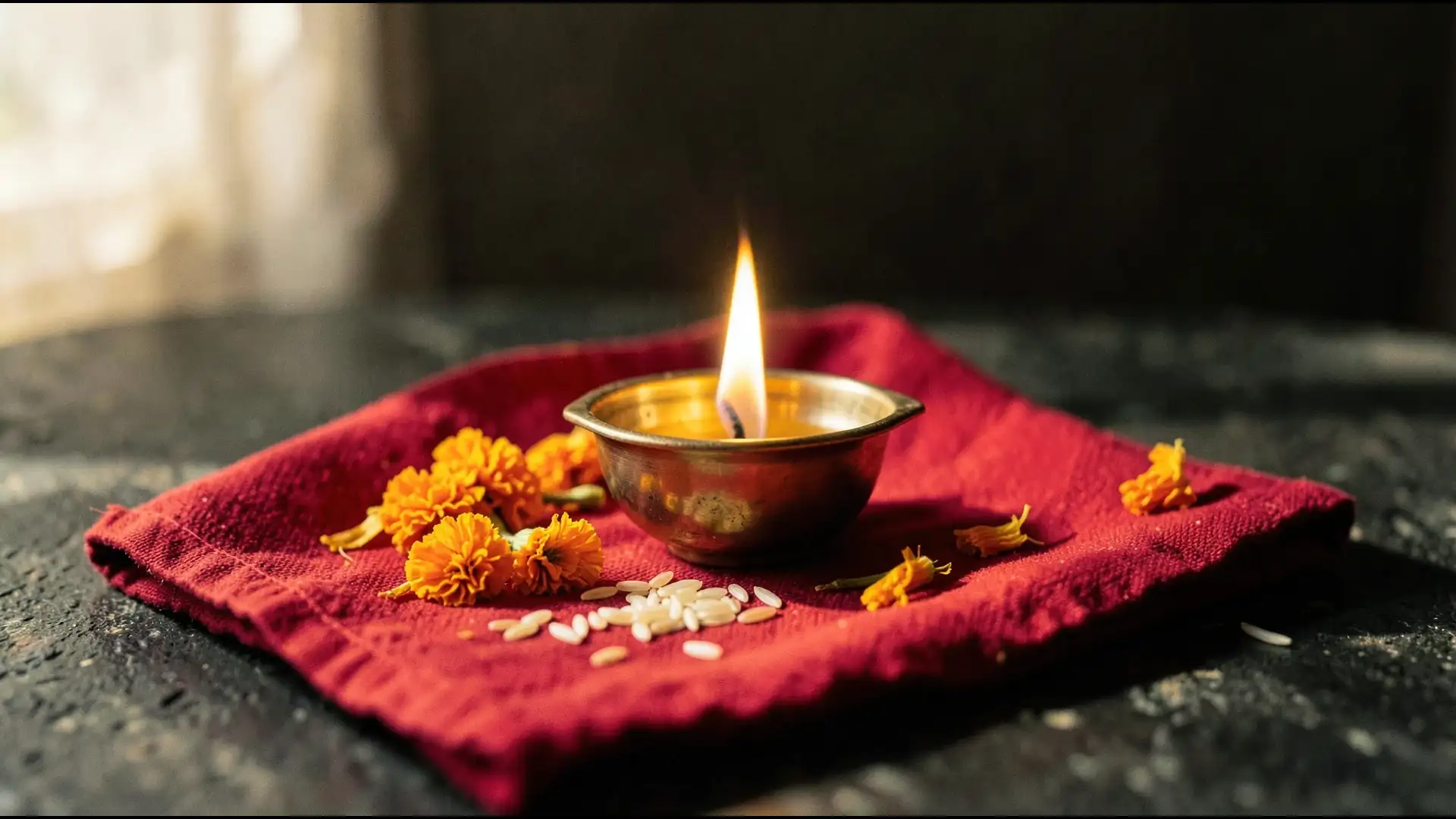
The deity whose vrat she observes intervenes, or the fruit of her devotion becomes visible in her life. The story ends with the fast vindicated and its reward made plain.
This structure is deliberate. The katha is not mythology attached to a ritual for colour. It is the ritual's explanation of itself, told in the form that oral cultures have always used to carry meaning across generations: a story with a beginning, a crisis, and a resolution.
The katha is heard in that state, when the devotee is most receptive and the intention of the day is still present. Breaking the fast afterward is the completion, not the goal. The katha positions the meal as prasad, a grace received, rather than relief from hunger.
There is also a practical wisdom embedded in the sequence. Hearing the katha before eating ensures it is not skipped. A ritual placed after the reward tends to dissolve. Placed before it, the story becomes the threshold the devotee must cross.
The listener is expected to hold the story in mind, not to analyse it, but to receive it. This act of attentive listening is itself considered part of the vrat's fulfillment.
In popular tradition, a katha heard without attention, or skipped entirely, is said to leave the vrat incomplete, not as a punishment, but because the story's function goes unperformed. The fast becomes a dietary act. The katha is what makes it a devotional one.
This identification is the katha's deepest function. The listener does not just learn that the vrat is powerful. She sees herself in someone who kept it and was met.
The story makes the fast feel witnessed rather than performed in private. That witness, the sense that the deity has seen this kind of devotion before and responded, is what the katha transfers to the listener before the meal begins.
The fast empties. The katha fills. The prasad, eaten after both, carries the weight of what has been heard and held.
Disclaimer: This article reflects traditional Hindu customs and popular beliefs surrounding vrat katha and fasting practices, which vary across regions and households. It is intended for cultural and informational reading only, and individuals should observe fasts according to personal health needs. Newspoint does not claim scriptural authority or take responsibility for how rituals or fasts are observed.
What the Katha Actually Is
The word katha means story, but in the context of a vrat it means something more specific: a narrative that carries the origin and the intention of the fast itself. Most kathas follow a recognisable shape. A devotee, often a woman, often in difficult circumstances, keeps the fast with complete sincerity. She faces a test of her faith.The deity whose vrat she observes intervenes, or the fruit of her devotion becomes visible in her life. The story ends with the fast vindicated and its reward made plain.
This structure is deliberate. The katha is not mythology attached to a ritual for colour. It is the ritual's explanation of itself, told in the form that oral cultures have always used to carry meaning across generations: a story with a beginning, a crisis, and a resolution.
Why It Is Heard Before the Fast Breaks
In Vedic and Puranic tradition, the sequence of a vrat matters as much as the acts within it. The fast creates a state of readiness, the body stilled, the mind turned toward the deity.The katha is heard in that state, when the devotee is most receptive and the intention of the day is still present. Breaking the fast afterward is the completion, not the goal. The katha positions the meal as prasad, a grace received, rather than relief from hunger.
There is also a practical wisdom embedded in the sequence. Hearing the katha before eating ensures it is not skipped. A ritual placed after the reward tends to dissolve. Placed before it, the story becomes the threshold the devotee must cross.
The Role of the Listener
Tradition holds that the katha must be heard with attention, not merely played in the background. In many households, a lamp is lit, water is kept in a vessel nearby, and the family gathers.The listener is expected to hold the story in mind, not to analyse it, but to receive it. This act of attentive listening is itself considered part of the vrat's fulfillment.
In popular tradition, a katha heard without attention, or skipped entirely, is said to leave the vrat incomplete, not as a punishment, but because the story's function goes unperformed. The fast becomes a dietary act. The katha is what makes it a devotional one.
What the Story Transfers
The katha does something that a list of rules cannot. It shows a person, not unlike the listener, who kept the fast under real difficulty. The devotee in the story is rarely a sage or a king. She is often a woman with a sick husband, a household without means, a test she did not choose. Her faith is not abstract. It is practical and personal, and it holds.This identification is the katha's deepest function. The listener does not just learn that the vrat is powerful. She sees herself in someone who kept it and was met.
The story makes the fast feel witnessed rather than performed in private. That witness, the sense that the deity has seen this kind of devotion before and responded, is what the katha transfers to the listener before the meal begins.
The fast empties. The katha fills. The prasad, eaten after both, carries the weight of what has been heard and held.
Disclaimer: This article reflects traditional Hindu customs and popular beliefs surrounding vrat katha and fasting practices, which vary across regions and households. It is intended for cultural and informational reading only, and individuals should observe fasts according to personal health needs. Newspoint does not claim scriptural authority or take responsibility for how rituals or fasts are observed.