
Why Do Devotees Treat Laddu Gopal Like a Child? 7 Janmashtami Traditions and Their Meaning

Laddu Gopal is not treated like an ordinary idol in many Hindu households. Devotees may dress him in tiny outfits, prepare a special bhog, place him in a small cradle and even make a little sleeping arrangement for him. For families who follow this tradition, these everyday acts are expressions of love and devotion towards Krishna in his child form.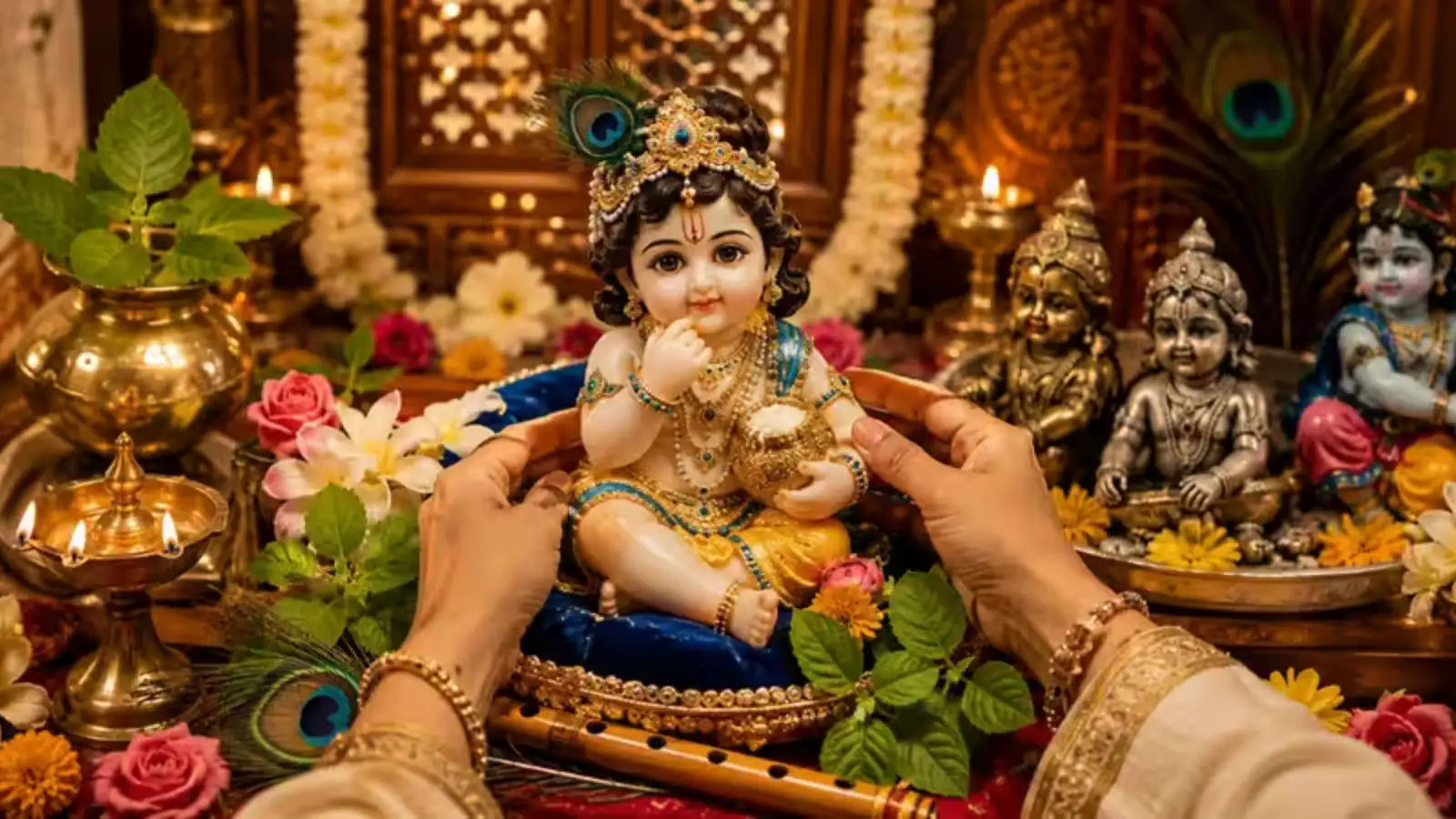
This unique way of worship becomes especially visible during Janmashtami, the festival celebrating the birth of Lord Krishna. From bathing and dressing Laddu Gopal to offering Makhan-Mishri and celebrating his birth at midnight, each practice carries a special devotional meaning. But why is Krishna worshipped as a child, and what do these Janmashtami traditions represent?
Instead of approaching the deity only with reverence, devotees may express their devotion through acts of care that resemble looking after a child. Preparing food, choosing clothes, arranging a resting place or celebrating special occasions can all become part of this personal form of bhakti.
For many families, this makes worship feel closely connected to everyday life. A meal becomes an offering, dressing the deity becomes an act of affection and a festival becomes an opportunity to celebrate Krishna's presence in the home.
The ritual is associated with cleanliness, reverence and lovingly preparing the deity for the celebration. Devotees may use water or other traditional bathing offerings according to their family or sampradaya practices.
Beyond the ritual itself, the act reflects the affectionate relationship devotees seek to cultivate with Bal Gopal. Krishna's birth is remembered not merely as a historical or religious event but as a joyous arrival that devotees symbolically welcome into their homes.
Janmashtami is a celebration, so dressing Bal Gopal in new or specially chosen clothes adds to the festive atmosphere. Devotees may select outfits, jewellery, crowns and other accessories according to the occasion.
The tradition also mirrors a familiar expression of love. When families celebrate a special occasion involving a child, dressing the child in new clothes is often part of the excitement. In Bal Gopal worship, a similar feeling is expressed through devotion.
The cradle or swing reflects Krishna's childhood and adds a playful, affectionate element to the worship. Families may decorate the Jhula with flowers, fabric and other festive elements before placing Bal Gopal in it.
For devotees, swinging the child Krishna is not simply a decorative tradition. It creates a visual and emotional representation of Krishna as a beloved child whose birth is being celebrated.
Devotional stories about Krishna's childhood frequently portray him as playful and fond of makhan, making butter-based offerings especially popular during Krishna worship. Makhan-Mishri is therefore often offered as bhog to Laddu Gopal.
The practice also connects with a simple human expression of affection: offering someone a food they love. For devotees, remembering Krishna's childhood preferences while preparing bhog can make the offering feel more personal and meaningful.
Offering Tulsi leaves is considered by devotees to be a humble expression of devotion. Its significance comes from its sacred place within Vaishnava worship rather than from its role as a mere decorative addition to an offering.
The tradition highlights an important idea in bhakti: an offering does not have to be elaborate to be meaningful. Sincerity and devotion are considered central to the act of offering.
Traditional accounts place Krishna's birth in Mathura at midnight. Consequently, devotees often observe the festival through the evening and wait for the arrival of the traditional birth hour before performing special prayers and rituals.
As midnight approaches, homes and temples can take on a celebratory atmosphere. Devotees may sing devotional songs, chant Krishna's name and perform rituals marking the symbolic birth.
For many worshippers, this midnight moment is the emotional centre of Janmashtami - the point at which the festival's anticipation culminates in the celebration of Krishna's birth.
In households that follow regular Bal Gopal worship, devotees may continue offering food, changing the deity's clothes, performing puja and maintaining other forms of daily worship. The exact routine can vary significantly depending on family customs and religious traditions.
Over time, these repeated practices can become part of the household's daily rhythm. What begins as a festival ritual may gradually become an everyday expression of devotion.
This is one of the reasons Laddu Gopal can feel so personally connected to family life.
Relationships often become stronger through repeated acts of care. A similar emotional connection can develop through regular devotional practices. When someone prepares bhog, selects tiny clothes, arranges a resting place or celebrates festivals with Laddu Gopal, these activities can create a strong personal bond.
The idol remains a sacred representation of Krishna, but the devotee's emotional relationship with that representation can become deeply personal.
This explains why someone in a household may naturally say that Laddu Gopal has eaten, needs to sleep or needs a new outfit. Within that devotional framework, such language expresses affection rather than treating the deity as an ordinary object.
Choosing a tiny outfit may become a joyful festival preparation. Preparing bhog can feel like cooking for someone special. Decorating a Jhula can bring an entire family together. Even maintaining a daily routine can create a sense of continuity and closeness.
Janmashtami therefore becomes more than a single religious celebration for these households. It can become a moment when an existing relationship with Krishna is expressed through music, food, decoration, prayer and family traditions.
Bathing Bal Gopal, dressing him in new clothes, offering Makhan-Mishri, placing him on a Jhula and celebrating his birth at midnight are all ways devotees connect with Krishna's child form.
Not every family follows every practice, and customs can differ across regions and Vaishnava traditions. What remains at the heart of Laddu Gopal worship for many devotees is the personal bond they feel with Krishna.
That is perhaps why, in many homes, the little deity is not merely worshipped - he is lovingly welcomed into everyday family life.
This unique way of worship becomes especially visible during Janmashtami, the festival celebrating the birth of Lord Krishna. From bathing and dressing Laddu Gopal to offering Makhan-Mishri and celebrating his birth at midnight, each practice carries a special devotional meaning. But why is Krishna worshipped as a child, and what do these Janmashtami traditions represent?
Why Is Krishna Worshipped as Laddu Gopal?
Laddu Gopal refers to Krishna's Bal Roop, or child form. In several Krishna-bhakti traditions, worshipping this form allows devotees to develop an intimate and affectionate relationship with Krishna.Instead of approaching the deity only with reverence, devotees may express their devotion through acts of care that resemble looking after a child. Preparing food, choosing clothes, arranging a resting place or celebrating special occasions can all become part of this personal form of bhakti.
For many families, this makes worship feel closely connected to everyday life. A meal becomes an offering, dressing the deity becomes an act of affection and a festival becomes an opportunity to celebrate Krishna's presence in the home.
7 Janmashtami Traditions Associated With Laddu Gopal
Janmashtami brings many customs associated with Bal Gopal worship. While practices can differ between families and traditions, these seven are among the most familiar.1. Bathing Laddu Gopal
Bathing the child form of Krishna is an important part of Janmashtami worship in many households.The ritual is associated with cleanliness, reverence and lovingly preparing the deity for the celebration. Devotees may use water or other traditional bathing offerings according to their family or sampradaya practices.
Beyond the ritual itself, the act reflects the affectionate relationship devotees seek to cultivate with Bal Gopal. Krishna's birth is remembered not merely as a historical or religious event but as a joyous arrival that devotees symbolically welcome into their homes.
2. Dressing Him in New Clothes
Tiny Laddu Gopal dresses, colourful poshaks and elaborate shringar are an important part of Krishna worship for many devotees.Janmashtami is a celebration, so dressing Bal Gopal in new or specially chosen clothes adds to the festive atmosphere. Devotees may select outfits, jewellery, crowns and other accessories according to the occasion.
The tradition also mirrors a familiar expression of love. When families celebrate a special occasion involving a child, dressing the child in new clothes is often part of the excitement. In Bal Gopal worship, a similar feeling is expressed through devotion.
3. Placing Laddu Gopal on a Jhula
A decorated Jhula for Laddu Gopal is one of the most recognisable sights during Janmashtami celebrations.The cradle or swing reflects Krishna's childhood and adds a playful, affectionate element to the worship. Families may decorate the Jhula with flowers, fabric and other festive elements before placing Bal Gopal in it.
For devotees, swinging the child Krishna is not simply a decorative tradition. It creates a visual and emotional representation of Krishna as a beloved child whose birth is being celebrated.
4. Offering Makhan-Mishri
Few foods are as closely associated with stories of young Krishna as butter.Devotional stories about Krishna's childhood frequently portray him as playful and fond of makhan, making butter-based offerings especially popular during Krishna worship. Makhan-Mishri is therefore often offered as bhog to Laddu Gopal.
The practice also connects with a simple human expression of affection: offering someone a food they love. For devotees, remembering Krishna's childhood preferences while preparing bhog can make the offering feel more personal and meaningful.
5. Offering Tulsi to Krishna
Tulsi has a revered position in Vaishnava traditions and is traditionally associated with the worship of Vishnu and Krishna.Offering Tulsi leaves is considered by devotees to be a humble expression of devotion. Its significance comes from its sacred place within Vaishnava worship rather than from its role as a mere decorative addition to an offering.
The tradition highlights an important idea in bhakti: an offering does not have to be elaborate to be meaningful. Sincerity and devotion are considered central to the act of offering.
6. Celebrating Krishna's Birth at Midnight
One of the defining features of Janmashtami celebrations is the midnight birth ceremony.Traditional accounts place Krishna's birth in Mathura at midnight. Consequently, devotees often observe the festival through the evening and wait for the arrival of the traditional birth hour before performing special prayers and rituals.
As midnight approaches, homes and temples can take on a celebratory atmosphere. Devotees may sing devotional songs, chant Krishna's name and perform rituals marking the symbolic birth.
For many worshippers, this midnight moment is the emotional centre of Janmashtami - the point at which the festival's anticipation culminates in the celebration of Krishna's birth.
7. Continuing Laddu Gopal's Care After Janmashtami
The relationship with Laddu Gopal does not necessarily end when the festival is over.In households that follow regular Bal Gopal worship, devotees may continue offering food, changing the deity's clothes, performing puja and maintaining other forms of daily worship. The exact routine can vary significantly depending on family customs and religious traditions.
Over time, these repeated practices can become part of the household's daily rhythm. What begins as a festival ritual may gradually become an everyday expression of devotion.
This is one of the reasons Laddu Gopal can feel so personally connected to family life.
Why Do Devotees Treat Laddu Gopal Like a Family Member?
The answer lies largely in the nature of bhakti, or devotional love.Relationships often become stronger through repeated acts of care. A similar emotional connection can develop through regular devotional practices. When someone prepares bhog, selects tiny clothes, arranges a resting place or celebrates festivals with Laddu Gopal, these activities can create a strong personal bond.
The idol remains a sacred representation of Krishna, but the devotee's emotional relationship with that representation can become deeply personal.
This explains why someone in a household may naturally say that Laddu Gopal has eaten, needs to sleep or needs a new outfit. Within that devotional framework, such language expresses affection rather than treating the deity as an ordinary object.
What Makes Laddu Gopal Worship So Personal?
For many devotees, the beauty of Bal Gopal worship lies in how ordinary activities can become part of spiritual life.You may also like
- How the Rare Planetary Conjunction Brings Wealth and Prosperity to Aries Through Virgo
- Unveiling the Divine Horoscope of Lord Krishna: Rare Planetary Mahayogas and Astrological Secrets Behind His Extraordinary Persona
- Unlocking the Spiritual Mystery of Lord Krishna's Flute: Beyond Music and Melody
- Krishna Janmashtami 2026: Step-by-Step Guide on How to Beautifully Adorn Laddu Gopal
- Janmashtami Is Decided by the Midnight Nishita Kaal Instead of Standard Udaya Tithi
Choosing a tiny outfit may become a joyful festival preparation. Preparing bhog can feel like cooking for someone special. Decorating a Jhula can bring an entire family together. Even maintaining a daily routine can create a sense of continuity and closeness.
Janmashtami therefore becomes more than a single religious celebration for these households. It can become a moment when an existing relationship with Krishna is expressed through music, food, decoration, prayer and family traditions.
Laddu Gopal Worship Is About Love as Much as Ritual
The traditions surrounding Laddu Gopal may look different from conventional forms of idol worship, but their central idea is simple: devotion can be expressed through affection and care.Bathing Bal Gopal, dressing him in new clothes, offering Makhan-Mishri, placing him on a Jhula and celebrating his birth at midnight are all ways devotees connect with Krishna's child form.
Not every family follows every practice, and customs can differ across regions and Vaishnava traditions. What remains at the heart of Laddu Gopal worship for many devotees is the personal bond they feel with Krishna.
That is perhaps why, in many homes, the little deity is not merely worshipped - he is lovingly welcomed into everyday family life.






Loving Newspoint? Download the app now
