
Trionda Unveiled! How FIFA’s Smart Match Ball Is Changing Football Forever

Football’s biggest tournament has always been a stage for innovation, and the 2026 FIFA World Cup is no exception. The latest official match ball, Trionda, introduces a significant technological leap that goes far beyond appearance or materials. Designed to support both players and match officials, it combines cutting-edge electronics, precision engineering and aerodynamic research within a single football.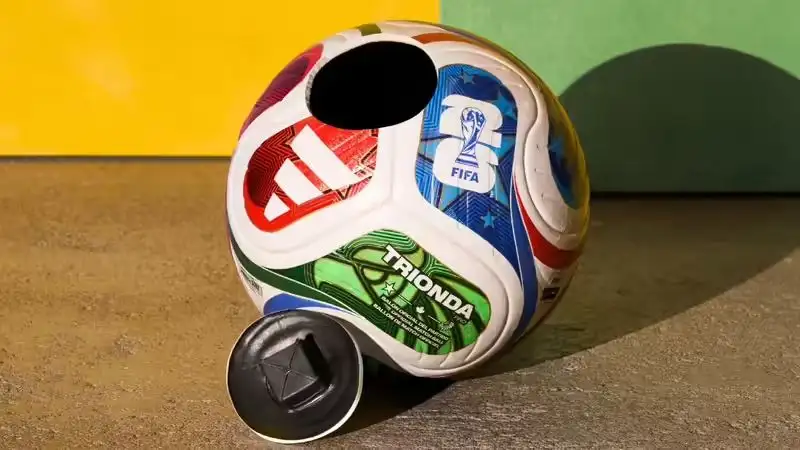
Named to celebrate the first World Cup jointly hosted by three nations, Trionda represents one of the most advanced footballs ever developed. From collecting live movement data to improving the accuracy of officiating decisions, the new ball reflects how technology is becoming increasingly important in the modern game while preserving the sport's traditional feel.
The embedded system measures acceleration, rotation, impact and direction more than 100 times every second. This information is instantly transmitted to the tournament's officiating systems, providing precise positional data during live matches.
The technology allows officials to identify the exact moment a player makes contact with the ball. This added accuracy supports semi-automated offside decisions and assists video review systems in judging handballs, deflections, corners and disputed possession. By combining sensor data with existing camera technology, referees receive a clearer picture of key incidents during play.
Although connected ball technology has appeared before, the latest version features a more carefully balanced sensor placement. This ensures the electronics remain perfectly centred inside the football, preserving its natural flight characteristics.
Reducing the number of seams creates a smoother surface, helping air flow more consistently around the football during play. As a result, long passes, powerful strikes and curling crosses are expected to behave more predictably.
The heat-bonded construction replaces conventional stitching, preventing water absorption while improving durability. It also helps the football maintain its perfectly round shape throughout demanding tournament conditions.
Engineers studied how airflow moved across the ball's surface under different speeds and conditions. The result is a design that produces more stable flight by reducing unpredictable movement caused by changing airflow patterns.
Greater aerodynamic stability benefits everyone involved in a match. Players gain improved control and consistency during passing and shooting, while officials can rely on more predictable ball movement when reviewing incidents.
Each football is tested for weight, circumference, pressure retention, rebound, water resistance and shape before receiving approval for competitive use. These rigorous inspections help ensure that every ball performs consistently throughout the tournament.
The football is manufactured in Sialkot, Pakistan, a city recognised globally for producing a large share of the world's footballs through decades of specialist expertise.
For players, the improved design offers greater consistency during matches. Officials benefit from more accurate decision-making supported by live data, while broadcasters can enhance match analysis using precise ball-tracking information.
As football continues to embrace innovation, Trionda demonstrates how sensors, wireless communication and AI-assisted officiating can work together without altering the game's core experience. The 2026 FIFA World Cup will not only showcase the world's best players but also one of the most technologically advanced footballs ever created, setting a new benchmark for the future of the sport.
Named to celebrate the first World Cup jointly hosted by three nations, Trionda represents one of the most advanced footballs ever developed. From collecting live movement data to improving the accuracy of officiating decisions, the new ball reflects how technology is becoming increasingly important in the modern game while preserving the sport's traditional feel.
Connected Ball Technology Delivers Real-Time Match Intelligence
At the heart of Trionda is its Connected Ball Technology. Hidden inside the football is a compact electronic module containing an Inertial Measurement Unit (IMU), which combines accelerometers and gyroscopes to monitor every movement of the ball.The embedded system measures acceleration, rotation, impact and direction more than 100 times every second. This information is instantly transmitted to the tournament's officiating systems, providing precise positional data during live matches.
The technology allows officials to identify the exact moment a player makes contact with the ball. This added accuracy supports semi-automated offside decisions and assists video review systems in judging handballs, deflections, corners and disputed possession. By combining sensor data with existing camera technology, referees receive a clearer picture of key incidents during play.
Although connected ball technology has appeared before, the latest version features a more carefully balanced sensor placement. This ensures the electronics remain perfectly centred inside the football, preserving its natural flight characteristics.
Four-Panel Construction Improves Flight Stability
Trionda also introduces a completely redesigned outer structure. Instead of the traditional multi-panel layout seen in older footballs, the new ball features just four thermally bonded panels, the fewest ever used in an official FIFA World Cup match ball.Reducing the number of seams creates a smoother surface, helping air flow more consistently around the football during play. As a result, long passes, powerful strikes and curling crosses are expected to behave more predictably.
The heat-bonded construction replaces conventional stitching, preventing water absorption while improving durability. It also helps the football maintain its perfectly round shape throughout demanding tournament conditions.
You may also like
- 'You have to earn': Former India cricketer says Vaibhav Sooryavanshi should not replace 'fabulous' Sanju Samson yet
- ETPL will play a crucial role in making cricket a global affair ahead of Olympics: Ashwin
- NFL Trade Rumors: Chicago Bears linked with $76 million Arizona Cardinals pass rusher in proposed three-team deal
- 'Persist with Sanju': Cheteshwar Pujara warns India against replacing Samson with Vaibhav Sooryavanshi
- "His racism is showing again": Fans rip Stephen A. Smith over controversial Lakers 'white dudes' remark
Advanced Aerodynamic Engineering Shapes Performance
Developing a modern football now relies heavily on digital engineering. Before reaching the pitch, Trionda underwent extensive computational modelling and wind tunnel testing to refine its aerodynamic behaviour.Engineers studied how airflow moved across the ball's surface under different speeds and conditions. The result is a design that produces more stable flight by reducing unpredictable movement caused by changing airflow patterns.
Greater aerodynamic stability benefits everyone involved in a match. Players gain improved control and consistency during passing and shooting, while officials can rely on more predictable ball movement when reviewing incidents.
Precision Manufacturing Supports Consistent Quality
Producing a football of this complexity requires a combination of advanced automation and skilled craftsmanship. Thermal bonding technology, robotic inspections and detailed quality checks ensure every match ball meets strict performance standards.Each football is tested for weight, circumference, pressure retention, rebound, water resistance and shape before receiving approval for competitive use. These rigorous inspections help ensure that every ball performs consistently throughout the tournament.
The football is manufactured in Sialkot, Pakistan, a city recognised globally for producing a large share of the world's footballs through decades of specialist expertise.
A New Generation Of Football Innovation
Trionda represents far more than an equipment update. It highlights how digital technology, engineering and sport are becoming increasingly connected.For players, the improved design offers greater consistency during matches. Officials benefit from more accurate decision-making supported by live data, while broadcasters can enhance match analysis using precise ball-tracking information.
As football continues to embrace innovation, Trionda demonstrates how sensors, wireless communication and AI-assisted officiating can work together without altering the game's core experience. The 2026 FIFA World Cup will not only showcase the world's best players but also one of the most technologically advanced footballs ever created, setting a new benchmark for the future of the sport.






More from our partners


Loving Newspoint? Download the app now
