
Why a Feather Shuttlecock Has Exactly 16 Feathers

Why does a feather shuttlecock have exactly 16 feathers? It may look like a simple piece of badminton equipment, but its design is the result of years of refinement and precise engineering. Made using 16 goose feathers arranged in a circular pattern and fixed into a cork base covered with thin leather, the shuttlecock follows a carefully developed structure. This specific design helps it maintain stability, control and predictable flight during a badminton match.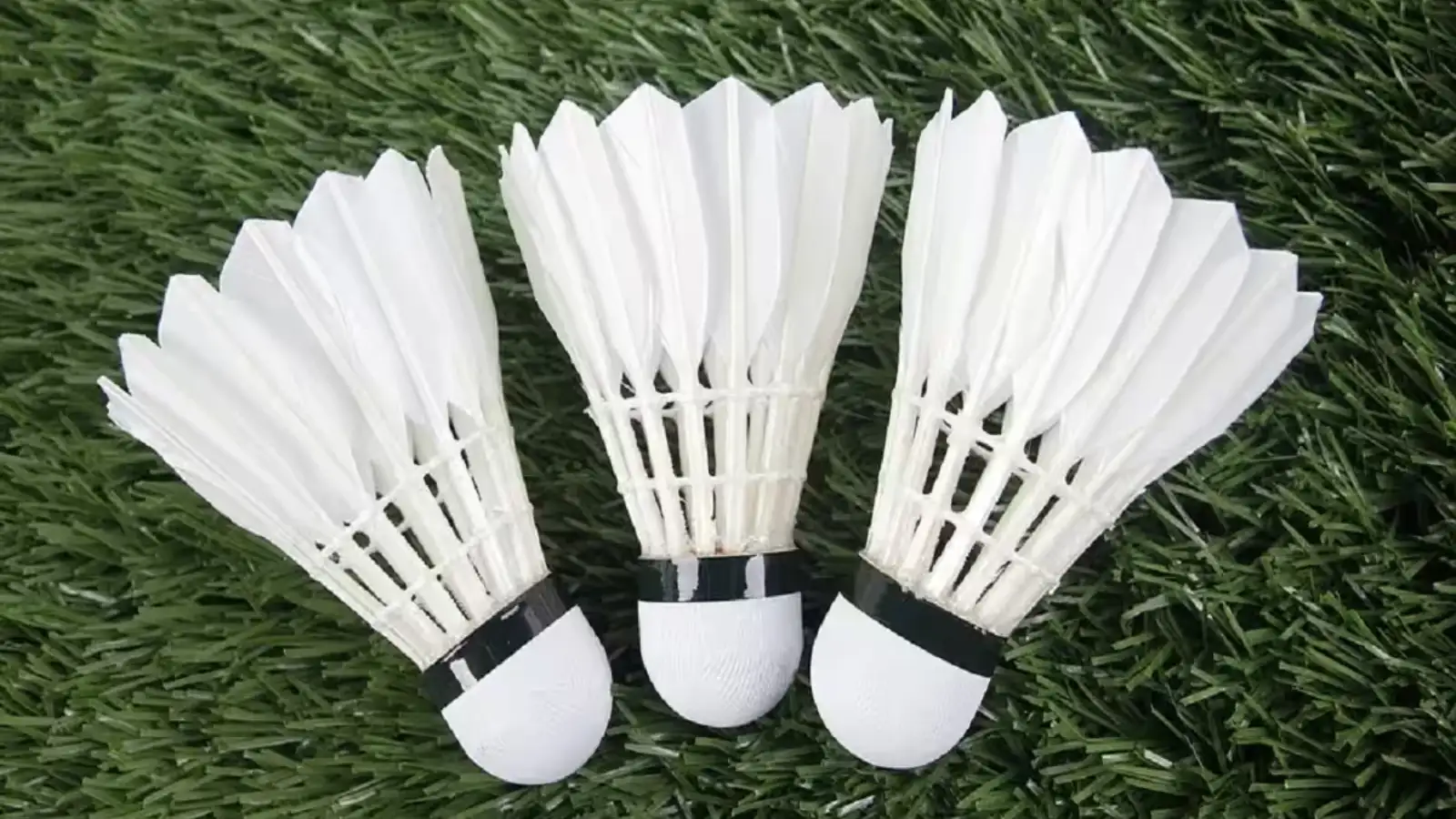
The cone also generates a slow, stable spin, typically around eight rotations per second in flight, which smooths out any wobble introduced at the moment of impact. Without that spin, the shuttle would tumble unpredictably. Too little drag and it overshoots; too much and it drops short. The cone angle and the number of feathers that form it are what set the drag coefficient.
The shuttle starts to feel harsh off the strings and the flight arc changes. Sixteen feathers, each overlapping the next by roughly two to three millimetres along the vane, produce a cone that is rigid enough to hold its shape under impact and flexible enough to recover. The Badminton World Federation's equipment regulations codify this, but the regulation did not invent the number, it confirmed what makers had already found through trial and error across generations of play.
Mixing wings in a single shuttle creates asymmetric spin and unpredictable drift. Every competition shuttle is made entirely from one wing. Duck feathers are used in lower-grade shuttles, they are cheaper and more available, but they are shorter, less uniform, and wear faster.
The natural curve in a goose feather also contributes to the spin: the vane is not flat but gently arced, and that arc, multiplied across sixteen feathers arranged in a circle, generates the rotational stability that a flat synthetic vane struggles to replicate. Synthetic shuttles have improved considerably, but the feather version remains the standard at the top level precisely because of what that natural geometry does to flight.
Longer feathers increase drag and slow the shuttle down; shorter feathers reduce drag and let it fly faster. The number of feathers stays at sixteen across every grade. The geometry of the cone stays the same. Only the scale shifts, tuned to the air the shuttle will actually fly through.
A player who has spent time at different altitudes learns to feel the difference in the first few rallies of a session and adjusts their game accordingly, a small, practical reminder that the shuttle is always in conversation with the atmosphere around it.
The sixteen-feather count is not arbitrary and it is not ceremonial. It is the minimum number that closes a cone tightly enough to generate stable drag, and the maximum number that keeps the skirt flexible enough to survive impact.
Everything that makes a shuttlecock behave the way it does, the forward flight, the steep drop at the end of its arc, the gentle spin, the way it slows as it falls, follows from that structural decision. The number sixteen is where geometry, aerodynamics, and material all agreed.
The Aerodynamics of a Cone in Flight
When a shuttlecock leaves a racquet, it does not fly like a ball. A ball is symmetric in every direction; it needs no preferred orientation. A shuttlecock must always fly cork-first. The feathers form a cone that creates drag behind the base, and that drag is what keeps the cork pointing forward through the entire trajectory.The cone also generates a slow, stable spin, typically around eight rotations per second in flight, which smooths out any wobble introduced at the moment of impact. Without that spin, the shuttle would tumble unpredictably. Too little drag and it overshoots; too much and it drops short. The cone angle and the number of feathers that form it are what set the drag coefficient.
Why Sixteen Is the Structural Answer
Each feather overlaps its neighbour by a fixed amount. That overlap is what gives the skirt its rigidity. With fewer feathers, say, fourteen, the gaps between quills widen, the cone loses its uniform surface, and air leaks through unevenly, destroying the symmetric drag that keeps the shuttle stable. Add more, say, eighteen, and the feathers crowd each other, the cone becomes too stiff, and the natural flex that absorbs impact disappears.The shuttle starts to feel harsh off the strings and the flight arc changes. Sixteen feathers, each overlapping the next by roughly two to three millimetres along the vane, produce a cone that is rigid enough to hold its shape under impact and flexible enough to recover. The Badminton World Federation's equipment regulations codify this, but the regulation did not invent the number, it confirmed what makers had already found through trial and error across generations of play.
The Role of the Goose
Not any feather works, and not any part of the goose. The left wing of a goose provides feathers that curve in one direction; the right wing curves the other way. A shuttlecock built from left-wing feathers spins clockwise when seen from above; one built from right-wing feathers spins counter-clockwise.Mixing wings in a single shuttle creates asymmetric spin and unpredictable drift. Every competition shuttle is made entirely from one wing. Duck feathers are used in lower-grade shuttles, they are cheaper and more available, but they are shorter, less uniform, and wear faster.
The natural curve in a goose feather also contributes to the spin: the vane is not flat but gently arced, and that arc, multiplied across sixteen feathers arranged in a circle, generates the rotational stability that a flat synthetic vane struggles to replicate. Synthetic shuttles have improved considerably, but the feather version remains the standard at the top level precisely because of what that natural geometry does to flight.
Speed Grades and What Changes Them
A shuttlecock does not fly identically at every altitude and temperature. Air is thinner at higher altitudes and less dense in hot weather, so the same shuttle that plays correctly in Mumbai in July will fly long in Shimla in winter. Manufacturers address this by varying the length of the feathers slightly across a range of speed grades, typically five grades, marked on the tube.Longer feathers increase drag and slow the shuttle down; shorter feathers reduce drag and let it fly faster. The number of feathers stays at sixteen across every grade. The geometry of the cone stays the same. Only the scale shifts, tuned to the air the shuttle will actually fly through.
A player who has spent time at different altitudes learns to feel the difference in the first few rallies of a session and adjusts their game accordingly, a small, practical reminder that the shuttle is always in conversation with the atmosphere around it.
The sixteen-feather count is not arbitrary and it is not ceremonial. It is the minimum number that closes a cone tightly enough to generate stable drag, and the maximum number that keeps the skirt flexible enough to survive impact.
Everything that makes a shuttlecock behave the way it does, the forward flight, the steep drop at the end of its arc, the gentle spin, the way it slows as it falls, follows from that structural decision. The number sixteen is where geometry, aerodynamics, and material all agreed.
Next Story