
Why Only the Wicketkeeper Wears Gloves in Cricket

Cricket is one of the few ball sports where protective equipment is rationed by law rather than left to personal choice. A batter may pad up from ankle to shoulder. A fielder may wear nothing on his hands at all. And exactly one player on the fielding side is allowed gloves, the wicketkeeper, and only under conditions the Laws spell out precisely.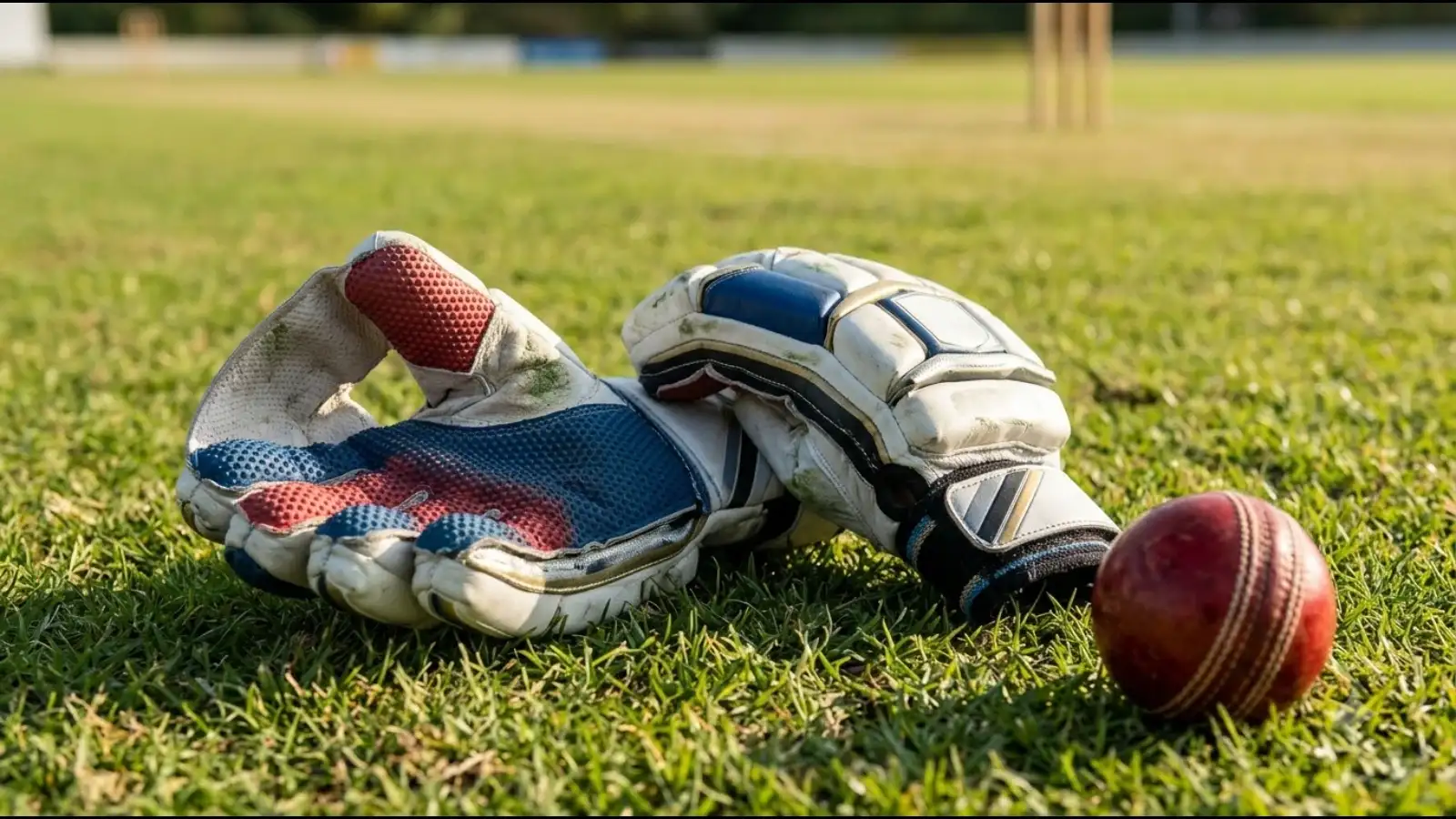

What the Law Actually Says
The Laws of Cricket, maintained by the Marylebone Cricket Club, define the wicketkeeper as the fielder designated to stand behind the wicket on the striker's side. Law 27 permits this player to wear gloves and to have external leg guards. It also states that no other fielder may use gloves or any external device to assist in catching or fielding the ball. The restriction is not informal tradition. It is written law, and any fielder who catches the ball while wearing a glove has not taken a legal catch.Why the Rule Exists at All
The wicketkeeper faces a specific physical problem that no other fielder shares. He receives the ball directly from a fast bowler, often travelling at speeds that would bruise bare hands badly over the course of a long innings. He also stands close enough to the stumps that he must catch or collect the ball in a very small window of time and space, often with spin or swing still on it. The gloves are a functional answer to a functional problem unique to that position. A cover fielder, by contrast, chooses where to stand. He moves to meet the ball and can cushion it with his whole body. The keeper cannot move away. He must receive.You may also like
- How Nathan MacKinnon's parents Graham and Kathy supported his journey from a small-town hockey dreamer in Cole Harbour to becoming an NHL superstar with the Colorado Avalanche through years of sacrifices and encouragement
- 'Winning games is top priority': Bruno Fernandes puts Man United contract talks on hold
- India and New Zealand Draw 2-2 in Final Match of Century of Sporting Unity Event
- SMAT 2026: MP hold Maharashtra for close win; Abdul Samad shines for J&K against Punjab
- India A pacer Harshit Rana breathes fire, engages in fiery exchanges with Pakistan A batters – WATCH
How the Gloves Are Designed
Wicketkeeping gloves are not ordinary batting gloves scaled up. They carry webbing between the index finger and thumb, a gusset of leather or synthetic material that creates a catching surface larger than the hand alone. The fingers are individually padded, and the back of the glove is reinforced. The design is governed by Law 27, which requires that any webbing must not extend beyond a straight line between the top of the index finger and the top of the thumb when the hand is fully open. This prevents the glove from becoming a net. The keeper must still catch; the glove only helps him hold what he gets a hand to.What Happens When a Fielder Touches the Ball with Gloves
If any fielder other than the designated wicketkeeper wears gloves and touches the ball, the batting side is awarded five penalty runs under Law 41, which governs unfair play and fielding restrictions. The same penalty applies if a fielder uses any part of his clothing deliberately to field the ball. The law treats the hands as the natural fielding instrument and anything added to them as an advantage the game has not agreed to grant.The Keeper's Permission Has Limits Too
Even the wicketkeeper's gloves come with a positional condition. He is only permitted to wear them while standing in his designated role behind the stumps. If a team asks its keeper to bowl or to field in the outfield temporarily, the gloves come off. The moment he is no longer acting as wicketkeeper, he is a fielder like any other. Some lower-level matches have seen players attempt to claim keeper status to protect sore hands; the Laws are clear that the designation must be declared and maintained, not picked up and put down as convenient.





Loving Newspoint? Download the app now
