
AI in action: How startups showcased solutions built across healthcare, education, enterprise and more


The India AI Impact Summit saw startups showcase artificial intelligence (AI) applications spanning healthcare, manufacturing, education, fintech and more.
Some of these products are already live and being used at scale. Others are still in the build phase and nearing launch.
Now, as investors and tech leaders pitch India as a use-case capital of the world for AI, a look at how some of these startups are building consumer and enterprise applications for real-world deployment and not just demos.

Navana.ai (2018)
Founded by: Raoul Nanavati and Jai Nanavati

The Mumbai-based voice AI startup Navana.ai operates a full-stack platform that enables enterprises in the BFSI sector to deploy voicebots, transcription tools, and real-time analytics systems. The company has built three main offerings: a voice AI contact centre platform, a speech recognition API, and a contact centre intelligence API. It also functions as a research lab, developing its models in-house, including speech recognition systems, text-to-speech engines, and small language models planned for later this year. The company currently processes around 100 million calls annually and supports 15 Indian languages.
Aalgorix (2015)
Founded by: Rohit Verma
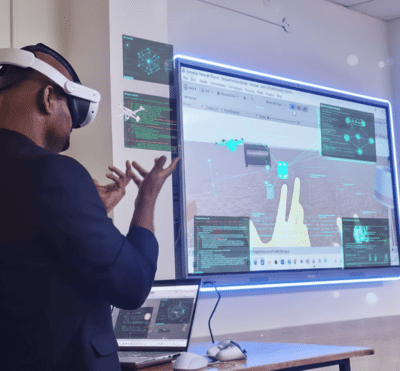
The company has been operating in the education sector for the past decade and has spent the last two years building its capabilities in AI, after previously working in extended reality (XR) and augmented reality/virtual reality (AR/VR) technologies. It has developed an AI-powered interactive toy designed as a companion for children under the age of 15. The syllabus-aligned toy engages with children by interacting, mentoring, and playing with them. The product is slated for launch in the next two months and will be distributed through toy shops.
Janus (2025)
Founded by: Shivum Pandove and Jet Wu

Janus helps companies test how well their AI systems actually work before putting them into production. It creates simulated environments that push AI agents to handle real-world scenarios, exposing gaps in logic, rule-following, tool use and overall reliability. Clients receive clear reports showing where the systems broke down and why. Backed by Y Combinator, Janus works mainly with enterprise customers and says it can cut testing timelines from months to days, helping teams fix issues faster. It charges on a pay-per-test basis. The platform can evaluate chatbots, voice assistants, browser-based agents and automated workflows. Based in the US, Janus is now exploring expansion into India.
Proxgy (2020)
Founded by: Pulkit Ahuja
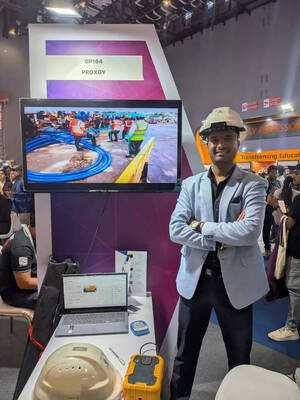
Proxgy develops Internet of Things (IoT)-based products aimed at industrial and blue-collar workforces. Its main product is a smart helmet equipped with features such as a camera, flashlight, video recording, gas sensors, and GPS, along with other safety tools. The Gurugram-based company sells these devices to enterprise clients. Backed by Lenskart founder Peyush Bansal, the firm says its helmet is designed to support hands-free operations while enabling monitoring and data capture for workplace use. The company holds more than 100 patents across India and the US and sells its products globally. Proxgy has also introduced a smart lock for cargo tracking and security. The device uses a mix of cellular networks, Bluetooth, and satellite connectivity to provide real-time updates on cargo movement and status.
Neurema (2025)
Founded by: Ashutosh Thakur, Shoaib S Attar and Priyansh Jain
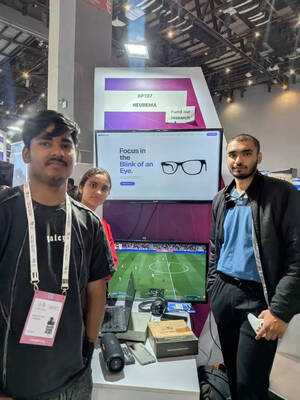
Neurema is developing a wearable device that tracks focus in real time and responds when attention drops. The system detects lapses in concentration and delivers calibrated binaural frequencies intended to help the wearer re-enter a focused state. The startup uses pupillometry and neuroscience-based feedback to guide attention. The product remains in development, with the company positioning itself for further research and funding to advance the technology.
Radai (2025)
Founded by: Bharat Aggarwal, Kshitij Jadhav and Aniket Aman

The Delhi-based startup builds AI tools for radiologists and hospitals to help them read scans more accurately and quickly. Its software is clinically tested and designed to fit into existing hospital workflows. In one validation study, doctors accepted the AI’s results without changes in 92% of cases. The company currently offers tools for detecting breast cancer, measuring bone and joint conditions, and assessing early signs of cognitive decline.
Eka Care (2020)
Founded by: Vikalp Sahni and Dilip Tuli

Backed by 3one4 Capital and Verlinvest, Eka Care is developing a unified, end-to-end medical scribe platform designed to work across multiple Indian languages. A key focus is an offline-capable version that can run entirely on local systems, aiming to extend AI-driven clinical documentation to remote and low-connectivity settings. The startup has partnered with Nvidia to tackle persistent healthcare constraints, including patient data privacy, patchy internet access, and the need for low-latency, real-time transcription. Eka Care offers digital health infrastructure spanning electronic medical records, e-prescriptions, appointment management, and patient engagement tools, positioning itself as a full-stack technology layer for clinics and healthcare providers.
Some of these products are already live and being used at scale. Others are still in the build phase and nearing launch.
Now, as investors and tech leaders pitch India as a use-case capital of the world for AI, a look at how some of these startups are building consumer and enterprise applications for real-world deployment and not just demos.
Navana.ai (2018)
Founded by: Raoul Nanavati and Jai Nanavati
The Mumbai-based voice AI startup Navana.ai operates a full-stack platform that enables enterprises in the BFSI sector to deploy voicebots, transcription tools, and real-time analytics systems. The company has built three main offerings: a voice AI contact centre platform, a speech recognition API, and a contact centre intelligence API. It also functions as a research lab, developing its models in-house, including speech recognition systems, text-to-speech engines, and small language models planned for later this year. The company currently processes around 100 million calls annually and supports 15 Indian languages.
Aalgorix (2015)
Founded by: Rohit Verma
The company has been operating in the education sector for the past decade and has spent the last two years building its capabilities in AI, after previously working in extended reality (XR) and augmented reality/virtual reality (AR/VR) technologies. It has developed an AI-powered interactive toy designed as a companion for children under the age of 15. The syllabus-aligned toy engages with children by interacting, mentoring, and playing with them. The product is slated for launch in the next two months and will be distributed through toy shops.
Janus (2025)
Founded by: Shivum Pandove and Jet Wu
Janus helps companies test how well their AI systems actually work before putting them into production. It creates simulated environments that push AI agents to handle real-world scenarios, exposing gaps in logic, rule-following, tool use and overall reliability. Clients receive clear reports showing where the systems broke down and why. Backed by Y Combinator, Janus works mainly with enterprise customers and says it can cut testing timelines from months to days, helping teams fix issues faster. It charges on a pay-per-test basis. The platform can evaluate chatbots, voice assistants, browser-based agents and automated workflows. Based in the US, Janus is now exploring expansion into India.
Proxgy (2020)
Founded by: Pulkit Ahuja
Proxgy develops Internet of Things (IoT)-based products aimed at industrial and blue-collar workforces. Its main product is a smart helmet equipped with features such as a camera, flashlight, video recording, gas sensors, and GPS, along with other safety tools. The Gurugram-based company sells these devices to enterprise clients. Backed by Lenskart founder Peyush Bansal, the firm says its helmet is designed to support hands-free operations while enabling monitoring and data capture for workplace use. The company holds more than 100 patents across India and the US and sells its products globally. Proxgy has also introduced a smart lock for cargo tracking and security. The device uses a mix of cellular networks, Bluetooth, and satellite connectivity to provide real-time updates on cargo movement and status.
Neurema (2025)
Founded by: Ashutosh Thakur, Shoaib S Attar and Priyansh Jain
Neurema is developing a wearable device that tracks focus in real time and responds when attention drops. The system detects lapses in concentration and delivers calibrated binaural frequencies intended to help the wearer re-enter a focused state. The startup uses pupillometry and neuroscience-based feedback to guide attention. The product remains in development, with the company positioning itself for further research and funding to advance the technology.
Radai (2025)
Founded by: Bharat Aggarwal, Kshitij Jadhav and Aniket Aman
The Delhi-based startup builds AI tools for radiologists and hospitals to help them read scans more accurately and quickly. Its software is clinically tested and designed to fit into existing hospital workflows. In one validation study, doctors accepted the AI’s results without changes in 92% of cases. The company currently offers tools for detecting breast cancer, measuring bone and joint conditions, and assessing early signs of cognitive decline.
Eka Care (2020)
Founded by: Vikalp Sahni and Dilip Tuli
Backed by 3one4 Capital and Verlinvest, Eka Care is developing a unified, end-to-end medical scribe platform designed to work across multiple Indian languages. A key focus is an offline-capable version that can run entirely on local systems, aiming to extend AI-driven clinical documentation to remote and low-connectivity settings. The startup has partnered with Nvidia to tackle persistent healthcare constraints, including patient data privacy, patchy internet access, and the need for low-latency, real-time transcription. Eka Care offers digital health infrastructure spanning electronic medical records, e-prescriptions, appointment management, and patient engagement tools, positioning itself as a full-stack technology layer for clinics and healthcare providers.
Next Story