
Be open to possibilities, it can bring wonders


I began my journey with an undergraduate degree in electronics from NIT Warangal, followed by a Master’s in electrical engineering from Auburn University, US. My first role was with IBM Microelectronics in Vermont, where I was the newest member of a highly experienced engineering team. Instead of feeling overwhelmed, I benefited immensely from senior colleagues who mentored me not only in technical disciplines but also in teamwork, collaboration, and maintaining curiosity.
After four years, I moved to IBM New York to work on CMOS technology development as part of a global alliance involving organisations in Singapore, Germany, and Korea. This was my first exposure to truly cross-cultural collaboration and taught me how to work effectively with diverse teams spread across time zones and working styles.
As my career progressed, I embraced increasingly complex challenges. After several years in industry, I made a pivotal decision to pursue a PhD at MIT. The decision was inspired by three senior women leaders I reported to, each of whom held an MIT doctorate. Their presence showed me what women could achieve at the highest levels of semiconductor innovation and inspired me to take the same leap.
After completing my PhD, I returned to India and took up my first leadership position at Maxim Integrated, where I built and led a new team focused on device characterisation and compact modeling. Over nine years, I grew into a director role.
Later, I moved to ams Osram to lead a design enablement organisation supporting digital and analog designers globally. That role expanded my experience with European leadership culture and operational styles.
Last year, I joined Micron Technology and I lead initiatives that enable next-generation memory solutions and shape the company’s technology roadmap.
One of the most defining turning points in my career occurred when I returned to India after my PhD. Up to that point, I had consistently turned down people management roles, convinced that the individual contributor track best aligned with my strengths.
However, in India, we were establishing new technical functions from the ground up. As the subject matter expert, I had no choice but to guide, train, and shape the new team. Leadership therefore came to me by necessity rather than design and it changed the direction of my career.
My leadership journey taught me several lessons:
– especially when aligning global teams with different viewpoints and priorities. Adaptability and lifelong learning matter. Whether transitioning from IBM to MIT, from the US to India, or transitioning to leading bigger teams, every phase required new skills, perspectives, and openness. Humility and openness to feedback are critical. I learned that leadership is not about having all the answers. Listening to team members, acknowledging gaps, and acting on feedback have been essential to building trust and driving results. Mentors and sponsors change trajectories. At multiple points, others saw leadership potential in me before I recognised it in myself, and their support helped me stretch beyond my comfort zone. My career has not followed a perfectly linear plan. Instead, it has been shaped by opportunities, challenges, mentors, risks, and sometimes unexpected turns. Every phase has made me a more thoughtful, confident, and impact-focused leader. Looking back, I am grateful that some of the most defining moments of my journey came not from meticulous planning, but from being open to possibilities I had not initially intended to pursue.
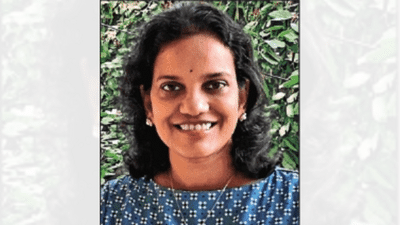
Usha Gogineni is director of technology development at Micron Technology, India
After four years, I moved to IBM New York to work on CMOS technology development as part of a global alliance involving organisations in Singapore, Germany, and Korea. This was my first exposure to truly cross-cultural collaboration and taught me how to work effectively with diverse teams spread across time zones and working styles.
As my career progressed, I embraced increasingly complex challenges. After several years in industry, I made a pivotal decision to pursue a PhD at MIT. The decision was inspired by three senior women leaders I reported to, each of whom held an MIT doctorate. Their presence showed me what women could achieve at the highest levels of semiconductor innovation and inspired me to take the same leap.
After completing my PhD, I returned to India and took up my first leadership position at Maxim Integrated, where I built and led a new team focused on device characterisation and compact modeling. Over nine years, I grew into a director role.
Later, I moved to ams Osram to lead a design enablement organisation supporting digital and analog designers globally. That role expanded my experience with European leadership culture and operational styles.
Last year, I joined Micron Technology and I lead initiatives that enable next-generation memory solutions and shape the company’s technology roadmap.
One of the most defining turning points in my career occurred when I returned to India after my PhD. Up to that point, I had consistently turned down people management roles, convinced that the individual contributor track best aligned with my strengths.
However, in India, we were establishing new technical functions from the ground up. As the subject matter expert, I had no choice but to guide, train, and shape the new team. Leadership therefore came to me by necessity rather than design and it changed the direction of my career.
My leadership journey taught me several lessons:
- Leadership is about leverage and empowerment. I could still contribute technically, but through others my impact became much larger.
- Communication and clarity matter just as much as technical excellence
Next Story