
<b>Can Smartphones Actually Change the Way We Remember Things?</b>

Your phone can remember almost everything for you. It stores photographs, saves phone numbers, records appointments, remembers passwords and answers questions within seconds. That convenience raises an intriguing question: if information is always available externally, does our brain become less interested in storing it internally? Scientists have explored this idea through the concept of " cognitive offloading ", where people use external tools to reduce the amount of information they need to retain. The answer is more complicated than simply saying smartphones are making us forgetful. In some situations, phones can weaken memory for details, while in others they can act as powerful memory aids.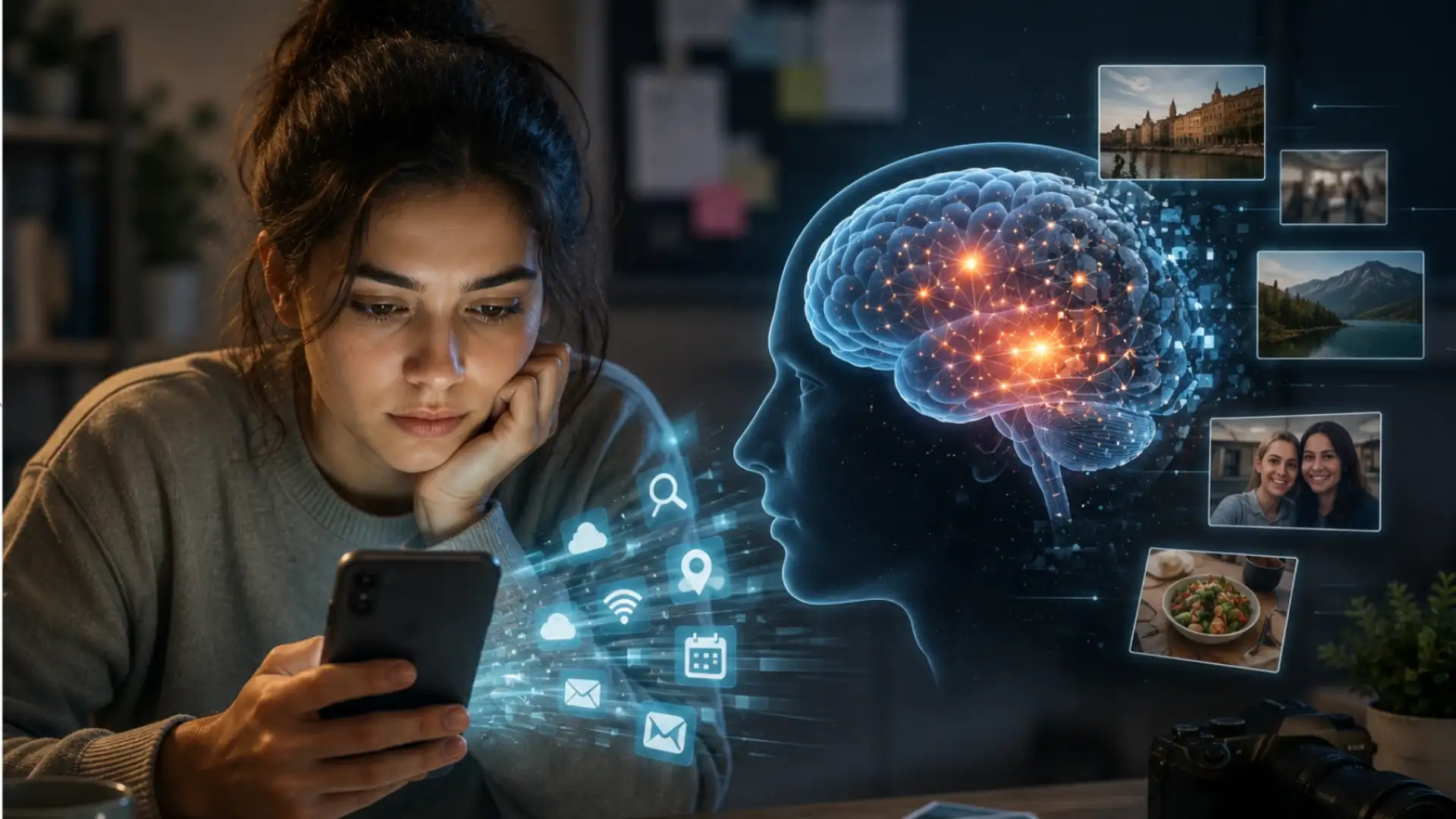
A 2024 meta-analysis examining the so-called " Google effect " found an association between intensive internet searching and changes in how people approach knowledge and memory. The effect appeared particularly relevant when information was accessed through mobile devices.
Instead of remembering an answer, people may increasingly remember where to find the answer.
A 2024 study examining smartphone photography found evidence of both effects: people sometimes remembered photographed scenes less well, while their memory for surrounding scenes could actually improve. Researchers explained this through cognitive offloading, where recording one piece of information reduces the need to retain it internally.
Other research has found that the reason for taking a photograph matters. Pictures taken as meaningful mementos were associated with more vivid and emotionally intense recollections than photographs taken mainly to offload information.
The bigger change may be that we are becoming selective about what deserves space in our minds.
The interesting question is therefore not whether smartphones make us forget, but what we choose not to remember because we know our phone will remember it for us.
When Your Phone Becomes an External Memory
The idea that technology can change what we remember is not entirely new. People have used notebooks, diaries, calendars and photographs to store information for generations. Smartphones have simply made these external memory systems instant and nearly limitless.A 2024 meta-analysis examining the so-called " Google effect " found an association between intensive internet searching and changes in how people approach knowledge and memory. The effect appeared particularly relevant when information was accessed through mobile devices.
Instead of remembering an answer, people may increasingly remember where to find the answer.
The Camera Can Change What You Notice
Smartphone photography offers an even more interesting example. Taking a photograph can feel like preserving a moment, but the act of photographing may alter how the event itself is remembered.You may also like
- Centre's expenditure on 1,847 big infra projects touches Rs 21.97 lakh crore
- Boat CineHead F1 series launched with Google TV 5.0, 1080p Full HD native resolution, price starts at Rs 32,999
- Anthropic has an important message for Claude users: Starting August 14, auto mode will be the default ...
- California city declares State emergency as cyber attacks hit crucial services, including 911: Here's what happened
- Fresher hiring intent rises to 75 pc, AI skills gain prominence
A 2024 study examining smartphone photography found evidence of both effects: people sometimes remembered photographed scenes less well, while their memory for surrounding scenes could actually improve. Researchers explained this through cognitive offloading, where recording one piece of information reduces the need to retain it internally.
Other research has found that the reason for taking a photograph matters. Pictures taken as meaningful mementos were associated with more vivid and emotionally intense recollections than photographs taken mainly to offload information.
Convenience Is Not the Same as Memory Loss
This does not mean smartphones are damaging human memory. In many situations, external memory is useful. A calendar reminder means you do not need to mentally rehearse an appointment all day, while photographs can provide valuable cues for remembering people and experiences.The bigger change may be that we are becoming selective about what deserves space in our minds.
What This Means Today
The smartphone has effectively become a second memory system. It stores facts we may not need to memorise, photographs that can reactivate old experiences and reminders that keep daily life organised.The interesting question is therefore not whether smartphones make us forget, but what we choose not to remember because we know our phone will remember it for us.






Loving Newspoint? Download the app now
