
Why Reading on Your Phone in a Moving Car Makes You Feel Sick

Your eyes are fixed on a screen that is perfectly still relative to your hands. Your inner ears, meanwhile, are registering every turn, bump and deceleration of the vehicle. These two streams of information reach your brain at the same moment, and they do not quite agree. This mismatch is one of the main reasons reading on a phone in a moving car can make you feel sick.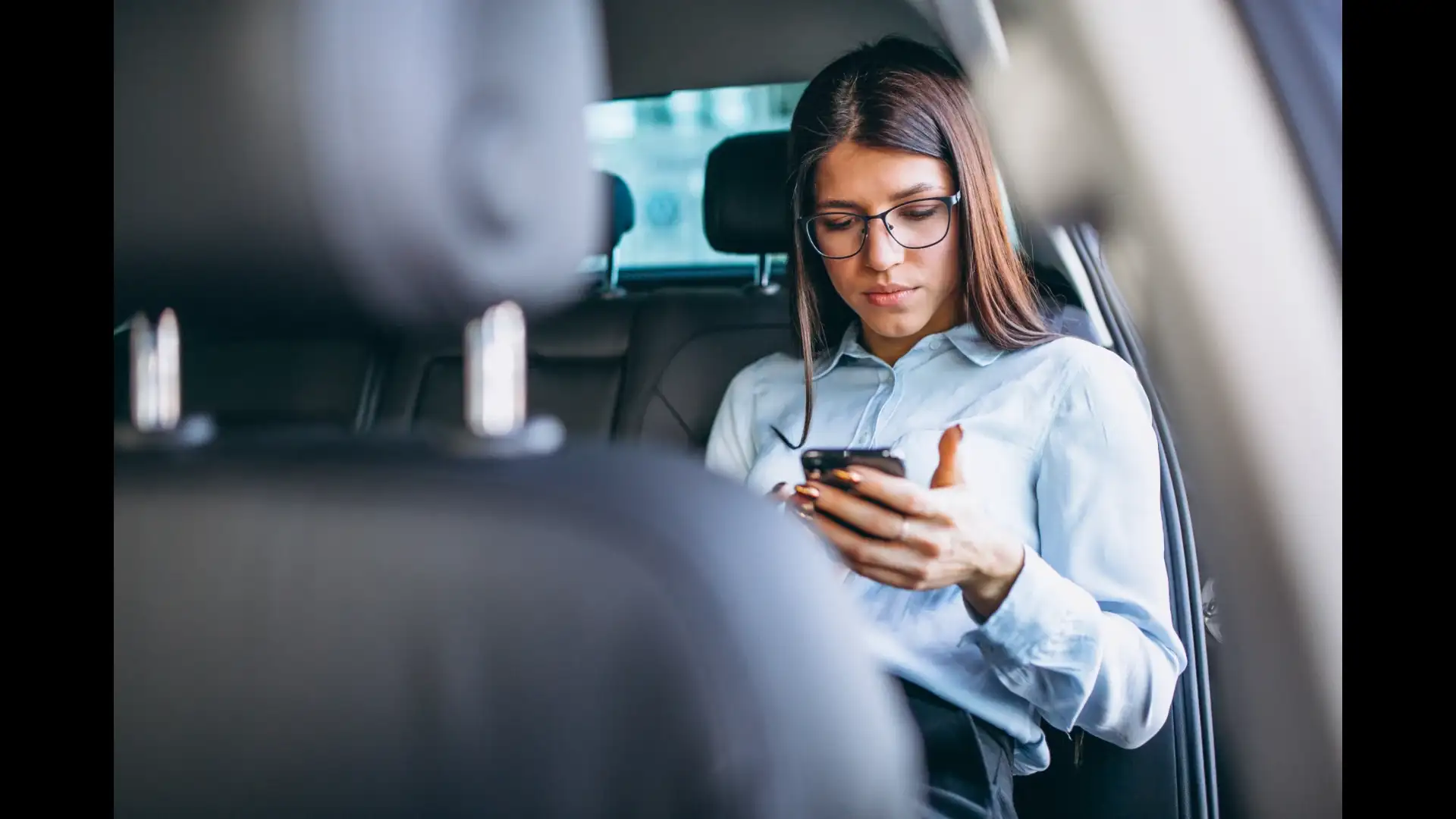
Your vestibular system, however, registers the vehicle's movement. Signals from your muscles and joints also provide information about your body's position and movement.
The brain has to interpret these different inputs together. When the incoming signals do not match the patterns it expects, motion sickness can develop. This is known as the sensory conflict or neural mismatch theory, the most widely accepted explanation for motion sickness.
There is also an evolutionary hypothesis that links this response to the body's defence against toxins. It suggests that sensory mismatch may trigger a nausea response similar to one associated with poisoning. However, this explanation remains a hypothesis rather than a proven account of why motion sickness evolved. Your brain is not malfunctioning. It is responding to conflicting information in a way that can leave you feeling distinctly unwell.
A phone screen, on the other hand, provides a close, stationary visual reference while the vehicle is moving. When the screen dominates your attention and limits awareness of the passing landscape, the conflict can become more pronounced. Your eyes are focused on something that appears still, even as your inner ear registers turns, acceleration and bumps.
Scrolling adds another layer. The content on the screen moves in a direction and at a speed unrelated to the vehicle's actual motion. This introduces additional visual movement that can further complicate the brain's interpretation of the conflicting signals. The result can be a stronger sense of discomfort, particularly for people who are already susceptible to motion sickness.
People who are prone to migraines often experience motion sickness more readily, suggesting a connection between migraine-related sensory sensitivity and susceptibility to motion. Anxiety and fatigue may also increase the likelihood of symptoms, although the mechanisms behind these effects are not fully understood. Sleep deprivation, in particular, can make motion sickness worse.
Reading difficulty can also make the experience more uncomfortable. Small fonts, glare or poor visibility may increase eyestrain and make it harder to follow text. However, the precise relationship between reading difficulty, eye movements and motion sickness is not fully established. The central issue remains the mismatch between the movement-related signals reaching the brain.
If the screen cannot be avoided, holding it higher, closer to eye level, may make it easier to remain aware of the surroundings. However, this is not a reliable way to prevent motion sickness. Sitting in the front seat can help because it generally provides a better forward view and clearer visual cues about the road's movement. Fresh air through an open window may also ease symptoms, although its exact mechanism is unclear.
Ginger is traditionally used to ease nausea, including travel-related nausea. Some studies suggest it may help with motion sickness, while others have found no clear benefit. The scientific evidence remains mixed, so it should not be treated as a guaranteed remedy.
Medicines used for motion sickness, including certain antihistamines and anticholinergic drugs, act on pathways involved in balance and nausea. Many are more effective when taken before travel, as directed, rather than after symptoms have become pronounced. Some can cause drowsiness and other side effects, so it is important to consult a pharmacist or healthcare professional before using them, particularly for children.
The one thing that reliably does not help is pushing through. Continuing to read can prolong the sensory conflict and deepen the discomfort. Once nausea begins, putting the phone away and shifting your attention to the surroundings is generally a better approach.
Motion sickness in a car is not simply a quirk of sensitive people. It is the predictable response of a sensory system that relies on information from the eyes, inner ears, muscles and joints to understand movement. The phone introduces a visual experience that does not fit the movement your body is sensing. And sometimes, that small mismatch is enough to turn an otherwise ordinary car journey into an uncomfortable one.
The Conflict Your Brain Cannot Ignore
The vestibular system, a network of sensory structures in the inner ear, helps detect head movement and maintain balance. Its semicircular canals detect rotational movements, while the otolith organs register linear acceleration and changes in head position relative to gravity. When you read on a phone, your visual system focuses on something that appears stationary.Your vestibular system, however, registers the vehicle's movement. Signals from your muscles and joints also provide information about your body's position and movement.
The brain has to interpret these different inputs together. When the incoming signals do not match the patterns it expects, motion sickness can develop. This is known as the sensory conflict or neural mismatch theory, the most widely accepted explanation for motion sickness.
There is also an evolutionary hypothesis that links this response to the body's defence against toxins. It suggests that sensory mismatch may trigger a nausea response similar to one associated with poisoning. However, this explanation remains a hypothesis rather than a proven account of why motion sickness evolved. Your brain is not malfunctioning. It is responding to conflicting information in a way that can leave you feeling distinctly unwell.
Why a Screen Makes It Worse Than Staring Out the Window
Looking out of the window provides visual cues that help the brain interpret the vehicle's movement. Passing trees, buildings and road markings offer a more consistent sense of motion, reducing the mismatch between visual and vestibular information.A phone screen, on the other hand, provides a close, stationary visual reference while the vehicle is moving. When the screen dominates your attention and limits awareness of the passing landscape, the conflict can become more pronounced. Your eyes are focused on something that appears still, even as your inner ear registers turns, acceleration and bumps.
Scrolling adds another layer. The content on the screen moves in a direction and at a speed unrelated to the vehicle's actual motion. This introduces additional visual movement that can further complicate the brain's interpretation of the conflicting signals. The result can be a stronger sense of discomfort, particularly for people who are already susceptible to motion sickness.
Why Some People Are More Susceptible
Sensitivity varies considerably between people, and the reasons are not fully understood. Children tend to be more susceptible to motion sickness than adults, particularly between the ages of 7 and 12. Susceptibility generally declines through adulthood, although the reasons behind this age-related pattern are not entirely clear.People who are prone to migraines often experience motion sickness more readily, suggesting a connection between migraine-related sensory sensitivity and susceptibility to motion. Anxiety and fatigue may also increase the likelihood of symptoms, although the mechanisms behind these effects are not fully understood. Sleep deprivation, in particular, can make motion sickness worse.
Reading difficulty can also make the experience more uncomfortable. Small fonts, glare or poor visibility may increase eyestrain and make it harder to follow text. However, the precise relationship between reading difficulty, eye movements and motion sickness is not fully established. The central issue remains the mismatch between the movement-related signals reaching the brain.
What Actually Helps
The most effective intervention is the simplest: put the screen down and look at the horizon or a distant fixed point. This can help reduce the mismatch between visual and vestibular signals, often easing symptoms. Closing your eyes and breathing slowly may also help.If the screen cannot be avoided, holding it higher, closer to eye level, may make it easier to remain aware of the surroundings. However, this is not a reliable way to prevent motion sickness. Sitting in the front seat can help because it generally provides a better forward view and clearer visual cues about the road's movement. Fresh air through an open window may also ease symptoms, although its exact mechanism is unclear.
Ginger is traditionally used to ease nausea, including travel-related nausea. Some studies suggest it may help with motion sickness, while others have found no clear benefit. The scientific evidence remains mixed, so it should not be treated as a guaranteed remedy.
Medicines used for motion sickness, including certain antihistamines and anticholinergic drugs, act on pathways involved in balance and nausea. Many are more effective when taken before travel, as directed, rather than after symptoms have become pronounced. Some can cause drowsiness and other side effects, so it is important to consult a pharmacist or healthcare professional before using them, particularly for children.
The one thing that reliably does not help is pushing through. Continuing to read can prolong the sensory conflict and deepen the discomfort. Once nausea begins, putting the phone away and shifting your attention to the surroundings is generally a better approach.
Motion sickness in a car is not simply a quirk of sensitive people. It is the predictable response of a sensory system that relies on information from the eyes, inner ears, muscles and joints to understand movement. The phone introduces a visual experience that does not fit the movement your body is sensing. And sometimes, that small mismatch is enough to turn an otherwise ordinary car journey into an uncomfortable one.
Next Story