
Honor Robot Phone launched with 200MP titanium gimbal camera: Price, specs and everything you need to know


Honor has finally launched the Robot Phone in China, closing out a tease that started at the Magic8 unveiling last October and ran through a CES prototype and months of leaks. The phone's headline feature is a motorised arm that rises out of the back panel, carrying a 200MP camera on a titanium gimbal that tilts, pans and spins on command.
Pricing starts at CNY 9,999 (roughly Rs 1.23 lakh) for the 12GB/512GB model, with the 16GB/1TB version at CNY 12,999 (about Rs 1.6 lakh). Preorders are live and open sales begin on August 18. This is a China-only launch, and Honor has said nothing about India or any other market.
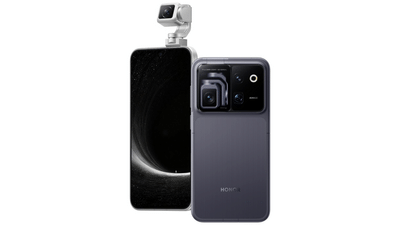
Honor squeezed a 4DoF gimbal into a 9.6mm phone, and it took 100 patentsHonor claims the industry's smallest 4DoF gimbal system, built across 60 manufacturing processes using more than 100 precision components. The titanium motor weighs 2.6g and measures 6mm thick. The company says the assembly is 65% smaller than mainstream gimbals while being 200% stronger, and it all tucks into a 9.6mm frame—though the phone tips the scales at 248 grams.
The gimbal camera pairs a 1/1.28-inch 200MP sensor with an f/1.6 lens. Beside it sit a 200MP periscope telephoto (1/1.4-inch, 62mm) and a 50MP ultrawide. Video tops out at 4K 120fps, or 4K 60fps in LogC3, the format that comes via Honor's tie-up with German cinema camera maker Arri. On-device LUT grading and Arri film profiles are part of the same deal. Spinshot handles 90-degree and 180-degree rotations, and AI subject tracking locks on with a double tap.
Honor's Yoyo assistant powers what it calls Robot Mode. The arm nods, shakes its head, dances to music and runs through over 100 expressions. Charming in a demo, certainly. The actual case for spending flagship money still rests on stabilisation and tracking during vlogs, livestreams and video calls. Honor says third-party developers will get access to the gimbal and perception stack.
Under the arm sits a fairly ordinary 6.3-inch flagshipPull the arm out of the equation and what's left is a compact flagship. The 6.3-inch LTPO OLED runs at 2640x1216 with a 1-120Hz refresh range and a peak local brightness of 6,800 nits, which is among the highest figures quoted on any phone this year. Honor has layered its AR anti-reflective coating on top, a sensible addition on a device meant to be used outdoors with the camera arm extended. The display is small by 2026 flagship standards—useful, given the phone already weighs 248 grams before you factor in a case.
Powering it is Qualcomm's Snapdragon 8 Elite Gen 5 with a custom cooling setup, running alongside Honor's own H1 imaging chip that handles the tracking and stabilisation work. Configurations go up to 16GB of RAM and 1TB of storage. The 7,060mAh silicon-carbon battery is generous for a 9.6mm frame, and it supports 120W wired and 50W wireless charging—welcome, since a motorised gimbal and 4K 120fps recording will drain a cell faster than a normal camera app. Software is MagicOS 10 on Android 16, and the phone comes in Silver and Gray.
Pricing starts at CNY 9,999 (roughly Rs 1.23 lakh) for the 12GB/512GB model, with the 16GB/1TB version at CNY 12,999 (about Rs 1.6 lakh). Preorders are live and open sales begin on August 18. This is a China-only launch, and Honor has said nothing about India or any other market.
Honor squeezed a 4DoF gimbal into a 9.6mm phone, and it took 100 patentsHonor claims the industry's smallest 4DoF gimbal system, built across 60 manufacturing processes using more than 100 precision components. The titanium motor weighs 2.6g and measures 6mm thick. The company says the assembly is 65% smaller than mainstream gimbals while being 200% stronger, and it all tucks into a 9.6mm frame—though the phone tips the scales at 248 grams.
The gimbal camera pairs a 1/1.28-inch 200MP sensor with an f/1.6 lens. Beside it sit a 200MP periscope telephoto (1/1.4-inch, 62mm) and a 50MP ultrawide. Video tops out at 4K 120fps, or 4K 60fps in LogC3, the format that comes via Honor's tie-up with German cinema camera maker Arri. On-device LUT grading and Arri film profiles are part of the same deal. Spinshot handles 90-degree and 180-degree rotations, and AI subject tracking locks on with a double tap.
Honor's Yoyo assistant powers what it calls Robot Mode. The arm nods, shakes its head, dances to music and runs through over 100 expressions. Charming in a demo, certainly. The actual case for spending flagship money still rests on stabilisation and tracking during vlogs, livestreams and video calls. Honor says third-party developers will get access to the gimbal and perception stack.
Under the arm sits a fairly ordinary 6.3-inch flagshipPull the arm out of the equation and what's left is a compact flagship. The 6.3-inch LTPO OLED runs at 2640x1216 with a 1-120Hz refresh range and a peak local brightness of 6,800 nits, which is among the highest figures quoted on any phone this year. Honor has layered its AR anti-reflective coating on top, a sensible addition on a device meant to be used outdoors with the camera arm extended. The display is small by 2026 flagship standards—useful, given the phone already weighs 248 grams before you factor in a case.
Powering it is Qualcomm's Snapdragon 8 Elite Gen 5 with a custom cooling setup, running alongside Honor's own H1 imaging chip that handles the tracking and stabilisation work. Configurations go up to 16GB of RAM and 1TB of storage. The 7,060mAh silicon-carbon battery is generous for a 9.6mm frame, and it supports 120W wired and 50W wireless charging—welcome, since a motorised gimbal and 4K 120fps recording will drain a cell faster than a normal camera app. Software is MagicOS 10 on Android 16, and the phone comes in Silver and Gray.
Next Story