
<b>How Your Phone Can Guess Where You've Been</b>

Your phone can often tell where you are with remarkable accuracy, but GPS is only part of the story. Modern smartphones combine information from satellites, mobile networks, nearby Wi-Fi networks and built-in sensors to estimate location. In some circumstances, they can work out where you are even when satellite signals are weak or unavailable. Location data can also be stored in services such as Google Maps Timeline when the relevant feature is enabled. This makes smartphones incredibly useful for navigation, nearby searches and travel records, but it also raises an important modern question: just how much can your phone infer about where you have been?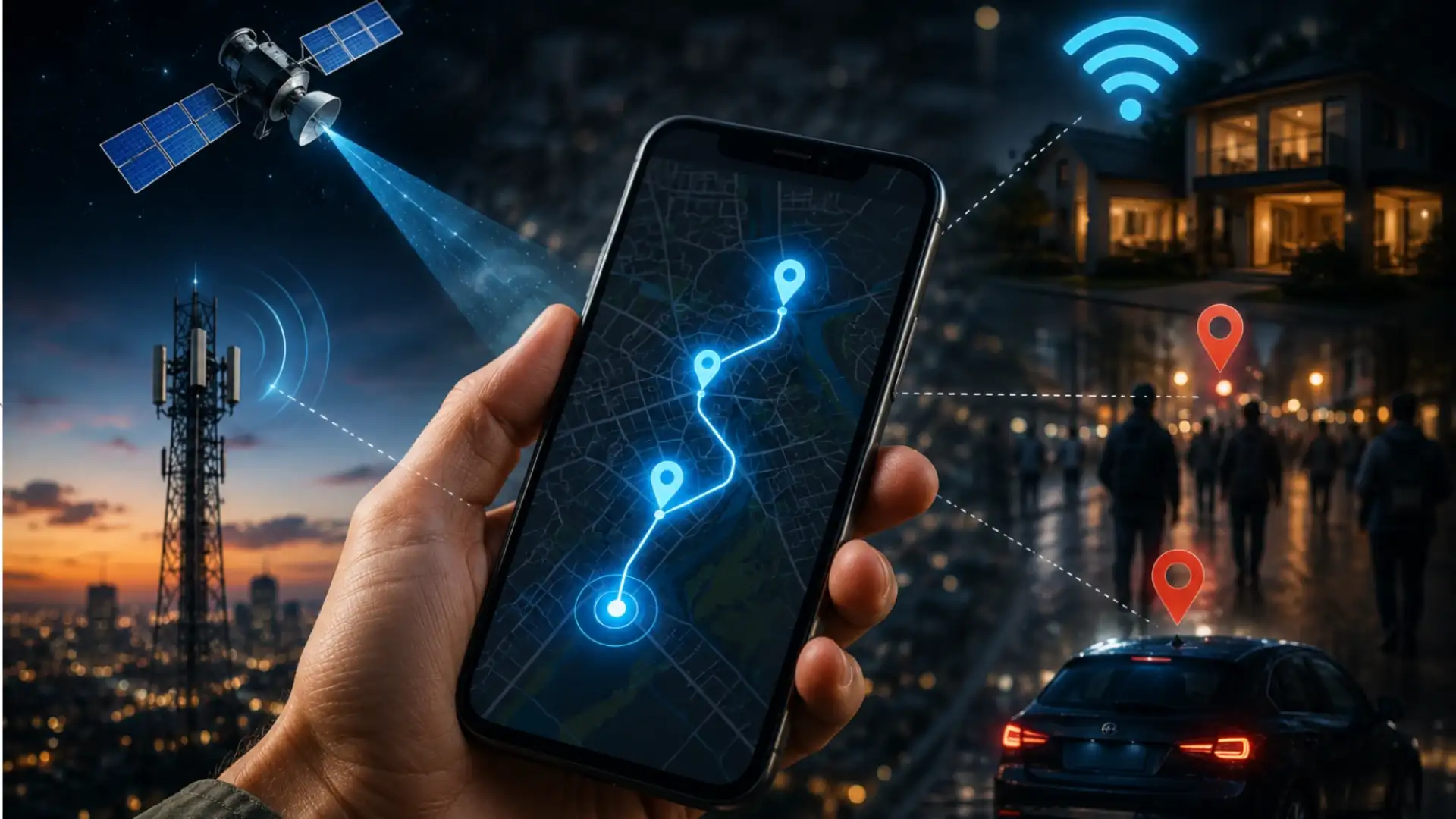
Google says Android Location Accuracy can combine GPS with Wi-Fi access points, mobile network towers and sensor information such as accelerometers, gyroscopes and barometers.
This combination allows a phone to estimate location more quickly and accurately than relying on GPS alone.
That is especially useful indoors, where satellite positioning may struggle. A phone can detect nearby networks and compare their known locations with other signals to improve its estimate.
That means a collection of seemingly ordinary location points can eventually tell a much larger story: where you work, which shops you visit, how often you travel and which places you return to.
The important distinction is between your phone technically being capable of estimating location and a particular app or service actually having permission to access or store it. Location permissions can be controlled on modern smartphones.
So the next time your phone seems to know exactly where you are, remember that it is not relying on one magical sensor. It is combining several small clues to build a remarkably accurate picture of your whereabouts.
GPS Is Only One Piece of the Puzzle
GPS works by receiving signals from satellites, but those signals can be weakened or blocked inside buildings, underground or around tall structures. That is why phones use additional sources.Google says Android Location Accuracy can combine GPS with Wi-Fi access points, mobile network towers and sensor information such as accelerometers, gyroscopes and barometers.
This combination allows a phone to estimate location more quickly and accurately than relying on GPS alone.
Wi-Fi Can Reveal Your General Location
Wi-Fi networks can act as useful geographical landmarks. Google explains that publicly broadcast information from wireless access points can be used alongside GPS and cellular data to estimate a device's location.You may also like
- Centre's expenditure on 1,847 big infra projects touches Rs 21.97 lakh crore
- Boat CineHead F1 series launched with Google TV 5.0, 1080p Full HD native resolution, price starts at Rs 32,999
- Anthropic has an important message for Claude users: Starting August 14, auto mode will be the default ...
- California city declares State emergency as cyber attacks hit crucial services, including 911: Here's what happened
- Fresher hiring intent rises to 75 pc, AI skills gain prominence
That is especially useful indoors, where satellite positioning may struggle. A phone can detect nearby networks and compare their known locations with other signals to improve its estimate.
Your Location History Can Build a Travel Map
Location becomes even more revealing when individual points are recorded over time. Google Maps Timeline can create a personal map showing places, routes and trips when the feature is enabled. Google says Timeline is off by default and requires users to turn it on.That means a collection of seemingly ordinary location points can eventually tell a much larger story: where you work, which shops you visit, how often you travel and which places you return to.
Why This Matters
Location technology is incredibly useful. It powers navigation, emergency services, local recommendations and travel apps. But convenience comes with a privacy consideration.The important distinction is between your phone technically being capable of estimating location and a particular app or service actually having permission to access or store it. Location permissions can be controlled on modern smartphones.
So the next time your phone seems to know exactly where you are, remember that it is not relying on one magical sensor. It is combining several small clues to build a remarkably accurate picture of your whereabouts.






Loving Newspoint? Download the app now
