
In 1926, a secretary noticed short lines between columns and highlighted the growing need for fax technology


Long before fax machines became a fixture in offices around the world, the idea of sending a document across distance was already taking shape. In the 1920s, businesses were searching for quicker ways to copy, store, and transmit information. It was an era when paperwork was growing rapidly, and efficiency had become a priority.
One account from 1926 centred on a secretary who had apparently taken notice of the small lines that separated columns in a business document. Although the detail may seem small to the observer, it represented something far bigger.
Fax was not an invention of a single light bulb moment; instead, it was the result of decades of experimentation and the daily needs of office workers who relied on paperwork throughout the day.
The roots of the fax machine stretch back to the 1840s
While many may see fax machines as something of the late 20th century, the actual origins go back much further.
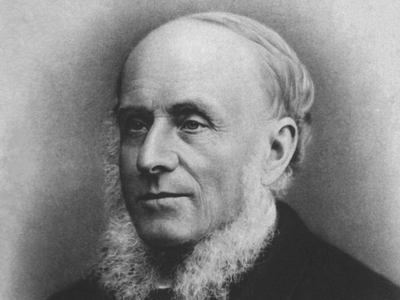
Scottish inventor Alexander Bain patented an early method for transmitting images over electric wires in 1843, less than a decade after the telegraph had first been put into operation. This method is considered by many to be one of the earliest stages in facsimile technology .
Bain's method was based on using electrical signals to scan an object, and using these signals to replicate marks on a piece of paper elsewhere. While basic by modern standards, it introduced the notion that visual information could be transmitted through wire.
Further improvements were later made by other inventors. In 1851, Frederick Bakewell demonstrated a method for transmitting facsimiles over telegraph wires at the Great Exhibition in London. A little over a decade later, in 1863, Italian inventor Giovanni Caselli launched the world's first commercial facsimile service between Paris and Lyon, marking an important step in the development of long-distance image transmission.
By 1926, the facsimile was not a new technology
The secretary in the 1926 story did not witness the initial development of the fax machine; she was merely part of its evolution.
According to Harvard University's Gazette, the wireless photo facsimile had already appeared by 1924. It was reported to be an idea brought into operation for newspapers and communications companies to enable the transmission of photographs and other printed material over long distances without the need to send the document via messenger.
Around this time, the telecommunications sector was making significant steps, with AT&T introducing telephotography in 1924, which sent photographs over telephone lines. A picture measuring roughly five by seven inches could reportedly be transmitted in just a few minutes, a remarkable achievement for the era.
It was this and similar technologies that formed the foundation of what we now know as the fax machine.
Why office workers played a greater part than people realise
The history of office technology is often portrayed in terms of its inventors and patents. The fact remains that many inventions were introduced as a result of office workers seeing a real need to improve their daily tasks.
According to the Center for the History of Print and Digital Culture, University of Wisconsin-Madison, copy technology was historically seen as a tool to enhance office duties, and in the case of early copying apparatus, Thomas Jefferson once compared copying technology to having an assistant that could duplicate writing for you.
It is this background to office technology that makes the 1926 secretary story interesting; secretaries, clerks, and other administrative staff were in constant close contact with paperwork and were the most obvious people to identify flaws and recognise where improvements could be made. Facsimile technology was largely driven by office needs.
What exactly does a fax machine do?
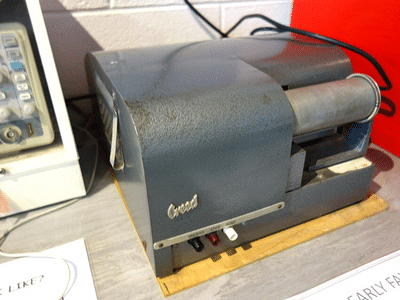
At its most basic level, a fax machine essentially makes a copy of a document at a remote location.
A paper indexed in PubMed defines fax as the transmission of text and graphics through telephone lines, allowing a document to be reproduced elsewhere while preserving its appearance.
While an ordinary task in the present day, the ability to send contracts, forms, diagrams, and other letters so quickly without relying on courier services or snail mail must have been revolutionary for businesses. The value wasn't in being fancy but in being efficient.
The journey to the office was long
Though facsimile systems may have been considered in the 19th century, their widespread use in the office only arrived much later.
According to the IEEE Engineering and Technology History Wiki, the first profitable fax services only arrived after World War I, and the machines for everyday office use would not become common until the 1960s. The machine as we know it wasn't commonplace until the 1980s.
The reality is that most inventions do not happen in one eureka moment, but in countless smaller steps and discoveries along the way.
A reminder that innovation can start from humble working duties
What remains interesting about this 1926 account is its simplicity; the fact that innovation doesn't always have to come from famous people in labs trying to invent the next big thing.
One account from 1926 centred on a secretary who had apparently taken notice of the small lines that separated columns in a business document. Although the detail may seem small to the observer, it represented something far bigger.
Fax was not an invention of a single light bulb moment; instead, it was the result of decades of experimentation and the daily needs of office workers who relied on paperwork throughout the day.
The roots of the fax machine stretch back to the 1840s
While many may see fax machines as something of the late 20th century, the actual origins go back much further.
Scottish inventor Alexander Bain patented an early method for transmitting images over electric wires in 1843, less than a decade after the telegraph had first been put into operation. This method is considered by many to be one of the earliest stages in facsimile technology .
Bain's method was based on using electrical signals to scan an object, and using these signals to replicate marks on a piece of paper elsewhere. While basic by modern standards, it introduced the notion that visual information could be transmitted through wire.
Further improvements were later made by other inventors. In 1851, Frederick Bakewell demonstrated a method for transmitting facsimiles over telegraph wires at the Great Exhibition in London. A little over a decade later, in 1863, Italian inventor Giovanni Caselli launched the world's first commercial facsimile service between Paris and Lyon, marking an important step in the development of long-distance image transmission.
By 1926, the facsimile was not a new technology
The secretary in the 1926 story did not witness the initial development of the fax machine; she was merely part of its evolution.
According to Harvard University's Gazette, the wireless photo facsimile had already appeared by 1924. It was reported to be an idea brought into operation for newspapers and communications companies to enable the transmission of photographs and other printed material over long distances without the need to send the document via messenger.
Around this time, the telecommunications sector was making significant steps, with AT&T introducing telephotography in 1924, which sent photographs over telephone lines. A picture measuring roughly five by seven inches could reportedly be transmitted in just a few minutes, a remarkable achievement for the era.
It was this and similar technologies that formed the foundation of what we now know as the fax machine.
Why office workers played a greater part than people realise
The history of office technology is often portrayed in terms of its inventors and patents. The fact remains that many inventions were introduced as a result of office workers seeing a real need to improve their daily tasks.
According to the Center for the History of Print and Digital Culture, University of Wisconsin-Madison, copy technology was historically seen as a tool to enhance office duties, and in the case of early copying apparatus, Thomas Jefferson once compared copying technology to having an assistant that could duplicate writing for you.
It is this background to office technology that makes the 1926 secretary story interesting; secretaries, clerks, and other administrative staff were in constant close contact with paperwork and were the most obvious people to identify flaws and recognise where improvements could be made. Facsimile technology was largely driven by office needs.
What exactly does a fax machine do?
At its most basic level, a fax machine essentially makes a copy of a document at a remote location.
A paper indexed in PubMed defines fax as the transmission of text and graphics through telephone lines, allowing a document to be reproduced elsewhere while preserving its appearance.
While an ordinary task in the present day, the ability to send contracts, forms, diagrams, and other letters so quickly without relying on courier services or snail mail must have been revolutionary for businesses. The value wasn't in being fancy but in being efficient.
The journey to the office was long
Though facsimile systems may have been considered in the 19th century, their widespread use in the office only arrived much later.
According to the IEEE Engineering and Technology History Wiki, the first profitable fax services only arrived after World War I, and the machines for everyday office use would not become common until the 1960s. The machine as we know it wasn't commonplace until the 1980s.
The reality is that most inventions do not happen in one eureka moment, but in countless smaller steps and discoveries along the way.
A reminder that innovation can start from humble working duties
What remains interesting about this 1926 account is its simplicity; the fact that innovation doesn't always have to come from famous people in labs trying to invent the next big thing.
Next Story