
Quote of the day by OpenAI Sam Altman: “The missing circuit in my brain, the circuit that would make me care what people think about me, is a real gift”


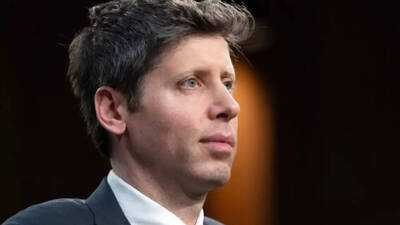
Sam Altman doesn't think the part of him that ignores what people think is a flaw to fix. He thinks it's a structural advantage. The OpenAI CEO has been quoted as saying—"The missing circuit in my brain, the circuit that would make me care what people think about me, is a real gift. Most people want to be accepted, so they won't take risks that could make them look crazy—which actually makes them wildly miscalculate risk."—and he has returned to this idea in different forms for years, but the framing here is the sharpest. He treats the need for social approval not as an emotional inconvenience but as a math error, the thing that quietly pulls people away from outsized bets toward ideas that merely look respectable.
A founder's case against approval-seekingAltman has lived this in public. He held the line against Elon Musk 's early bid for unilateral control of OpenAI, was fired by his board in November 2023 in front of the world's press, returned within a week, and has since shipped products at a cadence that draws as much hostility as it does adoption. He has also written candidly about being conflict-averse for too long, which suggests the "missing circuit" isn't an absence of feeling. It's a learned posture toward it.
The meditation backstoryOn the Art of Accomplishment podcast, Altman traced this back to meditation. He described his earlier self as anxious, high-strung and quietly miserable, the kind of founder who walked into work each morning convinced the company needed a brand-new strategy by lunchtime. The thing meditation eventually surfaced, he said, was how much energy he was spending on what other people thought of him. Dropping most of that opened up the freedom to work on things that wouldn't look cool for a long time. The reasoning track he then ran—that approval-seeking distorts how people price risk—is the same one inside the quote.
Why this lands nowThe line is making the rounds at an unusual moment for Altman. He has been writing about the "gentle singularity" and a future of intelligence too cheap to meter, and was recently the target of a Molotov cocktail attack on his home, which he addressed in an unusually personal post. Across all of it, the through-line is a refusal to soften the work to be more palatable.
The takeaway for everyone elseAltman's claim isn't that indifference to opinion makes you brave. It's that the brain that constantly polls for approval ends up bad at the one skill that matters in any high-stakes career, which is figuring out what's actually risky and what only looks risky from across the room.
A founder's case against approval-seekingAltman has lived this in public. He held the line against Elon Musk 's early bid for unilateral control of OpenAI, was fired by his board in November 2023 in front of the world's press, returned within a week, and has since shipped products at a cadence that draws as much hostility as it does adoption. He has also written candidly about being conflict-averse for too long, which suggests the "missing circuit" isn't an absence of feeling. It's a learned posture toward it.
The meditation backstoryOn the Art of Accomplishment podcast, Altman traced this back to meditation. He described his earlier self as anxious, high-strung and quietly miserable, the kind of founder who walked into work each morning convinced the company needed a brand-new strategy by lunchtime. The thing meditation eventually surfaced, he said, was how much energy he was spending on what other people thought of him. Dropping most of that opened up the freedom to work on things that wouldn't look cool for a long time. The reasoning track he then ran—that approval-seeking distorts how people price risk—is the same one inside the quote.
Why this lands nowThe line is making the rounds at an unusual moment for Altman. He has been writing about the "gentle singularity" and a future of intelligence too cheap to meter, and was recently the target of a Molotov cocktail attack on his home, which he addressed in an unusually personal post. Across all of it, the through-line is a refusal to soften the work to be more palatable.
The takeaway for everyone elseAltman's claim isn't that indifference to opinion makes you brave. It's that the brain that constantly polls for approval ends up bad at the one skill that matters in any high-stakes career, which is figuring out what's actually risky and what only looks risky from across the room.
Next Story