
Scientists reveal Earth's first global underground fungal network map; it stretches 110 quadrillion kilometres


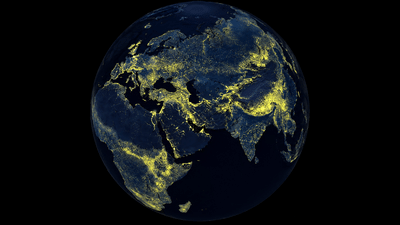
Beneath every forest, grassland and crop field lies a hidden living network that few people ever see. Invisible to the naked eye, microscopic fungi weave through the soil, connecting plant roots in an intricate web that helps sustain life on Earth. Now, an international team of scientists has produced the first global map of arbuscular mycorrhizal fungal networks, revealing an underground system of astonishing scale. Published in the journal Science, the study estimates that these fungal threads extend for around 110 quadrillion kilometres within the planet's topsoil and help lock away approximately 4 billion tonnes of carbon dioxide equivalent every year. The findings offer one of the clearest pictures yet of an ecosystem quietly regulating Earth's climate beneath our feet.
What are arbuscular mycorrhizal fungal networks and why are they so important?
According to researchers from the Vrije Universiteit Amsterdam, Arbuscular mycorrhizal (AM) fungi are among the oldest and most widespread organisms on Earth. Rather than living independently, they form mutually beneficial partnerships with the roots of around 70% of all vascular plant species, exchanging nutrients and water for sugars produced through photosynthesis.
The fungi grow as microscopic filaments known as hyphae, which spread through the soil to form vast underground networks. These threads effectively extend a plant's root system, helping it absorb phosphorus, nitrogen and water that would otherwise remain out of reach.
According to the study, the combined length of these hyphae in Earth's upper soils is estimated at 110 quadrillion kilometres, nearly one billion times the average distance between Earth and the Sun. Despite their immense reach, the entire network remains almost completely hidden beneath the surface.
As the researchers write in a peer reviewed paper titled ‘Global density and biomass of arbuscular mycorrhizal fungal networks’:
" Arbuscular mycorrhizal fungi represent one of Earth's largest living structures."
Scientists map Earth's vast underground fungal web for the first time
Creating a global picture of something largely invisible was no small task.
The international research team combined thousands of field observations with machine learning, ecological modelling and environmental data to estimate where these fungal networks occur and how densely they spread across different ecosystems.
Their findings reveal that underground fungal abundance varies significantly between forests, grasslands and agricultural landscapes.
The new map provides scientists with an unprecedented tool for understanding how these organisms support biodiversity, soil fertility and ecosystem resilience.
The work was led in collaboration with the Society for the Protection of Underground Networks (SPUN), an organisation dedicated to mapping and conserving Earth's hidden fungal ecosystems.
Researchers say the map could help identify areas where these underground networks are most vulnerable to land degradation, intensive farming and climate change.
How underground fungi help fight climate change by storing carbon
The study highlights another remarkable role played by these fungal networks: helping keep carbon locked underground.
SPUN states, each year, arbuscular mycorrhizal fungi contribute to the storage of an estimated 4 billion tonnes of carbon dioxide equivalent in soils. According to the researchers, that represents roughly 11% of annual global human greenhouse gas emissions.
The fungi achieve this by transferring carbon from plants into the soil, where it can remain stored for years or even decades, depending on environmental conditions. Healthy fungal networks also improve soil structure, making soils more stable and better able to retain organic carbon.
Scientists increasingly view these underground ecosystems as an overlooked component of the global carbon cycle. Protecting them may prove just as important as conserving forests above ground, particularly as agriculture and land-use change continue to fragment soil ecosystems.
What are arbuscular mycorrhizal fungal networks and why are they so important?
According to researchers from the Vrije Universiteit Amsterdam, Arbuscular mycorrhizal (AM) fungi are among the oldest and most widespread organisms on Earth. Rather than living independently, they form mutually beneficial partnerships with the roots of around 70% of all vascular plant species, exchanging nutrients and water for sugars produced through photosynthesis.
The fungi grow as microscopic filaments known as hyphae, which spread through the soil to form vast underground networks. These threads effectively extend a plant's root system, helping it absorb phosphorus, nitrogen and water that would otherwise remain out of reach.
According to the study, the combined length of these hyphae in Earth's upper soils is estimated at 110 quadrillion kilometres, nearly one billion times the average distance between Earth and the Sun. Despite their immense reach, the entire network remains almost completely hidden beneath the surface.
As the researchers write in a peer reviewed paper titled ‘Global density and biomass of arbuscular mycorrhizal fungal networks’:
" Arbuscular mycorrhizal fungi represent one of Earth's largest living structures."
Scientists map Earth's vast underground fungal web for the first time
Creating a global picture of something largely invisible was no small task.
The international research team combined thousands of field observations with machine learning, ecological modelling and environmental data to estimate where these fungal networks occur and how densely they spread across different ecosystems.
Their findings reveal that underground fungal abundance varies significantly between forests, grasslands and agricultural landscapes.
The new map provides scientists with an unprecedented tool for understanding how these organisms support biodiversity, soil fertility and ecosystem resilience.
The work was led in collaboration with the Society for the Protection of Underground Networks (SPUN), an organisation dedicated to mapping and conserving Earth's hidden fungal ecosystems.
Researchers say the map could help identify areas where these underground networks are most vulnerable to land degradation, intensive farming and climate change.
How underground fungi help fight climate change by storing carbon
The study highlights another remarkable role played by these fungal networks: helping keep carbon locked underground.
SPUN states, each year, arbuscular mycorrhizal fungi contribute to the storage of an estimated 4 billion tonnes of carbon dioxide equivalent in soils. According to the researchers, that represents roughly 11% of annual global human greenhouse gas emissions.
The fungi achieve this by transferring carbon from plants into the soil, where it can remain stored for years or even decades, depending on environmental conditions. Healthy fungal networks also improve soil structure, making soils more stable and better able to retain organic carbon.
Scientists increasingly view these underground ecosystems as an overlooked component of the global carbon cycle. Protecting them may prove just as important as conserving forests above ground, particularly as agriculture and land-use change continue to fragment soil ecosystems.
Next Story