
“This could be a disaster”: Ankur Warikoo, Jasveer Singh and Vijay Shekhar Sharma warn about WhatsApp usernames


WhatsApp has one of its biggest identity changes since the messaging service became a global communication platform. Instead of relying entirely on mobile numbers, users are able to connect through unique usernames, giving people a way to communicate without revealing their phone number. For many users, reportedly, the change promises greater privacy, especially when interacting with businesses, communities, or new contacts.
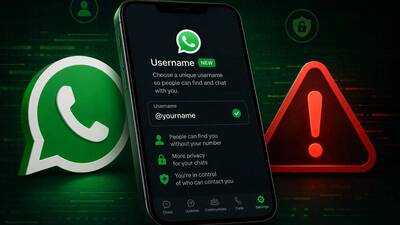
Yet the announcement has also prompted questions about whether the same system that protects personal information could make it easier for fraudsters to impersonate trusted individuals. As the rollout begins, the conversation has quickly shifted from convenience to the difficult balance between privacy and accountability.
How WhatsApp username reservation feature will change the way people connect
For years, WhatsApp accounts have been tied directly to phone numbers. That system meant anyone starting a conversation could usually see the other person's contact number unless privacy settings limited visibility. The upcoming username feature changes that approach by allowing users to reserve a unique identity that others can search for instead.
Meta has started rolling out username reservations across the world, giving people an opportunity to secure their preferred name before the feature becomes widely available. Although messaging through usernames is still being prepared, early reservations are intended to reduce conflicts over popular names once the service launches more broadly.
The update reflects a wider shift across online platforms where usernames, rather than personal phone numbers, act as the primary public identity. For users who regularly communicate with people they do not know personally, this could reduce unnecessary exposure of personal contact details.
Ankur Warikoo questions safety concerns over recent WhatsApp usernames update
Entrepreneur Ankur Warikoo publicly questioned on the recent X (Formerly Twitter), whether the safeguards surrounding the feature will be strong enough, particularly in India, where digital scams already affect large numbers of people.
‘In a country such as India, this could be a disaster if the right anti-abuse systems are not set up by WhatsApp.’ His concern was not directed at usernames themselves but at the possibility that fraudsters may register variations of well-known public identities before genuine account holders or create names that closely resemble recognised personalities.
He suggested that many users pay little attention to verification indicators, making it easier for deceptive accounts with similar usernames to appear authentic. Without visible phone numbers, distinguishing between legitimate and fake accounts could become more difficult for some users, particularly when unexpected financial requests arrive through private messages.
Warikoo's reaction is influenced by more than hypothetical risks. He previously became involved in legal proceedings relating to advertisements generated using artificial intelligence that allegedly misused his likeness to attract people into fraudulent investment groups operating through WhatsApp.
Ankur Warikoo reveals on an X post, from his perspective, that username-based communication introduces another layer that scammers may attempt to exploit unless moderation tools are capable of detecting impersonation quickly.
Co-founder of KnotDating compares WhatsApp usernames to Telegram's challenges
Questions about the new feature did not come from a single entrepreneur. Jasveer Singh , co-founder and chief executive of KnotDating, argued that usernames could expose WhatsApp to problems that have long existed on platforms where public identities are based largely on chosen account names.
He pointed to the accountability provided by phone numbers, saying they offer at least one identifiable piece of information that victims can report when suspicious messages appear. Usernames, while improving privacy, remove part of that visible connection between an account and a real-world identity.
‘My first thought wasn’t privacy - it was scams.’ His concern is that scammers generally benefit when identifying information becomes less obvious, increasing the importance of automated detection systems capable of spotting fraudulent behaviour before large numbers of users are affected.
Vijay Shekhar Sharma warns of lookalike WhatsApp usernames
Paytm founder Vijay Shekhar Sharma also commented on the announcement, suggesting that verified usernames could eventually be accompanied by many similar-looking unverified alternatives. His brief remark echoed concerns that visual similarity between usernames may become another challenge for users attempting to identify genuine accounts.
‘Unverified similar-sounding usernames….which in turn will…’
Kunal Shah encourages early WhatsApp username reservations
Interest in securing usernames has already started among well-known technology founders. Kunal Shah announced that he had reserved his preferred username before the broader public rollout, describing the feature as a more private way for people to connect on the platform.
Yet the announcement has also prompted questions about whether the same system that protects personal information could make it easier for fraudsters to impersonate trusted individuals. As the rollout begins, the conversation has quickly shifted from convenience to the difficult balance between privacy and accountability.
How WhatsApp username reservation feature will change the way people connect
For years, WhatsApp accounts have been tied directly to phone numbers. That system meant anyone starting a conversation could usually see the other person's contact number unless privacy settings limited visibility. The upcoming username feature changes that approach by allowing users to reserve a unique identity that others can search for instead.
Meta has started rolling out username reservations across the world, giving people an opportunity to secure their preferred name before the feature becomes widely available. Although messaging through usernames is still being prepared, early reservations are intended to reduce conflicts over popular names once the service launches more broadly.
The update reflects a wider shift across online platforms where usernames, rather than personal phone numbers, act as the primary public identity. For users who regularly communicate with people they do not know personally, this could reduce unnecessary exposure of personal contact details.
Ankur Warikoo questions safety concerns over recent WhatsApp usernames update
Entrepreneur Ankur Warikoo publicly questioned on the recent X (Formerly Twitter), whether the safeguards surrounding the feature will be strong enough, particularly in India, where digital scams already affect large numbers of people.
‘In a country such as India, this could be a disaster if the right anti-abuse systems are not set up by WhatsApp.’ His concern was not directed at usernames themselves but at the possibility that fraudsters may register variations of well-known public identities before genuine account holders or create names that closely resemble recognised personalities.
He suggested that many users pay little attention to verification indicators, making it easier for deceptive accounts with similar usernames to appear authentic. Without visible phone numbers, distinguishing between legitimate and fake accounts could become more difficult for some users, particularly when unexpected financial requests arrive through private messages.
Warikoo's reaction is influenced by more than hypothetical risks. He previously became involved in legal proceedings relating to advertisements generated using artificial intelligence that allegedly misused his likeness to attract people into fraudulent investment groups operating through WhatsApp.
Ankur Warikoo reveals on an X post, from his perspective, that username-based communication introduces another layer that scammers may attempt to exploit unless moderation tools are capable of detecting impersonation quickly.
- ‘Most people don't understand verified status (even if and when it is launched)’
- ‘Cannot be verified through calling the phone number (because username = privacy)’
Co-founder of KnotDating compares WhatsApp usernames to Telegram's challenges
Questions about the new feature did not come from a single entrepreneur. Jasveer Singh , co-founder and chief executive of KnotDating, argued that usernames could expose WhatsApp to problems that have long existed on platforms where public identities are based largely on chosen account names.
He pointed to the accountability provided by phone numbers, saying they offer at least one identifiable piece of information that victims can report when suspicious messages appear. Usernames, while improving privacy, remove part of that visible connection between an account and a real-world identity.
‘My first thought wasn’t privacy - it was scams.’ His concern is that scammers generally benefit when identifying information becomes less obvious, increasing the importance of automated detection systems capable of spotting fraudulent behaviour before large numbers of users are affected.
Vijay Shekhar Sharma warns of lookalike WhatsApp usernames
Paytm founder Vijay Shekhar Sharma also commented on the announcement, suggesting that verified usernames could eventually be accompanied by many similar-looking unverified alternatives. His brief remark echoed concerns that visual similarity between usernames may become another challenge for users attempting to identify genuine accounts.
‘Unverified similar-sounding usernames….which in turn will…’
Kunal Shah encourages early WhatsApp username reservations
Interest in securing usernames has already started among well-known technology founders. Kunal Shah announced that he had reserved his preferred username before the broader public rollout, describing the feature as a more private way for people to connect on the platform.
Next Story