
Why AI Sometimes Sounds Confident Even When It Is Wrong

There is something strangely convincing about an AI giving you an answer that sounds completely certain. It may provide a neat explanation, use technical terminology and even present specific dates or names. The problem is that none of those things guarantee that the answer is true.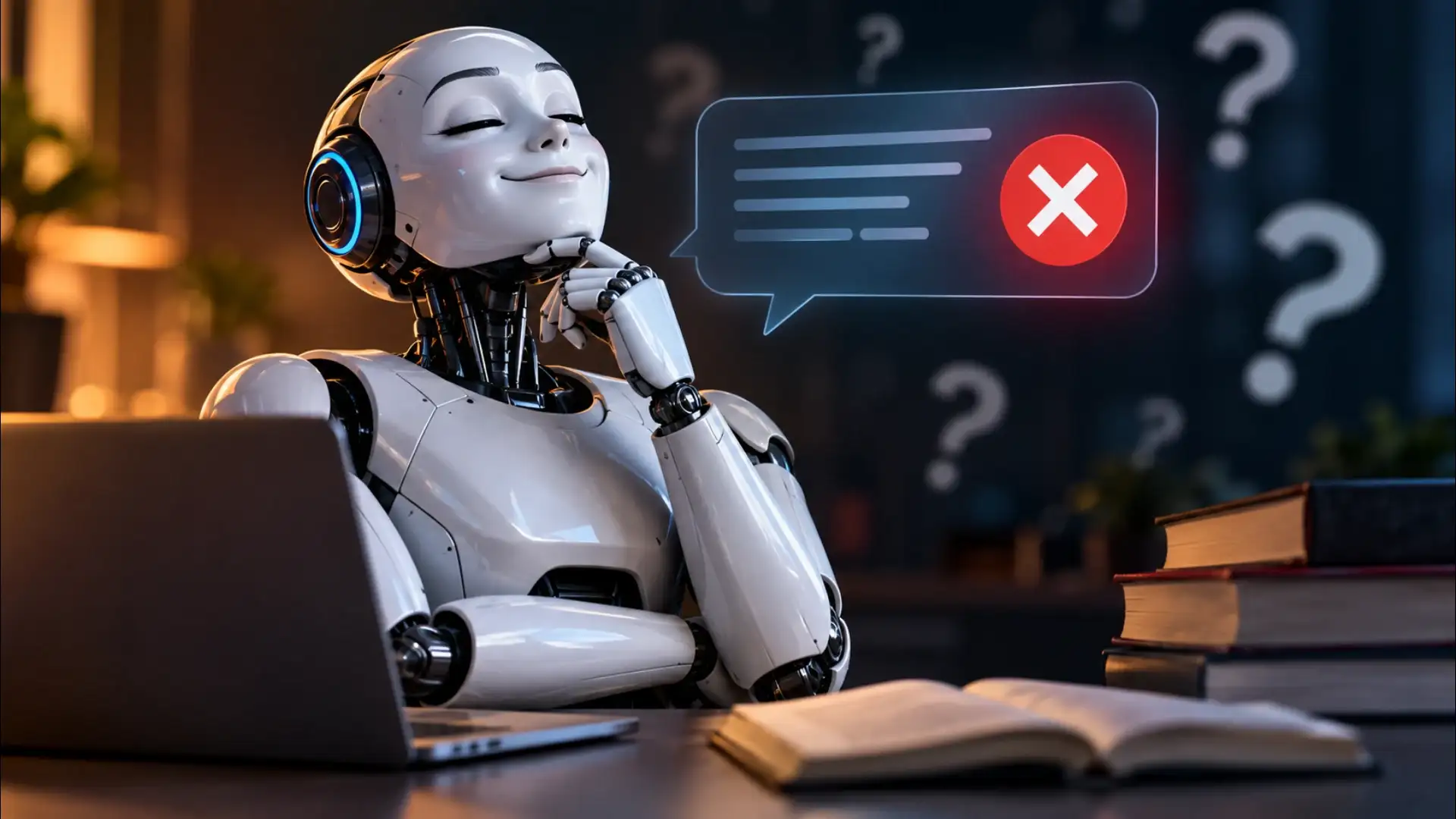
This is one of the most important limitations of modern artificial intelligence. Large language models are designed to generate useful language, not to possess a human-like sense of truth. As a result, they can sometimes produce an answer that is fluent, detailed and completely incorrect. Researchers commonly describe these fabricated or unsupported responses as AI hallucinations .
That process is remarkably powerful, but it is not the same as consulting a database of verified facts before answering every question.
This distinction explains why an AI can produce a convincing sentence about something that does not exist. A response can follow the patterns of real language while the underlying claim is false.
A 2026 study published in Nature found that next-word prediction itself creates statistical pressure towards hallucination, particularly for unusual or poorly supported facts. The researchers also argued that accuracy-focused evaluation can encourage models to guess rather than admit uncertainty.
A confident sentence does not necessarily mean the model has high certainty in the way a person might understand confidence. The wording is generated as part of the response, and phrases such as "this happened because" or "the answer is" can appear naturally even when the underlying information is unreliable.
Research published in Nature Machine Intelligence found that people can overestimate an AI system's accuracy based on the language of its explanations. Longer explanations, in particular, increased people's confidence even when additional length did not improve accuracy.
That makes polished answers particularly deceptive.
It might invent a citation, attribute a quote to the wrong person or confidently describe an event that never happened. The details can make the answer look more credible rather than less.
Recent research also suggests that language models do possess useful internal signals related to confidence. The challenge is getting those signals reliably translated into appropriate behaviour, such as answering when confidence is high and abstaining when it is not.
For everyday brainstorming, drafting and general explanations, an occasional mistake may be manageable. But when the information involves money, health, law, work decisions or important personal choices, verify significant claims using reliable sources.
Ask for sources, check dates and be particularly cautious with precise names, statistics and quotations.
AI is becoming better at recognising uncertainty, but no chatbot should be treated as an automatic fact-checker.
The irony is that the most convincing AI answer may sometimes be the one that deserves the most scrutiny. In an age of increasingly fluent machines, knowing when to ask "How do you know that?" may become just as important as knowing how to ask the question.
This is one of the most important limitations of modern artificial intelligence. Large language models are designed to generate useful language, not to possess a human-like sense of truth. As a result, they can sometimes produce an answer that is fluent, detailed and completely incorrect. Researchers commonly describe these fabricated or unsupported responses as AI hallucinations .
AI Is Predicting Language, Not Checking Every Fact
Large language models learn patterns from enormous quantities of text. At a basic level, they generate responses by predicting what tokens are likely to come next based on the context.That process is remarkably powerful, but it is not the same as consulting a database of verified facts before answering every question.
This distinction explains why an AI can produce a convincing sentence about something that does not exist. A response can follow the patterns of real language while the underlying claim is false.
A 2026 study published in Nature found that next-word prediction itself creates statistical pressure towards hallucination, particularly for unusual or poorly supported facts. The researchers also argued that accuracy-focused evaluation can encourage models to guess rather than admit uncertainty.
Why Does AI Sound So Certain?
Human beings often associate fluent communication with knowledge. AI benefits from exactly the same effect.A confident sentence does not necessarily mean the model has high certainty in the way a person might understand confidence. The wording is generated as part of the response, and phrases such as "this happened because" or "the answer is" can appear naturally even when the underlying information is unreliable.
Research published in Nature Machine Intelligence found that people can overestimate an AI system's accuracy based on the language of its explanations. Longer explanations, in particular, increased people's confidence even when additional length did not improve accuracy.
You may also like
- Steve Jobs' son watched his father battle cancer as a child; decades later, Reed Jobs is using a $1 billion fund to fight the disease
- Google sends its 'chips' to space in a refrigerator-sized satellite; CEO Sundar Pichai says: I remember the first meeting where...
- Dreame X60 Ultra first impressions
- NITI Aayog holds workshop to strengthen 'Sustainable Development Goals' budgeting
- PM e-Drive Scheme Boosts Sales of 2.66 Million Electric Vehicles in India
That makes polished answers particularly deceptive.
The Problem Is Not Simply That AI Makes Mistakes
Humans make mistakes too. The more difficult issue with AI is that it can turn uncertainty into a very specific statement.It might invent a citation, attribute a quote to the wrong person or confidently describe an event that never happened. The details can make the answer look more credible rather than less.
Recent research also suggests that language models do possess useful internal signals related to confidence. The challenge is getting those signals reliably translated into appropriate behaviour, such as answering when confidence is high and abstaining when it is not.
How Should You Use AI More Safely?
The practical rule is simple: treat confidence in the wording as separate from confidence in the facts.For everyday brainstorming, drafting and general explanations, an occasional mistake may be manageable. But when the information involves money, health, law, work decisions or important personal choices, verify significant claims using reliable sources.
Ask for sources, check dates and be particularly cautious with precise names, statistics and quotations.
AI is becoming better at recognising uncertainty, but no chatbot should be treated as an automatic fact-checker.
The irony is that the most convincing AI answer may sometimes be the one that deserves the most scrutiny. In an age of increasingly fluent machines, knowing when to ask "How do you know that?" may become just as important as knowing how to ask the question.






Loving Newspoint? Download the app now
