
India wants to lead, not just host, GCCs: Nirmala Sitharaman


New Delhi: Finance Minister Nirmala Sitharaman on Thursday said India aspires to become a "strategic leader" in hosting global capability centres (GCCs) of MNCs and become indispensable to the world's knowledge economy.
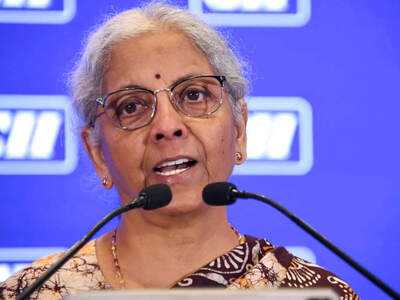
Addressing the CII GCC Business Summit 2026, Sitharaman said from one new GCC being set up every week in 2024, India, on an average, now sees one such addition every day, making the country host to more than half of the world's GCCs.
Also Read: GCCs in India: The story so far
Stressing that India's GCC ecosystem has reached a point where scale is no longer the only measurement of success, she said the focus is now on enabling global enterprises to develop next-generation products, frontier technologies and shape enterprise strategy from the country.
India possesses "every ingredient" required to lead this transformation, she said.
"Our aspiration is not merely to host the world's capability centre or centres, but to shape next-generation technologies and products and enterprises of the future. So, this is how India moves from capability to leadership.
"India's GCC journey is much larger than the story of one successful sector. It is about making India indispensable to the world's knowledge economy and strengthening our long-term economic resilience. In doing so, we will only gain a new form of economic resilience and strategic relevance," Sitharaman said.
India hosts more than 2,100 GCCs, employing 23 lakh professionals directly and generating almost USD 100 billion in annual revenue.
"From capability to global leadership is what I think defines India's next decade. The opportunity before India is to redefine our place in the global economy," the FM said.
Around two-thirds of Fortune Global 2000 companies are yet to establish a GCC in India. This is one of the largest untapped investment opportunities before us.
"Indian GCCs are assuming a growing share of global leadership mandates and strategic decision-making responsibilities. In other words, India's value proposition has evolved from cost-efficiency to capability leadership," Sitharaman said.
Also Read: Tier 2 cities emerge as next frontiers for India's growing GCC ecosystem
She said enterprises are now moving beyond minimising cost to maximising innovation, accelerating discovery and strengthening long-term competitiveness.
Addressing the CII GCC Business Summit 2026, Sitharaman said from one new GCC being set up every week in 2024, India, on an average, now sees one such addition every day, making the country host to more than half of the world's GCCs.
Also Read: GCCs in India: The story so far
Stressing that India's GCC ecosystem has reached a point where scale is no longer the only measurement of success, she said the focus is now on enabling global enterprises to develop next-generation products, frontier technologies and shape enterprise strategy from the country.
India possesses "every ingredient" required to lead this transformation, she said.
"Our aspiration is not merely to host the world's capability centre or centres, but to shape next-generation technologies and products and enterprises of the future. So, this is how India moves from capability to leadership.
"India's GCC journey is much larger than the story of one successful sector. It is about making India indispensable to the world's knowledge economy and strengthening our long-term economic resilience. In doing so, we will only gain a new form of economic resilience and strategic relevance," Sitharaman said.
India hosts more than 2,100 GCCs, employing 23 lakh professionals directly and generating almost USD 100 billion in annual revenue.
"From capability to global leadership is what I think defines India's next decade. The opportunity before India is to redefine our place in the global economy," the FM said.
Around two-thirds of Fortune Global 2000 companies are yet to establish a GCC in India. This is one of the largest untapped investment opportunities before us.
"Indian GCCs are assuming a growing share of global leadership mandates and strategic decision-making responsibilities. In other words, India's value proposition has evolved from cost-efficiency to capability leadership," Sitharaman said.
Also Read: Tier 2 cities emerge as next frontiers for India's growing GCC ecosystem
She said enterprises are now moving beyond minimising cost to maximising innovation, accelerating discovery and strengthening long-term competitiveness.
Next Story