
From Siam to Thailand: 10 Fascinating Country Name Changes Explained

Changing a country’s name is not just a rebranding exercise - it often reflects deeper shifts in identity, history, and sovereignty. From breaking colonial ties to embracing cultural roots, many nations have taken the bold step to redefine how they are known to the world. Here’s a fascinating look at 10 countries that chose new names, what prompted the change, and when it happened.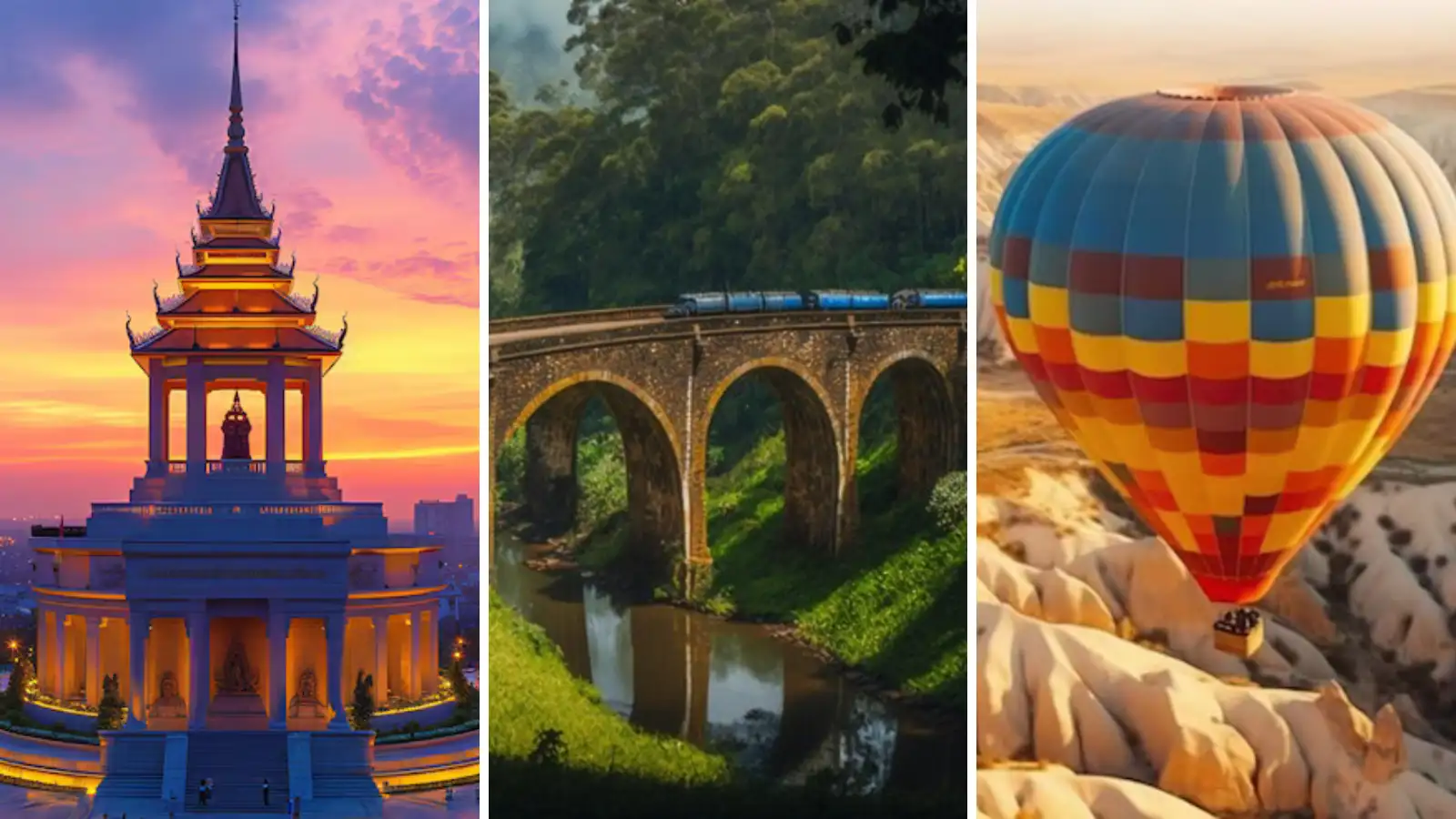
1. Iran (formerly Persia) – 1935
In 1935, Reza Shah Pahlavi renamed Persia to Iran, a term rooted in the word "Aryan," reflecting the country’s ethnic heritage. The move aimed to modernise the image of the nation and distance it from its colonial past.
2. Thailand (formerly Siam) – 1948
Siam became Thailand in 1948 to reflect national pride and independence. Meaning "Land of the Free," Thailand's new name symbolised its unique position as the only Southeast Asian country never colonised by a Western power.
3. Bangladesh (formerly East Pakistan) – 1971
Following a fierce war of independence in 1971, East Pakistan became Bangladesh. The new name marked a fresh start for a nation shaped by its distinct language, culture, and political vision.
4. Sri Lanka (formerly Ceylon) – 1972
After becoming a republic in 1972, Ceylon was renamed Sri Lanka, meaning "Resplendent Island." This shift broke away from colonial connotations and embraced the island’s ancient heritage.
5. Zimbabwe (formerly Rhodesia) – 1980
With independence from British colonial rule in 1980, Rhodesia was renamed Zimbabwe. The name honours the Great Zimbabwe ruins, a powerful symbol of the country’s African roots and sovereignty.
6. Myanmar (formerly Burma) – 1989
In 1989, the ruling military government renamed Burma to Myanmar, citing the need to reflect the country's diverse ethnic groups. While the change remains politically debated, it was intended to reinforce national unity.
7. Cabo Verde (formerly Cape Verde) – 2013
Cape Verde adopted its Portuguese name, Cabo Verde, in 2013 to standardise international usage with its native language. The change aligned with the country’s Lusophone identity and cultural pride.
8. Czechia (formerly Czech Republic) – 2016
To simplify global branding, the Czech Republic introduced the short-form name Czechia in 2016. It serves as a more concise identity for international events and diplomacy, while the formal name remains unchanged.
9. Eswatini (formerly Swaziland) – 2018
In 2018, King Mswati III renamed Swaziland to Eswatini, meaning "Land of the Swazis." The change commemorated 50 years of independence and revived the nation’s pre-colonial identity.
10. Türkiye (formerly Turkey) – 2022
Turkey officially rebranded as Türkiye in 2022, urging the global community to adopt the name. The shift aimed to strengthen national identity and avoid confusion with the bird of the same name.
A name change can reshape how a country is perceived - both at home and on the world stage. These ten nations demonstrate how a new name can carry powerful messages of independence, heritage, and a forward-looking identity.
1. Iran (formerly Persia) – 1935
In 1935, Reza Shah Pahlavi renamed Persia to Iran, a term rooted in the word "Aryan," reflecting the country’s ethnic heritage. The move aimed to modernise the image of the nation and distance it from its colonial past. 2. Thailand (formerly Siam) – 1948
Siam became Thailand in 1948 to reflect national pride and independence. Meaning "Land of the Free," Thailand's new name symbolised its unique position as the only Southeast Asian country never colonised by a Western power.3. Bangladesh (formerly East Pakistan) – 1971
Following a fierce war of independence in 1971, East Pakistan became Bangladesh. The new name marked a fresh start for a nation shaped by its distinct language, culture, and political vision. 4. Sri Lanka (formerly Ceylon) – 1972
After becoming a republic in 1972, Ceylon was renamed Sri Lanka, meaning "Resplendent Island." This shift broke away from colonial connotations and embraced the island’s ancient heritage.You may also like
- A gold-domed New York City penthouse first listed for $25 million has sold for $9 million after 530 days on the market, with owner Greg Carr directing the sale proceeds to his conservation project
- Death Toll Rises to Six After Severe Storm Hits Eastern Japan
- US approves $425 million sale of MH-60R Seahawk helicopters and equipments to Denmark
- India tests 1,000-km-range KAL one-way attack drone at Pokhran
- Former news anchor working for California Democrat arrested by ICE at Las Vegas airport
5. Zimbabwe (formerly Rhodesia) – 1980
With independence from British colonial rule in 1980, Rhodesia was renamed Zimbabwe. The name honours the Great Zimbabwe ruins, a powerful symbol of the country’s African roots and sovereignty. 6. Myanmar (formerly Burma) – 1989
In 1989, the ruling military government renamed Burma to Myanmar, citing the need to reflect the country's diverse ethnic groups. While the change remains politically debated, it was intended to reinforce national unity. 7. Cabo Verde (formerly Cape Verde) – 2013
Cape Verde adopted its Portuguese name, Cabo Verde, in 2013 to standardise international usage with its native language. The change aligned with the country’s Lusophone identity and cultural pride. 8. Czechia (formerly Czech Republic) – 2016
To simplify global branding, the Czech Republic introduced the short-form name Czechia in 2016. It serves as a more concise identity for international events and diplomacy, while the formal name remains unchanged.9. Eswatini (formerly Swaziland) – 2018
In 2018, King Mswati III renamed Swaziland to Eswatini, meaning "Land of the Swazis." The change commemorated 50 years of independence and revived the nation’s pre-colonial identity. 10. Türkiye (formerly Turkey) – 2022
Turkey officially rebranded as Türkiye in 2022, urging the global community to adopt the name. The shift aimed to strengthen national identity and avoid confusion with the bird of the same name. A name change can reshape how a country is perceived - both at home and on the world stage. These ten nations demonstrate how a new name can carry powerful messages of independence, heritage, and a forward-looking identity.






Loving Newspoint? Download the app now
