
5 temples older than Stonehenge - and why tiny Malta still baffles historians


Thinking about the pictures of the oldest places of worship, we always think of the gigantic stone monuments constructed by the Ancient Egyptians, or maybe of the brick ziggurats constructed by the Mesopotamians. We feel certain that such great master builders should come from great empires having lots of warriors and lots of resources. This is quite logical because it seems only possible that older civilisations were greater than the modern ones. However, history teaches us otherwise.
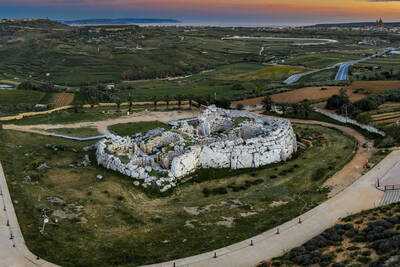
As you examine the earliest surviving freestanding temple structures, you will find that their geographic distribution presents an unexpected narrative to be told. Unlike the continental civilisations we might expect, the true birthplace of monumental stone architecture is instead the tiny, sunlit islands located right in the middle of the Mediterranean Sea. Before the first blocks of the Great Pyramid of Giza were even laid, an isolated group of people on an island had been lifting and erecting large blocks of limestone into their own unique temples.
The island group that has upended the world’s timeline
These structures, which have taken top honours for the earliest surviving architectural works, belong to the category of the Megalithic Temples of Malta . Unlike other archaeological remains, such as post holes or foundation layers, the temples found at Malta are complete buildings that include entrances, interior rooms, and detailed construction techniques.
According to an official global evaluation published by the UNESCO World Heritage Convention under the title Megalithic Temples of Malta, these complexes represent a unique architectural phenomenon. They were built by a highly organised Neolithic society during a boom period that began around 3600 BCE. To put that into perspective, these temples were already centuries old before the construction of Stonehenge even began.
Since the construction and expansion of some of these complexes took place in successive waves, there could be heated debates about their chronological sequence, but they all serve as the oldest freestanding temples that still stand on Earth.
1. Ġgantija Temples
Found on the serene island of Gozo in Malta, the complex is considered to be the oldest standing freestanding temple in the world. It was built around 3600 BCE. The name of the temple is derived from the phrase “giant’s tower,” which was the belief of later communities who lived on the island and thought that only the giant-like race would be capable of moving the huge limestone blocks forming the walls.
2. Skorba Temples
Tucked away on the northern edge of Malta, Skorba is less visually intact than its neighbours, but it is a treasure trove for historians. It preserves some of the earliest structural evidence of the temple-building era, proving that the artistic and structural styles of the islands evolved over several centuries of experimentation.
3. Ta' Ħaġrat Temples
These temples lie within proximity to the other temples in the nearby village of Mġarr and contain one of the best-preserved doorways, which resembles the Stonehenge site, only in miniature form. The design is remarkable in its mastery of balance and space and consists of globigerina limestone blocks transported manually from place to place using stone rollers.
4. Ħaġar Qim
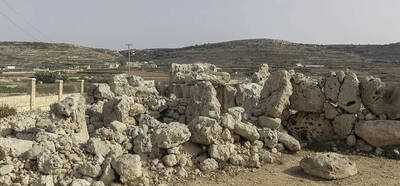
This magnificent temple lies at a vantage point on top of a hill, providing spectacular views of the ocean surrounding Malta. This complex contains some of the heaviest stones ever used for the construction of buildings, weighing in excess of twenty tons.
5. Temples of Mnajdra
Only a brief distance from Haġar Qim down the coast, here lies another remarkable construction which is uniquely oriented towards the sun. On the occasions of the spring and fall equinoxes, the early morning sunlight shines straight into the main entrance. It lights up the altar, indicating that these ancients were not only brilliant architects but excellent astronomers as well.
Solving the riddle of the ancient builders
Discovering how an isolated island community was able to achieve stone building technology offers historians a captivating enigma to decipher. A structure conservation report published by Heritage Malta, titled Roofing the Past - The Mnajdra Graffito, indicates that the islanders who created these temples were much more developed than their Stone Age contemporaries.
Scratches have been discovered on the walls of the temples, which seem to indicate that the constructors had a plan for the layout of the rooms prior to starting any physical work. Their design included clover leaf-like formations that allowed even distribution of the weight of the roofs to the stone walls, thus making them resistant to the extreme heat conditions of the Mediterranean region.
The existence of these sites compels us to reconsider our perspective on the ancient world entirely. The evidence shows that such grand structures do not necessarily need an entire empire behind them or countless workers. In some instances, only an isolated island society with a common goal, a limestone quarry, and sufficient time can rewrite the history of man entirely.
As you examine the earliest surviving freestanding temple structures, you will find that their geographic distribution presents an unexpected narrative to be told. Unlike the continental civilisations we might expect, the true birthplace of monumental stone architecture is instead the tiny, sunlit islands located right in the middle of the Mediterranean Sea. Before the first blocks of the Great Pyramid of Giza were even laid, an isolated group of people on an island had been lifting and erecting large blocks of limestone into their own unique temples.
The island group that has upended the world’s timeline
These structures, which have taken top honours for the earliest surviving architectural works, belong to the category of the Megalithic Temples of Malta . Unlike other archaeological remains, such as post holes or foundation layers, the temples found at Malta are complete buildings that include entrances, interior rooms, and detailed construction techniques.
According to an official global evaluation published by the UNESCO World Heritage Convention under the title Megalithic Temples of Malta, these complexes represent a unique architectural phenomenon. They were built by a highly organised Neolithic society during a boom period that began around 3600 BCE. To put that into perspective, these temples were already centuries old before the construction of Stonehenge even began.
Since the construction and expansion of some of these complexes took place in successive waves, there could be heated debates about their chronological sequence, but they all serve as the oldest freestanding temples that still stand on Earth.
1. Ġgantija Temples
Found on the serene island of Gozo in Malta, the complex is considered to be the oldest standing freestanding temple in the world. It was built around 3600 BCE. The name of the temple is derived from the phrase “giant’s tower,” which was the belief of later communities who lived on the island and thought that only the giant-like race would be capable of moving the huge limestone blocks forming the walls.
2. Skorba Temples
Tucked away on the northern edge of Malta, Skorba is less visually intact than its neighbours, but it is a treasure trove for historians. It preserves some of the earliest structural evidence of the temple-building era, proving that the artistic and structural styles of the islands evolved over several centuries of experimentation.
3. Ta' Ħaġrat Temples
These temples lie within proximity to the other temples in the nearby village of Mġarr and contain one of the best-preserved doorways, which resembles the Stonehenge site, only in miniature form. The design is remarkable in its mastery of balance and space and consists of globigerina limestone blocks transported manually from place to place using stone rollers.
4. Ħaġar Qim
This magnificent temple lies at a vantage point on top of a hill, providing spectacular views of the ocean surrounding Malta. This complex contains some of the heaviest stones ever used for the construction of buildings, weighing in excess of twenty tons.
5. Temples of Mnajdra
Only a brief distance from Haġar Qim down the coast, here lies another remarkable construction which is uniquely oriented towards the sun. On the occasions of the spring and fall equinoxes, the early morning sunlight shines straight into the main entrance. It lights up the altar, indicating that these ancients were not only brilliant architects but excellent astronomers as well.
Solving the riddle of the ancient builders
Discovering how an isolated island community was able to achieve stone building technology offers historians a captivating enigma to decipher. A structure conservation report published by Heritage Malta, titled Roofing the Past - The Mnajdra Graffito, indicates that the islanders who created these temples were much more developed than their Stone Age contemporaries.
Scratches have been discovered on the walls of the temples, which seem to indicate that the constructors had a plan for the layout of the rooms prior to starting any physical work. Their design included clover leaf-like formations that allowed even distribution of the weight of the roofs to the stone walls, thus making them resistant to the extreme heat conditions of the Mediterranean region.
The existence of these sites compels us to reconsider our perspective on the ancient world entirely. The evidence shows that such grand structures do not necessarily need an entire empire behind them or countless workers. In some instances, only an isolated island society with a common goal, a limestone quarry, and sufficient time can rewrite the history of man entirely.
Next Story