
A mystery wreck off the English coast was identified in 2023 as a Dutch warship sunk in a 1672 ambush, still loaded with the Italian marble it was carrying home


For years, a well-preserved shipwreck lying beneath the English Channel was known as the Unknown Wreck off Eastbourne. In January 2023, maritime archaeologists finally identified the shipwreck as the Klein Hollandia , a 44-gun Dutch warship built in 1656 and sunk in 1672 during a surprise English attack. According to CBS News, the identification solved a long-standing mystery, while Historic England noted that the wreck’s condition is remarkable and could offer an insight into Dutch warships from the 17th century. Notably, the vessel still carried cargo from its final Mediterranean voyage, including finely cut Italian marble for prestigious buildings in the Netherlands.
Four years of investigation beneath the sea
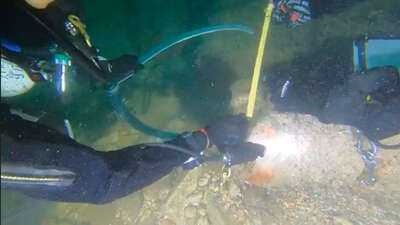
According to Historic England, in 2019, the wreck was discovered by Eastbourne dive operator David Ronnan after an earlier hydrographic survey had detected an underwater anomaly and after recognising its archaeological importance, authorities granted the highest level of protection under the Protection of Wrecks Act 1973. In the next four years, specialists from Historic England, the Cultural Heritage of the Netherlands and the Nautical Archaeology Society combined underwater surveys with archival research, dendrochronology of timber samples and historical records to determine the vessel’s identity. Following this, the breakthrough came from examining both the ship’s structure and its cargo.
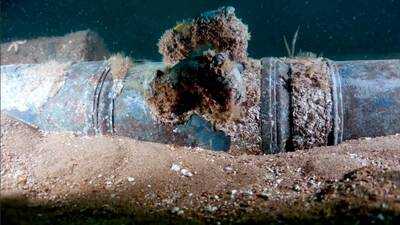
According to Historic England, scientists used petrographic, mineral-composition and isotope analysis on the recovered stone tiles. The researchers identified them as marble from the Apuan Alps near Carrara, Italy, which is celebrated as one of the world’s renowned marble-producing regions. Furthermore, archaeologists also documented cannons, substantial sections of the wooden hull and fragments of Italian pottery. This evidence helped the archaeologists to identify the wreck as a Dutch warship returning from Italy rather than a merchant vessel or an English naval ship.
Four years of investigation beneath the sea
According to Historic England, in 2019, the wreck was discovered by Eastbourne dive operator David Ronnan after an earlier hydrographic survey had detected an underwater anomaly and after recognising its archaeological importance, authorities granted the highest level of protection under the Protection of Wrecks Act 1973. In the next four years, specialists from Historic England, the Cultural Heritage of the Netherlands and the Nautical Archaeology Society combined underwater surveys with archival research, dendrochronology of timber samples and historical records to determine the vessel’s identity. Following this, the breakthrough came from examining both the ship’s structure and its cargo.
According to Historic England, scientists used petrographic, mineral-composition and isotope analysis on the recovered stone tiles. The researchers identified them as marble from the Apuan Alps near Carrara, Italy, which is celebrated as one of the world’s renowned marble-producing regions. Furthermore, archaeologists also documented cannons, substantial sections of the wooden hull and fragments of Italian pottery. This evidence helped the archaeologists to identify the wreck as a Dutch warship returning from Italy rather than a merchant vessel or an English naval ship.
Next Story