
A royal warship sunk off Sweden in 1495 has preserved its spice cabinet and weapons, including saffron, cloves, crossbows and early artillery


A royal warship that sank nearly 500 years ago off the coast of southern Sweden continues to reveal insights into life, warfare and luxury during the dawn of Europe’s Age of Exploration . According to ScienceDaily, citing new research from Lund University, researchers studying the wreck of Gribshunden , which was the flagship of Danish-Norwegian King Hans , have uncovered new evidence of the sophisticated life of that time.
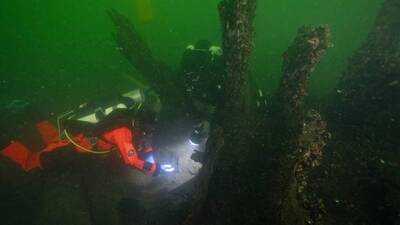
Archaeologists had previously recovered exotic spices, including saffron, cloves, ginger and black pepper, as well as crossbows and weapons. The latest excavation revealed sophisticated shipboard artillery. Notably, this vessel, lost in 1495, is regarded as one of the world’s best-preserved ships from the Age of Exploration, offering an archaeological window into the kinds of ships that sailed during the era of Christopher Columbus and Vasco da Gama.
A vessel built for power and prestige
According to ScienceDaily, Gribshunden was built between 1483 and 1484, and King Hans had taken possession of it by 1486. Interestingly, instead of using the ship for overseas exploration, the Danish king employed it as a floating castle, which displayed the military strength and royal authority across the kingdom. ScienceDaily reported that in 1495, the vessel was sailing to Kalmar, Sweden, where the Danish monarch hoped to secure election as king and reunite the Nordic kingdoms. ScienceDaily noted that several historical accounts indicate that while King Hans was ashore near Ronneby, an explosion engulfed the anchored ship, sending it to the bottom of the Baltic Sea with most of its cargo still aboard.
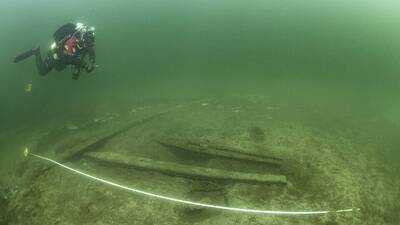
Many researchers think that the Baltic Sea’s cold and low-salinity conditions created ideal preservation conditions, with researchers from Lund University noting that the wreck has retained major sections of its wooden hull together with weapons, personal belongings, food remains and goods that rarely survive on other medieval shipwrecks. Notably, researchers describe Girbshunden as one of the most complete examples discovered yet of a late medieval carvel-built warship, thus solidifying its position as an invaluable reference for understanding vessels that were in use during the Age of Exploration.
Archaeologists had previously recovered exotic spices, including saffron, cloves, ginger and black pepper, as well as crossbows and weapons. The latest excavation revealed sophisticated shipboard artillery. Notably, this vessel, lost in 1495, is regarded as one of the world’s best-preserved ships from the Age of Exploration, offering an archaeological window into the kinds of ships that sailed during the era of Christopher Columbus and Vasco da Gama.
A vessel built for power and prestige
According to ScienceDaily, Gribshunden was built between 1483 and 1484, and King Hans had taken possession of it by 1486. Interestingly, instead of using the ship for overseas exploration, the Danish king employed it as a floating castle, which displayed the military strength and royal authority across the kingdom. ScienceDaily reported that in 1495, the vessel was sailing to Kalmar, Sweden, where the Danish monarch hoped to secure election as king and reunite the Nordic kingdoms. ScienceDaily noted that several historical accounts indicate that while King Hans was ashore near Ronneby, an explosion engulfed the anchored ship, sending it to the bottom of the Baltic Sea with most of its cargo still aboard.
Many researchers think that the Baltic Sea’s cold and low-salinity conditions created ideal preservation conditions, with researchers from Lund University noting that the wreck has retained major sections of its wooden hull together with weapons, personal belongings, food remains and goods that rarely survive on other medieval shipwrecks. Notably, researchers describe Girbshunden as one of the most complete examples discovered yet of a late medieval carvel-built warship, thus solidifying its position as an invaluable reference for understanding vessels that were in use during the Age of Exploration.
Next Story