
Ancient footprints found in Kenya reveal how early human relatives may have travelled and lived together 1.43 million years ago


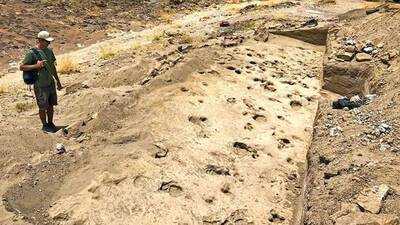
Long before stone tools or bones tell their part of the story, footprints can preserve something far more immediate. They capture movement rather than anatomy, recording where an individual walked, how they placed their feet, and sometimes who was travelling beside them. A newly described set of fossil footprints from northern Kenya offers a rare glimpse into the lives of Early Pleistocene hominins around 1.43 million years ago. Preserved along what was once a lakeshore, the tracks suggest that several large-bodied individuals crossed the same muddy ground together. While the identity of the track-makers remains open to debate, the footprints provide fresh evidence about body size, walking style and the social behaviour of one of humanity's ancient relatives.
Next Story